Wednesday, July 24, 2013

Autism`s 40% With Intellectual Disability? Auti$m $peak$ Doesn't See YOU, Doesn't Speak For YOU!


Autism Speaks has done much to create publicity around the word autism, the color blue, puzzle pieces and ... some very talented, high functioning individuals with autism diagnoses like Alex Plank and J. E. Robison.  In terms of its public statements and presentations though it does little to nothing to  raise awareness about one very basic fact: autism has a very close relationship with intellectual disability to the extent that 40% of persons with autism spectrum diagnoses (DSM-IV) also have intellectual disability. 

Prior to the DSM-IV and prior to the addition of PDD-NOS and Aspergers persons with intellectual disability constituted the vast majority of persons with autistic disorder.  Autism Speaks has reluctantly acknowledged that 40% of persons with autism have intellectual disability but does not reflect their existence in their press releases.  Autism Speaks conflicted attitude toward those with autism and intellectual disability was illustrated vividly in the recent Drake and J. Cole lyrics uproar when Autism Speaks defended persons with autism but not those with autism and intellectual disability. Instead of criticizing the rappers for their derogatory reference  to persons as “autistic, retarded." Autism Speaks went further and argued that in fact persons with autism are very successful and talented. No mention was made in the Autism Speaks press release of the 40% of the autism spectrum who are intellectually disabled even though the words "mentally retarded." have been replaced by the words intellectually disabled.  

Autism Speaks chose not to stand up for the intellectually disabled members of the "àutism community" even though they were  expressly  maligned in the original lyrics:


"Lyrics from the recently released song “Jodeci Freestyle” from hip hop artists Drake and J.Cole have many in the autism community up in arms. The song, which was released last month and is now getting airplay, contains the following lyric by J. Cole: “I’m artistic, you n----s is autistic, retarded." 

These lyrics are offensive and perpetuate negative stereotypes. There are many inspiring individuals with autism and other disabilities who have achieved great success across a variety of artforms, including music. We encourage J. Cole to recognize their talents and learn from the positive example they have set for all of us."

This is not the first time Autism Speaks has chosen to ignore the intellectually disabled 40% while promoting the very, very, very high functioning elite members of the autism spectrum like J. E. Robison and Alex Plank.  There is almost never any mention of the intellectually disabled in promotions and news releases by Autism Speaks or on their web site.  I have previously noted that Autism Speaks has only reluctantly acknowledged the existence of intellectual disability on the About Autism section of its web site burying mention of 40% with ID in the middle of the page, book ended by references to those with high IQs and abilities.

In the "rapper incident" AS went further than just ignoring those with autism and intellectual disability.  They implied that persons with autism, all persons with autism, are in fact talented, successful people.  They were ashamed to mention and defend the 40% with autism and Intellectual Disability.  The rappers have offered sincere apologies and taken steps to address the issue by changing the lyrics.  Rapper J.  Cole even acknowledged the existence of those with severe autism and their families.  By their actions Drake and J. Cole have shown themselves to be ahead, light years ahead of Autism Speaks in caring about ALL persons on the autism spectrum including the 40%  intellectually disabled.  

Monday, July 22, 2013

Severe Autism Breakthrough: J. Cole Offers Sincere Apology And Acknowledges Existence of Severe Autism

Dreamvillain


Rapper J. Cole has offered what appears to this observer to be a very sincere apology, one offered without qualifications and one which actually offers a breakthrough for those who, like my son, suffer from severe autism. Unlike most prominent autism advocates rapper J. Cole actually acknowledged the existence of, and included in his apology, those at the severe end of the autism spectrum.  

Many autism advocacy organizations and "self" advocates routinely denigrate anyone who mentions severe autism disorders. Television series, movies and feel good mainstream media rarely acknowledge the severe, low functioning end of the autism spectrum. Rapper J. Cole's apology, however,  set out on his blog, DREAMVILLAIN, extended to all persons with autism disorders including those with severe autism and their families. 

I hope Autism Speaks, in particular, takes note of Cole's references to those with Aspergers AND those with severe autism and their families. If Rapper J. Cole can acknowledge the existence of severe autism surely Autism Speaks can do the same and start addressing the challenges facing the 40% on the autism spectrum who also suffer from intellectual disability and the many spectrum members who suffer from serious "comorbid" conditions like epileptic seizures. Cole's apology is set out hereafter in full, as stated on his blog, with my underlining added. 

Autism Speaks

Recently there’s been a trend that includes rappers saying something
offensive, only to be attacked for it in the media and pressured to
apologize. I have to be completely honest and say there’s a part of me
that resents that. I view rap similar to how I view comedy. It’s going
to ruffle feathers at times. It’s going to go “too far”. I do not
believe that an apology is needed every time someone is offended,
especially when that apology is really only for the sake of saving an
endorsement or cleaning up bad press.
With that said, this is not the case today. This letter is sincere.
This apology IS necessary.
In a recent verse on the song “Jodeci Freestyle”, I said something
highly offensive to people with Autism. Last week, when I first saw a
comment from someone outraged about the lyric, I realized right away
that what I said was wrong. I was instantly embarrassed that I would
be ignorant enough say something so hurtful. What makes the crime
worse is that I should have known better.
To the entire Autism community who expressed outrage, I’m moved and
inspired by your passion, and I’m amazed at how strong you are as a
unit. I have now read stories online from parents about their
struggles and triumphs with raising an Autistic child and I admire how
incredibly strong you have to be to do so. It’s touching. It also
makes what I said even more embarrassing for me. I feel real shame.
You have every right to be angry.
To anyone suffering from Autism, either mildly or severely, I am
sorry. I’m bound to make mistakes in my life, but in my heart I just
want to spread Love.
I want to educate myself more on Autism, and I’ll gladly own my
mistake and serve as an example to today’s generation that there’s
nothing cool about mean-spirited comments about someone with Autism.
People with this disorder and their loved ones have to go through so
much already, the last thing they need is to hear something as
ignorant as what I said. I understand.
To the parents who are fighting through the frustrations that must
come with raising a child with severe autism, finding strength and
patience that they never knew they had
; to the college student with
Asperger’s Syndrome; to all those overcoming Autism. You deserve
medals, not disrespect. I hope you accept my sincere apology.
Much Love
-Cole
Well said Cole, well done. 

Wednesday, July 17, 2013

Dear Anna Kennedy: Please Stop Misrepresenting Autism, Autism Is A Health DISORDER NOT a Gift


Anyone  described as "having autism" or "being autistic" 
would have received an autism disorder diagnosis 
pursuant, in all likelihood, to either the DSM or the ICD 

Dear Anna Kennedy

My 17 year old son Conor who was diagnosed 15+ years ago with "autistic disorder" (now autism spectrum disorder) and profound developmental delays ( a euphemism for intellectual disability) is truly a gift. Conor brings great joy to our lives as shown on the sample pictures that follow.  While Conor is a joy, however, his autism disorder is not.  Nor is his autism disorder a GIFT or a SUPER ABILITY.


Conor's autism is a disability and a disorder and that is WHY he received a medical diagnosis of autism (autistic disorder).  While there may be some autistic individuals with special gifts he is not one of them.  Conor is one of the 40% of persons with autism and intellectual disability.  As you probably know that combination also makes him more likely to suffer from epileptic seizures and indeed Conor has suffered two grand mal seizures in six months.  He also suffered a life threatening reaction to his anti-seizure medication at the time. Other challenges brought by his autism disorder are wandering, self injurious behavior (self biting and head banging) and obsessive behaviors.  There is abundant literature indicating that those with autism, ID and epilepsy are at particular risk of shortened life expectancy.

Drake and Cole deserve to be admonished for their denigration of persons with autism AND for their denigration of persons with intellectual disabilities.  The solution, however, is not to circulate a petition which claims that autism is a gift or a super ability. In doing so you mislead the public about serious, challenges faced by the vast majority of persons with autism DISORDERS.  If you continue to misrepresent autism to the world you will probably cause harm to people like my son who in fact suffer from their autism disorders.  

I have been advocating publicly in my home province of New Brunswick, Canada for 15 years with other parents and we have achieved some success in ensuring that NB children with autism receive evidence based early intervention and that autistic students receive assistance from autism trained education assistants and resource teachers.  I have visited two psychiatric hospital facilities and met severely autistic adults living out their lives in those institutions and I continue to advocate for modern residential care and treatment options for adults with autism.

Any successes we have achieved, or hope to achieve, are based on presenting accurate, informed, evidence based portrayals of the realities of autism disorders to government decision makers and to the public at large.  Portraying autism as a gift misleads everyone about the real challenges faced by many with these very serious disorders.


Please reconsider your misleading public characterization of autism as a gift and super ability and acknowledge clearly that autism disorders are exactly that ... disorders.  My son is a gift, his autistic disorder is not. 

Respectfully,

Harold L Doherty
Fredericton, New Brunswick
Canada

Tuesday, July 16, 2013

Conor's Fredericton Adventures 2013 Part I


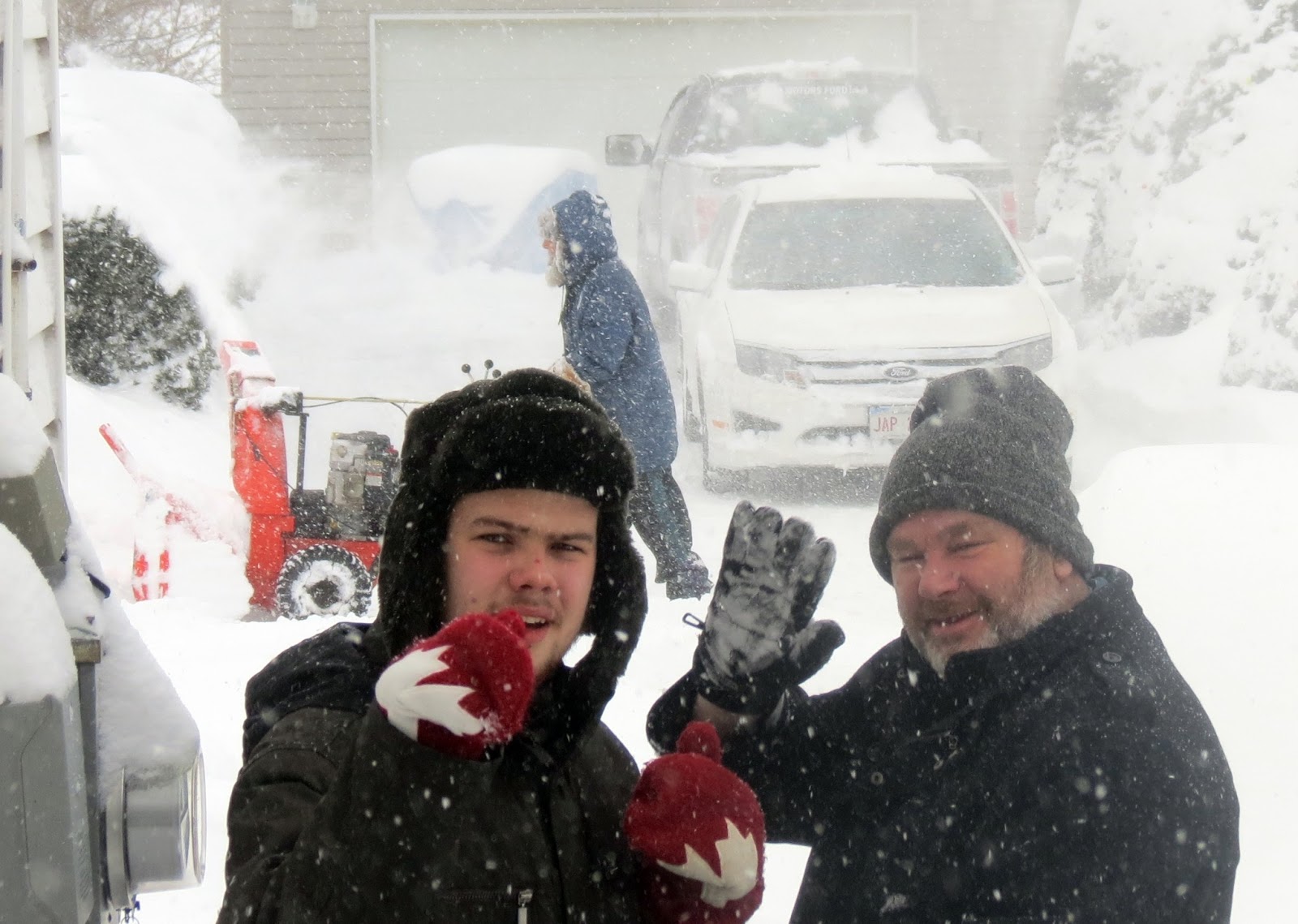
Conor & Dad, couple of hosers enjoying the snow, eh?


Conor's Saint John River view clear day, above, not so clear below


Conor helps Dad with a visit at the Chalmers Hospital Acute Care Unit


Conor and Mom head out for  a stroll on the North Riverfront Trail


Conor changes his mind about the strolling part


Conor enjoys a late March snowstorm eh?


Conor isn't the only one who gets to fly along our North Riverfront Trail


The Run Jump Fly Boy lets it all loose on the North Riverfront Trail, Fredericton


Just days after Conor was running, jumping and flying down the trail he was taken by ambulance to the Chalmers Hospital in Fredericton where he spent 6 days in the Intensive Care Unit, and a total of 2 weeks in hospital, as a result of a life threatening adverse reaction to his anti seizure medication. 


Many thanks to the incredible doctors, nurses and staff at the Chalmers Emergency and Intensive Care Units for saving our Conor.


Conor didn't take too long to fully recover and there was no better way to show it than heading out on the trail with Mom and Dad ... where he had to wait from time to time for us to catch up.

Looking forward to lots more fun with Conor on the trail and elsewhere in 2013.  I hope he continues to enjoy the wonderful outdoor environment that Fredericton and friends like the Ospreys shown below offer. 


Sound Advice for Autism Speaks


In yesterday's commentary  Autism Speaks Joins Drake And J.Cole In Insulting 40% With Autism AND Intellectual Disability I criticized Autism Speaks for stigmatizing persons with Intellectual Disability, particularly the 40% of persons on the autism spectrum with ID, the 40% that Autism Speaks seldom acknowledges in its promotions and literature.  

I received the comment, posted above, from BLOOM - Parenting Kids With Disabilities editor Louise Kinross that expresses my issue with Autism Speaks' approach to intellectually disabled members of the autism spectrum better than I did. It would do Autism Speaks and the autism community it purports to represent  a great service to give serious consideration to Louise's comment. 

Monday, July 15, 2013

Autism Speaks Joins Drake And J.Cole In Insulting 40% With Autism AND Intellectual Disability


Autism Speaks has joined rappers Drake and J. Cole in insulting persons with Intellectual Disability particularly the 40% of the autism spectrum with intellectual disability.  The rappers had published song lyrics referring in an insulting manner to persons who are "autistic, retarded".  Autism Speaks did not simply criticize the rappers for denigrating persons who were autistic or intellectually disabled. Autism Speaks criticized the rappers for perpetuating negative stereotypes and for failing to recognized the many persons with autism and "other" disabilities who have enjoyed great success and talents.  

Presumably it would have been OK in the view of Autism Speaks if the rappers had mocked only the 40% with intellectual disabilities or those who were not successful or did not display exceptional talents.   It is not clear to this father of a severely autistic son with profound developmental delays, who lacks an exceptional talent, who Autism Speaks for but it clearly does not speak for my son. 

There are no doubt many in the high functioning end of the autism spectrum community who would  be insulted by the rappers lyrics ... my son who would not understand the lyrics is not one of them. I love my son and I take insult at the smarmy lyrics of Drake and Cole simply because they intended to insult persons like my son who are autistic and/or intellectually disabled not because they failed to recognized the talents and intellects of higher functioning persons with autism disorders. I am also ticked off, but not surprised, by Autism Speaks for essentially endorsing the rappers mocking of intellectually disabled a term which does not even appear in the Autism Speaks criticism.   Nowhere are autism's 40% intellectually disabled more invisible than within the Autism Speaks agenda:

Hip Hop Lyric Insults Autism Community

"Lyrics from the recently released song “Jodeci Freestyle” from hip hop artists Drake and J.Cole have many in the autism community up in arms. The song, which was released last month and is now getting airplay, contains the following lyric by J. Cole: “I’m artistic, you n----s is autistic, retarded." 


These lyrics are offensive and perpetuate negative stereotypes. There are many inspiring individuals with autism and other disabilities who have achieved great success across a variety of artforms, including music. We encourage J. Cole to recognize their talents and learn from the positive example they have set for all of us."

Sunday, July 14, 2013

DSM-5 Autism Emperors' Ridiculous Assumption


"The fifth edition of the diagnostic and statistical manual of mental disorders (DSM-5) (APA in diagnostic and statistical manual of mental disorders, Author, Washington, 2013) has decided to merge the subtypes of pervasive developmental disorders into a single category of autism spectrum disorder (ASD) on the assumption that they cannot be reliably differentiated from one another."

LY Tsai, M. Ghaziuddin (JADD 2013) DSM-5 ASD Moves Forward into the Past


I agree with the observations of Tsai, Ghazuiddin and Dr. Waterhouse.  I have none of their outstanding academic and research  qualifications.  I am a humble Canadian labour lawyer, the father of a severely autistic 17 year old son, with "profound developmental delays" who has, like 25% of those with severe autism and intellectual disability also suffered from serious grand mal seizures.  My 17  year old son, who I love dearly, whose joyful visage adorns the sides of this blog,  reads at a Dr. Seuss level.  He is not autistic in the manner of a Michelle Dawson who appeared at the Supreme Court of Canada to argue as an "autistic" against the parents from British Columbia who were seeking Medicare coverage for evidence based ABA treatment for their autistic children.  My son is not autistic in the manner of an Ari Ne'eman who graduated from university, founded a corporate entity called ASAN, participates as a member of the IACC and lectures journalists on what it means to be autistic in a meeting of the Washington press corps.

I don't have the academic autism credentials of the distinguished names mentioned above.  I do have credentials as an autism father who has loved and cared for a severely autistic son for 17+ years. I have credentials as an autism advocate who, in my home Canadian province of New Brunswick, has advocated with other parents with success for early evidence based intervention for autistic children, autism trained Teacher Assistants and for the continuation of a tertiary care autism center for NB children and youth when threatened with closure by bureaucratic decree.  In my continuing advocacy for autistic adults I have visited psychiatric hospitals where they have lived in the absence of a residential care system to meet their needs. I have conducted many meetings with other autism parents as the Autism Society New Brunswick and met many autistic children and adults from my son's severe end of the spectrum to the very high functioning "Aspergers" end. 

What my experience, what my daily life for 17+ years has always told me, is that there are vastly different realities facing those on the autism spectrum. There is no evidence justifying the lumping together of these hugely different realities under the label Autism Spectrum Disorder.  To borrow the words of Dr. Waterhouse autism to any reasonably informed observer is marked by heterogeneity and complexity.

As Tsai and Ghazuddin have said the DSM-5 ASD is counter to evidence and is based on the assumption that "they cannot be reliably differentiated from one another."  

That assumption is not just wrong. It is in the humble opinion of this informed autism father a ridiculously false assumption.

Thursday, July 11, 2013

40% Intellectual Disability In Autism Disorders: Coincidence or Consequence?


I have never subscribed to the assumption that Intellectual Disability is a co-morbidity as described by the authors of a new study examining Intellectual  Disability in Autism: (unrelated in etiology and causality from the ASD itself)  I have been frustrated by the historical tendency of  "autism" researchers to exclude intellectually disabled autistic subjects from their research studies.  I am very disappointed with Dr. Lord, Dr. Swedo, Dr. King and other APA members for their efforts to further the artificial disassociation of Intellectual Disability from Autism Spectrum Disorder (s) in the DSM5.  I have always believed, as the father of a severely autistic son with "profound developmental delay", and contrary to the "autism as strength" ideology of Dr. Laurent Mottron and Michelle Dawson, that autism and intellectual disability are inseparable components of my son's condition. I am very pleased to see reports of a new study, as set out in this brief online paper by the authors of that study, which begins to examine the ID and ASD relationship front on and with complete intellectual honesty.  

I hope that the proof of principle resulting from the study  that "ASD symptom severity contributes to the extent to which the environmental input required to support “typical” brain development can be processed by the individual, so that the risk of developing ID increases as the number and severity of ASD social-communicative impairments increase"  is pursued further and that additional research on this topic is not squelched by the political correctness of those who control autism research funding dollars.

I also hope that researchers study the ID in ASD issue from  different perspectives:  that the ID increases the severity of the ASD symptoms and that ID and ASD are simply different aspects of one condition.   This humble father  does not believe that my son's severe autism symptoms and ID are separate coincidental or "comorbid" conditions.  I am pleased to see these "down under" Austalian researchers joining the ranks of the few with the intellectual honesty and curiousity to study the Intellectual Disability component of autism symptoms and disorders.

Intellectual development in autism spectrum disorders: new insights from longitudinal studies

Giacomo Vivanti1,2*, Josephine Barbaro1Kristelle Hudry1Cheryl Dissanayake1 and Margot Prior1,3
  •   1Olga Tennison Autism Research Centre, School of Psychological Science, La Trobe University, Melbourne, VIC, Australia
  •  2Victorian Autism Specific Early Learning and Care Centre, La Trobe University, Melbourne, VIC, Australia3
  • Melbourne School of Psychological Sciences, University of Melbourne, Melbourne, VIC, Australia
The presence/absence of Intellectual Disability (ID) is considered to be the most critical factor affecting outcomes in individuals with Autism Spectrum Disorders (ASD). However, the question of the specific nature of ID in ASD has received little attention, with the current view being that ID is a comorbid condition (i.e., one that is unrelated in etiology and causality from the ASD itself). Recent advances in developmental neuroscience, highlighting the importance of early exposure to social experiences for cognitive development, support an alternative view; that ID in ASD might emerge as a consequence of severe social-communication deficits on the experience-dependent mechanisms underlying neurocognitive development. We tested this prediction in two independent samples of young children with ASD (Ns = 23 and 60), finding that children with greater ASD severity at an initial assessment were more likely to present with poorer cognitive outcomes at a later assessment, irrespective of initial cognitive level. The results of this proof of principle study suggest that ASD symptom severity contributes to the extent to which the environmental input required to support “typical” brain development can be processed by the individual, so that the risk of developing ID increases as the number and severity of ASD social-communicative impairments increase.

Sunday, July 07, 2013

10 Years of NB Government Inaction On Adult Autism Care: Is It Possible Our Elected Leaders Just Don't Care?

It is increasingly difficult to be polite when discussing the lack of compassion demonstrated by NB governments towards New Brunswick's adult autism population. As the letter from Gary Mayes to the Telegraph Journal in 2005 demonstrates, after two years, at that time, of flat refusals to act, the refusal of our governments to address adult autism care in a systemic, conscientious fashion over the last decade is fixed in stone: 


Today New Brunswick still needs appropriate residential facilities to meet the individual needs of NB adults with autism, particularly those with severe symptoms including sensory challenges, obsessive routines and self injurious behaviors.  An adult autism care network with a center for permanent care and treatment for those most severely affected by autism disorders and expertise available for autism group home care around the province was proposed by UNB Professor Emeritus (Psychology), clinical psychologist and autism expert Paul McDonnell in 2010.  That proposal would also build on the success enjoyed by New Brunswick in early intervention and school services; areas which also need improvement but have been recognized as models worthy of emulation.

The McDonnell  proposal has received no serious consideration from NB's current government. That was made clear to me in a pre-Christmas 2012 chat at Kings Place with Ken Ross, Assistant Deputy Minister of Health.  When I raised autism issues for discussion with Mr. Ross and indicated ASNB's interest in adult autism care with him he diverted the discussion by asking questions about ASNB's organizational status even though ASNB is the most transparent disability advocacy group in NB, is totally conflict of interest free in that it receives no financial subsidy from the government, and operates, unlike another major community organization, at arms length from government.  While not being financially indebted to the government ASNB has consistently invited government and party leaders to ASNB meetings, an offer which has been recently been taken up by EECD Minister Jody Carr and NDP Party Leader Dominic Cardy.

Mr. Ross's attempt to change the conversation was exactly the same tack he took over a decade ago when ASNB was advocating for evidence based early intervention for New Brunswick's autistic children.  Ultimately the Department of Health transferred responsibility for providing early intervention to the Department of Family and Community Services as it was then called even though autism disorders are, and were, recognized as mental health disorders by the Diagnostic and Statistical Manual of Mental Health Disorders versions, IV and 5.  We did ultimately get back to adult care in our pre-Christmas discussion but there was no indication from Mr. Ross that he was even aware of the network proposal  suggested by Dr. McDonnell, a proposal which was consistent with positions taken over the past 10 years in meetings with and submissions to the Province of New Brunswick.  Ken Ross is not an elected official but he is a key autism adviser to New Brunswick ministers of health over more than a decade.   His lack of professed awareness of the ASNB or McDonnell positions is a strong indication that our elected officials have either ignored or outright rejected the proposed modern autism adult care network whether they were, or were not, acting on Mr. Ross's advice in doing so.

While NB has done much to help autistic children and students our governments  simply refuse to seriously address the needs of  autistic adults particularly those with severe challenges who must live out their adult lives in the psychiatric hospital in Campbellton.   It is difficult to avoid the conclusion that, when it comes to autistic adults in need of residential care and treatment, our governments, and/or some of their key advisers,  simply do not care.

Tuesday, July 02, 2013

Conor Debunks TWO Autism Myths Eh!

Yesterday was Canada Day and Conor sported his Team Canada shirt to celebrate.  He also debunked not one but TWO autism myths.  Conor has received ABA based intervention at school for 8 years.  Yet, contrary to the myth that ABA causes discomfort and harm to persons with autism disorders,  Conor shows his terrific smiles again ( see also side bar on this blog) debunking that nonsense yet again.  He also debunks the myth that people with autism disorders do not like hugs and his Mom was very happy to assist in the demonstration!


Monday, July 01, 2013

Happy Canada Day, Eh!


Canada flag photo by Harold L Doherty, very happy to be a Canadian,  
living in Canada, despite the lack of progress on the national autism front  

Today is Canada Day and I am very happy to be a Canadian living here in Canada.   We can still enjoy living in one of the world's freest countries in the world.  I am happy and thankful that Canada is my home. I am thankful for our freedoms, our beautiful natural environment and our national health care system that generally takes  good care of all Canadians not just those who can afford the very best care. 

Not much positive though can be said on our national autism front, a point that was reinforced by the death this week of former Fredericton MP, national autism champion and all aground great guy Andy Scott.  Andy did succeed in getting autism on the national agenda with his private member's motion M-172 and tried to follow up to push the Harper government to action. Our Prime Minister and his submissive federal health bureaucracy though have done absolutely nothing to advance the cause of Canadians with autism, particularly those with severe autism disorders ... Canadians like my youngest son.   

Notwithstanding lack of autism progress nationally though events of the past year have brought home to me all too forcefully that I am very lucky to be living in this wonderful Canada. When I could not breathe while waiting in an after hours clinic I received immediate care, was sent by ambulance to the emergency clinic of the local hospital and received acute care attention for a week at minimal expense.  When Conor suffered grand mal seizures and an adverse drug reaction he received care for two weeks at the same hospital including 6 days in the intensive care unit where he received the medical attention that saved his life.

My family and I are fortunate to live in Canada even without national level autism effort. 

I will continue to fight on the national autism front with wonderful autism advocates like the members of Medicare for Autism Now! 

In the meantime I wish everyone a very happy Canada Day, eh!

Tuesday, June 25, 2013

Canada Loses an Autism Champion: Andy Scott Passed This Morning


Andy Scott With A Megaphone Supporting Autism Cause with Andrew Kavchak

Canada has lost an autism champion with the passing this morning of former Fredericton MP Andy Scott.  In a telephone conversation with a friend and fellow autism advocate elsewhere in Canada I once suggested the person contact their federal Member of Parliament.  I was informed that had already been done but there would be a wait before the MP could be seen.  There was some apparent disbelief when I mentioned that I could literally walk across the street to the office of our then MP Andy Scott and if he was in he  would probably see me or any other visitor.  

Andy met with representatives of the Autism Society NB on several occasions and actively pushed for a National Autism Strategy which he ultimately realized with the passage of Motion M-172.  The motion was essentially a commitment in principle with no obligations being undertaken by our federal government but it did help put autism on our national agenda and it was Andy Scott being Andy ... getting done what could get done ... with a view to moving forward further in future.  He continued to advocate for autism as demonstrated in his June 5, 2007 statement in House of Commons:

Autism 

[Table of Contents]

Hon. Andy Scott (Fredericton, Lib.):

Mr. Speaker, it is regrettable that we have seen little action by the government toward implementing a national autism strategy.

It has been more than a year since I introduced Motion No. 172. My private member's motion called for evidence based standards, innovative funding arrangements for diagnosis, treatment and research, and a national surveillance program.

The motion was adopted in good faith and supported by the government. However, it was very disappointing to see no reference to a national autism strategy in the recent budget or any discussion this spring.

Recently, I joined my colleagues from Charlottetown and Sackville—Eastern Shore and Senator Munson at a rally in Halifax that reinforced that there are families with autistic children across Canada who need the government's help.

The Conservatives should move off their default position of jurisdictional excuses, show creativity and compassion and start helping these Canadians.

On a previous blog commentary about Andy I had referenced the National Autism Strategy and quoted from Tali Folkins 2003 Telegraph Journal article:

"Fredericton MP Andy Scott said Saturday he has been lobbying prime- minister-to-be Paul Martin for a federal program to help young children with autism. "I desperately want a national autism strategy - and let me just assure you that Paul Martin knows it," Mr. Scott told supporters at a party celebrating his 10th anniversary as an MP in Fredericton Saturday evening.

Early work by therapists with young autistic children, Mr. Scott said, can make a big difference in their capacity to lead fulfilling lives as adults - and can save money in the long run. But the costs of starting such early intervention programs are high and should be borne directly by Ottawa rather than each individual province, he said. "We have responses and therapies and so on that I genuinely believe can work," he said. "You're going to save millions of dollars over the lifetime of an autistic adult. If you can get in at the front end, you can make enormous progress.

"But it's very expensive, and there's not a lot of stuff being added to Medicare, generally - that's why we have catastrophic drug problems and other things," he said. "In the province of New Brunswick, P.E.I., or even Quebec or Ontario it's very, very expensive. The feds are going to have to step up to the plate." "

Andy Scott fought on behalf of autistic persons in Canada.  He did not achieve all the goals he wanted by any means but he did what was possible in the time he had. Autistic Canadians have lost a champion today.  

Saturday, June 22, 2013

Will New Brunswick Ever Act To Provide Adult Autism Residential Care?


The Campbellton Based Restigouche Psychiatric Hospital
 is the Only NB Based Residential Care Option for Severely 
Autistic Adults in New Brunswick

June 22, 2013

David Alward, Premier's Council on Status of Disabled Persons 
Hugh J Flemming, Minister of Health 
Madeline Dube, Minister of Social Development 
Dorothy Shephard, Minister of Healthy and Inclusive Communities 

Dear Premier Alward and Honourable Ministers:

Re: Residential Care and Treatment for NB`s Autistic Youth and Adults

I am the father of a 17 year old son with severe autism, developmental delays and epileptic seizures.  If his mother and I were to perish in an accident tomorrow my last thoughts would probably be filled with the knowledge that New Brunswick lacks anything resembling adequate residential care and treatment facilities for youths with severe autism and related disorders.  In that regard nothing has changed since the attached 2005 Toronto Star article, in which I am quoted,  concerning the youth who was housed on the grounds of the Miramichi youth correctional facility solely because he was severely autistic.  Shortly thereafter, in part at least because of Toronto media attention, he was moved to the Spurwink facility in Maine. 

As our son ages into adulthood we, his parents, will likely grow feebler and ultimately will die. No adult care facilities for severely autistic adults who require permanent residential care and treatment exist in New Brunswick.  I have worked on this issue over the past decade and met on several occasions during the Lord and Graham government eras with Ministers and even with former Premier Graham.  Even before the Miramichi youth situation arose I advocated with other parents to move an autistic adult out of the Saint John Centracare facility.  I have visited Centracare on more than one occasion and I have also been given a tour by the operators of the Campbellton psychiatric hospital where some autistic adults live out there lives.

With that lengthy advocacy involvement on adult autism care, and lack of government response,  I did not honestly expect this administration, which repeats community and inclusion cliches in many government and official statements, and even pays for a new "community" government department, to actually take action on the issue of adult autism care and treatment.  I say this in the interests of candor not confrontation.  

Despite my skepticism about your philosophically driven approach to government I still have to hope, in the best interests of my severely autistic son and others, that you will, as the Lord and Graham governments did on early autism intervention, autism trained education assistants and reversal of the decision to close the Stan Cassidy tertiary care autism team, look realistically at the issues of adult autism care.  I ask you to take an evidence based approach to adult autism care issues. I ask you to take action.  I ask you to do something about the problem.

In that regard I refer you, once again, to an interview with  New Brunswick autism expert Dr. Paul McDonnell, UNB professor emeritus (psychology) and clinical psychologist, in 2010 in which Dr. McDonnell commented on the need for an enhanced adult residential care network:

Autism services needed for N.B. adults

"Our greatest need at present is to develop services for adolescents and adults," McDonnell writes. "What is needed is a range of residential and non-residential services and these services need to be staffed with behaviourally trained supervisors and therapists."

The professor, who has spent 20 years studying children who have autistic spectrum disorders, said New Brunswick could look to the programs being implemented in the United States where local governments have funded facilities that provide independent living options for people with disabilities. 

These facilities can be expensive, but McDonnell said the costs can be even higher in terms of the "human costs" if these reforms are not implemented. "In the past we have had the sad spectacle of individuals with autism being sent off to institutional settings such as the Campbellton psychiatric hospital, hospital wards, prisons, and even out of the country at enormous expense and without any gains to the individual, the family or the community," he said. 

Enhanced network 

Among the reforms that the UNB professor is calling for is an enhanced group home system where homes would be connected to a major centre that would develop ongoing training and leadership. The larger centre could also offer services for people who have mild conditions. But, he said, it could also be used to offer permanent residential care for individuals with more severe diagnoses.

"Such a secure centre would not be based on a traditional 'hospital' model but should, itself, be integrated into the community in a dynamic manner, possibly as part of a private residential development," he writes. "The focus must be on education, positive living experiences and individualized curricula. The key to success is properly trained professionals and staff."

The 2005 Toronto Star Article follows. It demonstrates clearly how long these autism youth and adult problems have been festering in New Brunswick. Please take steps now to address these issues that torment so many with autism and their families in New Brunswick.

Respectfully,


Harold L Doherty
Fredericton, New Brunswick

cc. Brian Gallant, Leader of the Official Opposition Liberal Party of NB
     Dominic Cardy, Leader, New Democratic Party of New Brunswick
     David Coon, Leader, Green Party of New Brunswick
     Facing Autism in New Brunswick
     Media

-----------------------------------------------------------------------------------------


No other place for him to stay 13-year-old must go to U.S. hospital. 
The Toronto Star, KELLY TOUGHILL, ATLANTIC CANADA BUREAU, Oct. 19, 2005
HALIFAX—A 13-year-old autistic boy now living in a New Brunswick jail compound will be sent out of Canada because there is no home, hospital or institution that can handle him in his own province.
Provincial officials confirmed yesterday the boy is living in a visitor's apartment at the Miramichi Youth Centre and will be moved to a treatment centre in Maine by November.
They stressed he is not under lock and key, has no contact with other inmates and is living outside the high wire fence that surrounds the youth detention centre.
Nevertheless, the jailhouse placement and the transfer to Maine have outraged mental health advocates and opposition critics.
"They put this boy in a criminal facility because he is autistic," said Harold Doherty, a board member of the Autism Society of New Brunswick.
"Now we are exporting our children because we can't care for them. This is Canada, not a Third World country.
"We are supposed to have a decent standard of care for the sick and the vulnerable, but we don't."
Liberal MLA John Foran echoed his concern. "This boy has done nothing wrong, is not the subject of any court order, but is in a penal institution."
Provincial officials yesterday insisted critics are misrepresenting the nature of the boy's situation and that in fact the province has done everything it can to help him.
"This individual is not being held, and is not incarcerated," said Lori-Jean Johnson, spokeswoman for the family and community services department.
"He has housekeeping, bath and a separate entrance. We are just utilizing existing resources."
Privacy laws prevent officials from discussing anything that would reveal the boy's identity, including details of his previous living situation and the whereabouts of his parents.
This much is known: He suffers from a severe form of autism and is a ward of the state, under the guardianship of the minister of family and community services. He was living in a group home until recently, but became so violent that he was judged a danger to himself and others. At a psychologist's recommendation, he was moved to a three-bedroom apartment on the grounds of the Miramichi Youth Centre, a prison for about 50 young offenders. Two attendants from a private company watch the boy around the clock, at a cost to taxpayers of $700 a day.
Johnson said she does not know any details of his care.
Doherty said the jailhouse placement and move to Maine highlight the desperate need for better services for autistic children in New Brunswick and across Canada.
He said staff at most group homes in New Brunswick aren't trained to deal with autism and don't understand the disorder.
"If you don't understand autism, things can become very bad very quickly," said Doherty, who has a 9-year-old son with the disorder.
"We have been pushing for (better facilities) in New Brunswick for several years. This is not a crisis that has popped up in the last two days. Residential care is a critical element for these people and it is not being provided."
Johnson said the provincial system of group homes and institutions that care for children and adults with psychiatric disorders and mental disabilities works for most people.
"We do have existing resources, but once in a while, there will be an exception. Here, we are looking at a very extreme case."
The boy will be moved to an Augusta, Me., treatment centre at the end of the month, said Johnson.
The centre, run by a non-profit group called Spurwink, specializes in dealing with autistic adolescents.
A Spurwink representative did not return a phone call from the Toronto Star.
Provincial officials could not detail the cost to keep the child at Spurwink, nor did they have information about why he's being sent to Maine, rather than a Canadian facility in another province.``

Monday, June 17, 2013

Conor Recovery ... For Dad ... Means Walking On The Trail Again

We have been very happy with the excellent care Conor received after his adverse drug reaction. Everyone involved, from our family doctor who saw us very quickly after our concerns arose, immediately advised cutting back on Conor's meds and was at the ICU and pediatric wards as part of his treatment team to the doctors, nurses, technicians, physiotherapists and all staff at the emergency, ICU and pediatric ward teams. All were terrific in ensuring Conor's recovery. Everybody was top notch and we are grateful for their service to our son. 

Each day of progress brought fresh signs and while some work remains overall his progress has been great. This afternoon he and I walked the trail to the Superstore for an OJ treat and return home. The Run Jump Fly boy has not returned ... yet ... but Conor kept a brisk walking pace and Dad was very hard pressed to keep up ... another great sign of Conor's recovery progress.

In the top picture below the white building with yellow trim in the center of the photo is the hospital, the DECH, where Conor was treated a few weeks ago. 
 A long time ago in a universe far, far away.


Saturday, June 08, 2013

Extremely Grateful


The Intensive Care Unit of the Dr. Everett Chalmers Hospital in Fredericton made a difference for our family.  They saved our son Conor's life after he suffered an adverse reaction to new anti seizure medication.  They gave our son back to us. For that we are, as the CBC caption underneath the audio of my interview in support of the ICU campaign to raise funds for new monitoring equipment put it ... extremely grateful. 

As we understood it Conor's muscles were breaking down and releasing proteins that were very dangerous to his kidneys. The ICU team were monitoring him constantly while flushing the meds out of his system, taking blood samples and other tests and examinations and starting him on the road to recovery.  

Conor spent 6 days in the ICU with his mother beside him where she slept on a cot for the  entire stay.   During those six days the ICU doctors and nurses were reading his vital information in the room he was in and at the large desk area outside the patients' room.  This monitoring equipment is 10 years old and needs replacement.  If you can help the ICU team save lives   please do so by contributing at the Chalmers Foundation

Audiotape of my interview by CBC's Terry Seguin yesterday in support of the campaign to raise funds for new monitoring equipment for the Chalmers' ICU:


Conor at the Chalmers Hospital's Intensive Care Unit 
In the left of the photo above you can see some of the 10 year old 
monitoring equipment that the ICU team used to save Conor's life.


Conor home and happy after his first day back at the swimming pool as part
of his school recreation activities. We asked his school assistant to take him only in to the shallow end but Conor had none of that and went to the deep end, swimming, jumping off the diving board and going up and down the large slide.