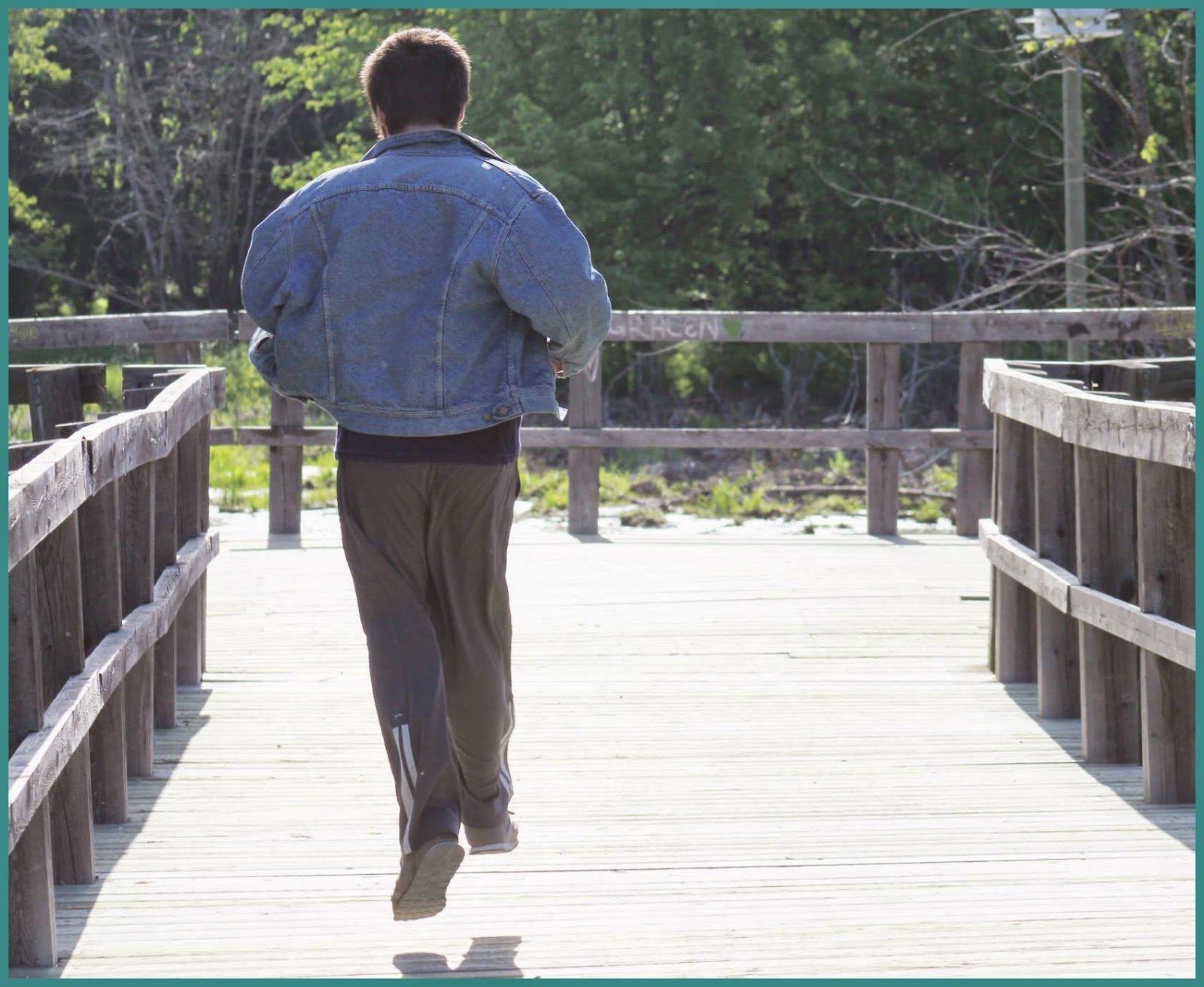
A day can make a big difference in my son's world of severe autism disorder, intellectual disability and epileptic seizures. Yesterday as I pulled up to his school to pick him up at the end of the day I could hear his voice inside the school and I knew things were not going well. He had been undergoing a very serious meltdown and I won't go into all the details. Today though, 24 hours later I pulled up to the same location and before I turned the corner I could see him at the basketball net. I stopped pulled my camera out and completed the turn. Conor was having fun outdoors, shooting the basketball and he was happy. And Dad is very happy as I type these words and post these pictures of my happy Conor.
Showing posts with label intellectual disability. Show all posts
Friday, June 05, 2015
Tuesday, June 02, 2015
Autism, Intellectual Disability and Seizures, When Together, Constitute ONE DISORDER
In the picture above, taken 3 years ago my son erupted in sudden self injurious behavior smashing himself violently in the head after he had been on the swing at his old grade school, Nashwaaksis Memorial School; a split second after he had been very smiling and happy. I captured the image because it was a series of pictures taken with an "athletic" setting on my Canon camera to capture his until then joyful, smiling activity on the swing. In the commentary below from my January 19, 2008 commentary on Facing Autism in New Brunswick, "Autism Disorder and Impulse Control" I commented on a variation of such sudden violent activity when moments of joyful interaction turn harmful for Mom or Dad. Seven years after I speculated that my son's sudden impulses of violence towards himself or us were a reflection of seizure activities in his brain he has suffered a number of obvious tonic-clonic or gran mal seizures and he has been on a variety of seizure medications for almost 3 years.
I also know now that my belief in an Autism Knowledge Revolution was premature ... very, very premature. Despite much higher rates of epileptic seizures among persons with autism than among the general population .... as much as 30% compared to as little as 1% based on sources I have read ... it still does not seemed to have dawned on the autism research community that "co-morbidity: which seems to imply "coincidence" to this humble layperson are aspects of one neurological disorder not two co-morbid disorders at least for those who have features of both and that the presence both of these alleged "co-morbidities" is even greater among those who, like my son, also suffer from intellectual disability.
This humble layperson strongly recommends and begs the "autism research community" to re-focus its priorities and shift away from trivial, puerile aspects of autism, stop calling it a condition, stop equating autistic with savant and start focusing more on finding causes, treatments and yes, cures, for the debilitating trifecta of autism, intellectual disability and epilepsy which this humble Dad would like to inform you is in fact ONE DISORDER not THREE separate co-morbid conditions. I realize you can snicker and snort as professionals in the field and dismiss my comments but if you do so you are dismissing the 24/7 observations, over a period of 19+ years of a person who loves the subject being studied and so pays close attention ... a parent. Get serious about autism, intellectual disability and epilepsy or quit pretending you care.
Autism News and Opinion
SATURDAY, JANUARY 19, 2008
Autism Disorder and Impulse Control
There are many puzzling features of autism. Hence the puzzle symbol for autism. Some of the mystery is being removed as our daily news brings us reports of new studies mapping the genetic and biological basis of autism. But even those areas are just beginning to be explored and while we are living through an Autism Knowledge Revolution there is much which remains unexplained and mysterious. Impulse control is one of those unexplained mysteries.
Even 10 years after Conor was diagnosed with Autism Disorder I am still startled by the impulses which suddenly seize Conor, and I mean seize literally, turning gentle acts of affection into potentially injurious and even dangerous acts of violence. Conor is very affectionate, tactile and observant. He likes to place his hands on either side of Dad's scruffy bearded face and study my face. But some times, suddenly, his hands dig painfully into my face. Sometimes he will grab my throat. Conor has also suddenly grabbed his mother by the hair and snapped her head and neck. Walking arm in arm downtown Fredericton, as we often do on weekends, he will occasionally grab by arm forcefully.
We have never thought for even a second that Conor intentionally tries to injure. I do not believe he has control during these instances. An impulse appears to overcome him suddenly and often is not preceded by any apparent triggering environmental stimuli. Conor simply appears physically seized by a powerful impulse.
I do not know what causes these seizure like impulses. I realize that my description of these events may sound like they are epileptic seizures and Conor's pediatrician may well confirm that lay person's guess. I know that there are many articles commenting on comorbidity of autism and epilepsy. Putting a new name on them may well be helpful in leading to other literature and understanding but I suspect that the behavior itself when it happens will always be startling and mysterious.
Sunday, April 05, 2015
Severe Autism With Intellectual Disability And Epilepsy Can Be Tough But It's Still a Wonderful World
My Son Conor Wore The Blue on World Autism Awareness Day
I understand some of the criticisms of the day and of thinking that
wearing a color in itself creates autism awareness but as long as people
raise real autism awareness of the challenges of autism disorders and the related
conditions from which so many suffer including self injurious behavior, intellectual disability, epilepsy
and depression; that's all I look for and it is what I try to do 365 days a year.
Caring for, advocating for, fighting for my son with severe autism disorder, intellectual disability, tonic clonic seizures and life threatening adverse reactions to an ever changing seizure meds scheme will not bring me down. My son is worth every minute of my time and effort and at the end of each day I believe its a wonderful world and will do my best tomorrow to help my Conor enjoy it as much as I do.
Saturday, February 07, 2015
Autism Disorders and the 1st International Epilepsy Day, February 9, 2015
Monday, February 9, 2015 is the first International Epilepsy Day, a joint initiative created by the International Bureau for Epilepsy (IBE) and the International League Against Epilepsy (ILAE) scheduled to occur annually hereafter on the second Monday in February to promote epilepsy awareness around the world. Epileptic seizures are much more common among persons with an autism spectrum disorder than among the general population and parents of children with a newly diagnosed autism disorder should discuss the possibility and care implications of autism with their medical advisers. The autism and epilepsy connection is discussed on the Autism Speaks official blog site in the commentary How Common Are Seizures Among People With Autism And What Can Help:
"Seizures are indeed more common in both children and adults on the autism spectrum. Independently, autism and epilepsy (seizures of unknown cause), each occur in around 1 percent of the general population. But epilepsy rates among those with autism spectrum disorders (ASD), range from 20 to 40 percent, with the highest rates among those most severely impaired by autism. Conversely, about 5 percent of children who develop epilepsy in childhood go on to develop autism."
Autism Speaks also has a more detailed information page about autism and epilepsy that provides some answers to questions this father of a son with autism, intellectual disability and epilepsy found helpful: Autism and Epilepsy Resources.
The World Health Organization provides a helpful over view of epilepsy in the graphic below WHAT IS epilepsy? and does not shy away from pointing out one of the more severe epilepsy impacts, specifically that persons with epilepsy have a 3-6 TIMES greater risk of premature death. Given the serious potential impact of epilepsy and the much greater risk of epilepsy among persons with autism disorders it is critically important that persons with autism and parents of children with autism are aware of the autism epilepsy connection.
Saturday, December 27, 2014
Autism Society Canada Misrepresents Autism On Its Web Site Makeover By Hiding The Many with Autism AND Intellectual Disability
The Autism Society Canada web site was down briefly and I had hoped, notwithstanding past experience, that once it was back up the ASC would have started presenting an accurate picture of autism disorders to the Canadian public and families with autism disorders. My hopes, faint as they might have been, were dashed again. ASC, on its "new" web site face, once again misrepresents autism disorders by hiding some harsher facts, in particular the fact that as much as 50% (World Health Organization) of persons with autism disorders also have an intellectual disability:
"Q: Do persons with autism always suffer from intellectual disability?
A: The level of intellectual functioning is extremely variable in persons with ASD, ranging from profound impairment to superior non-verbal cognitive skills. It is estimated that around 50% of persons with ASD also suffer from an intellectual disability."(World Health Organization, September 2013)
Canadian families of children with autism disorders should be aware of the very high % of persons with autism disorders who also suffer from an intellectual disability. Those families should also be aware that many with autism and intellectual disability have very high rates of seizures and increased mortality.
Statements below from a more reliable source that takes autism disorders more seriously than the Autism Society Canada appears to: the American Academy of Pediatrics in a statement concerning Management of Children with Autism Spectrum Disorders published in 2007 and reaffirmed in 2010 and 2014.
American Academy of Pediatrics
Management of Children with Autism Spectrum Disorders, (2007)
Statement of reaffirmation 134 (5): e1520. (2014)
Comorbid severe global developmental delay/mental retardation and motor deficits
are associated with a high prevalence of seizures (42%)
Health care utilization and costs are substantially higher for children and adolescents with ASDs compared with children without ASDs, and available data suggest that mortality is increased as well. The increased mortality in ASDs is thought to be largely, but not completely, accounted for by the increased mortality associated with mental retardation and epilepsy.
Tuesday, December 23, 2014
Self Injurious Behavior, Seizures, Reduced Life Expectancy Are My Son's Severe Autism Disorder Challenges Not Concern Over The Expression #MSSNG
Self Injurious Behavior, a common occurrence in some with severe autism, can appear in a flash and transform a happy, fun filled moment into pain and suffering as it does above with my son Conor. The very high functioning autistics who do not share my son's disorder and challenges have no right to dictate what autism research will or will not be conducted, research that may someday help my son and others with severe autism disorders.
The world has recently seen the very talented, successful Jerry Seinfeld "identify" with autism before retracting his statements. More recently John Elder Robinson and other high functioning autistics got very upset over the use of the expression #MSSNG coined for the Autism Speaks research campaign and demanded that autistics must dictate the course of autism research. My son Conor with his severe autism disorder, intellectual disability and epilepsy has no understanding of this high functioning autism outrage. His problems are more in the nature of the serious self injury engaged in often as set out in the pictures above.
Today, with the holidays disrupting his routines, Conor engaged in one of his most serious meltdowns in some time hurting himself and the walls and when Dad intervened I felt some of it too. I honestly can't relate to the concern that #MSSNG is somehow an insult and travesty to those with autism disorders not when I am trying to restrain my powerful, 210 lb 6'1" son without hurting him and at the same time protect myself in the middle of a serious meltdown.
Statements below from the AAP.
American Academy of Pediatrics
Management of Children with Autism Spectrum Disorders, (2007)
Statement of reaffirmation 134 (5): e1520. (2014)
Comorbid severe global developmental delay/mental retardation and motor deficits
are associated with a high prevalence of seizures (42%)
Health care utilization and costs are substantially higher for children and adolescents with ASDs compared with children without ASDs, and available data suggest that mortality is increased as well. The increased mortality in ASDs is thought to be largely, but not completely, accounted for by the increased mortality associated with mental retardation and epilepsy.
Wednesday, December 03, 2014
So Called Autism Brain Study Excluded 50% of the Autism Spectrum, Those With Intellectual Disability
Credit (or Discredit) Carnegie Mellon University
What's Wrong With This Picture? It Omits 50% of The Autism Spectrum, Those with Intellectual Disability
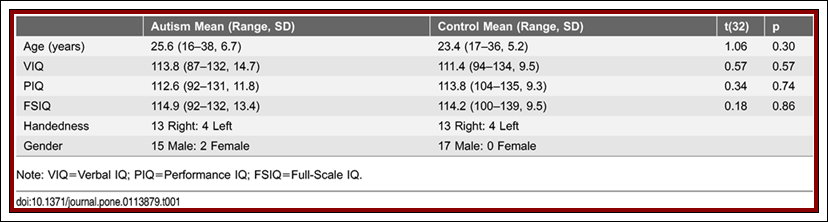
The picture above, credit (or discredit) to Carnegie Mellon University, is from a Science Daily review article Brain representations of social thoughts accurately predict autism diagnosis which reviews an MRI study published in PLOS ONE, December 2014, Identifying Autism from Neural Representations of Social Interactions: Neurocognitive Markers of Autism, purporting to demonstrate different brain responses to social interaction stimuli in what are described as "autism" brains as compared to control brains of persons without autism. The review article states that it is based on materials supplied by Carnegie Mellon U the institution that conducted the study in which fMRI imaging was used to compare brain reactions of 17 persons with high functioning autism with the brain reactions of 16 control subjects with similar IQ levels:
As the father of an almost 19 year old low functioning son with severe autism, profound intellectual disability ... and epilepsy I understand why it may not have been feasible to include intellectually disabled autistic adults in an fMRI study. What the study authors and the journal articles reviewing the study could have done would have been to describe the results as applying only to those with high functioning autism. After all they expressly and intentionally excluded the 50% of the autism spectrum with intellectually disability (WHO, September 2013) and should have claimed that their results applied only to high functioning autism. Arguably they could have talked about a "high functioning autism brain" but they certainly can not assume their results apply to the low functioning half of the autism world.
The study authors should have been more accurate .... and honest ... in what they tell the world about their high functioning autism study. They could have started with the title of their study and called it:
"Identifying HIGH FUNCTIONING Autism from Neural Representations of Social Interactions: Neurocognitive Markers of HIGH FUNCTIONING Autism".
Sunday, November 23, 2014
Joy of Conor 2014
Conor himself enjoys life and brings us great joy and with his mother I will always try to return that joy. I will fight those who misrepresent the disorder, and the at times very harsh symptoms, from which he suffers, I will NOT back down and .... I will enjoy every bit of the great joy he brings us every day.
Here are some 2014 snap shots of the joy we call Conor.
Thursday, November 20, 2014
DSM5 ASD Criterion D: No Clinically Signifcant Impairment in Current Functioning = No Autism
The DSM5 is certainly open to criticism; particularly in its combining of the pervasive developmental disorders into one Autism Spectrum Disorder ignoring the very large numbers of persons with DSM-IV Autistic Disorder who also suffer from Intellectual Disability. One point which did make sense in the Autism Spectrum Disorder diagnostic criteria though is the one that is routinely ignored by those who glorify autism disorders ... Criterion D (underlining added):
Diagnostic Criteria for 299.00 Autism Spectrum Disorder
D.Symptoms cause clinically significant impairment in social, occupational, or other important areas of current functioning.
The subscribers to the irrational view that autism disorder, a mental health disorder diagnosis, is not really a disorder after all are able to maintain their beliefs by ignoring reality particularly the realities faced by those with severe autism disorders. They routinely claim every historical genius or artistic talent as an "autistic". They argue for the purity of the autism spectrumm "condition" by pretending there intellectual disability is just a coincidence and has nothing to do with autism. In that regard of course they are on the same page as the professionals who separate ID and ASD and call them comorbid conditions. They fall off that page though and put distance between themselves and the autism health care professionals by ignoring the plain wording of the DSM5 ASD Criterion D.
Unfortunately a Jerry Seinfeld has only to speak and his words are heard and debated around the world. JS "migh be autistic" and that is good enough for those who want to put distance between themselves, or their family members, and the intellectually disabled and impaired in their everyday life activities at the severe end of the spectrum were autism is exactly what it has always been ... a disorder.
Very high functioning persons claiming to be autistic must be able to demonstrate, as stated in DSM5 299.00 Autism Spectrum Disorder that the DSM5 autism symptoms cause .... . clinically significant impairment in current functioning. Otherwise they should not receive an ASD Autism Spectrum Disorder diagnosis and should not claim to be autistic.
Wednesday, June 11, 2014
JAMA Study: $2.4 Milliion (US) Lifetime Cost of Care for Person with Autism and Intellectual Disability
JAMA study points out US lifetime costs of care for a person with autism disorder and intellectual disability will approximate $2.4 million US (ASD W/Out ID #1.4 million). For children special education and parental productivity loss were largest cost components. For adults residential care, supportive living accommodation individual productivity loss and much higher productivity costs contributed to the highest costs.
Costs of Autism Spectrum Disorders in the United Kingdom and the United States
Results The cost of supporting an individual with an ASD and intellectual disability during his or her lifespan was $2.4 million in the United States and £1.5 million (US $2.2 million) in the United Kingdom. The cost of supporting an individual with an ASD without intellectual disability was $1.4 million in the United States and £0.92 million (US $1.4 million) in the United Kingdom. The largest cost components for children were special education services and parental productivity loss. During adulthood, residential care or supportive living accommodation and individual productivity loss contributed the highest costs. Medical costs were much higher for adults than for children.
Conclusions and Relevance The substantial direct and indirect economic effect of ASDs emphasizes the need to continue to search for effective interventions that make best use of scarce societal resources. The distribution of economic effect across many different service systems raises questions about coordination of services and sectors. The enormous effect on families also warrants policy attention.
Monday, May 26, 2014
Conor's 3rd Tonic Clonic (Grand Mal) Seizure
Two and a half hours ago Conor suffered his 3rd Tonic Clonic or Grand Mal seizure. (A Year ago he also suffered an episode of rhabdomyolisis, a serious adverse reaction to his previous seizure medication). On the previous 2 seizures Conor was in a room by himself when they started, this time he was with me in the living room after we had returned, together with his mother, from a trip to the Superstore. I sat down in a chair in the living room and Conor came in and fell backwards like a tree falling in the woods. Fortunately he fell into a soft, well cushioned chair and did not hit his head on anything hard or sharp. I thought at first he was joking but then I saw that the cheese which he had sought out at the Superstore had been flung across the room. I noticed then things were not right.
His mom was home and together we moved him to the floor on his side with a soft pillow under his head. When he spewed up fluid it went on to the pillow and a rolled up blanket we had also put under his head. His body went into convulsions and he was unconscious for a period of 3-4 minutes. We called 911 and they sent the emergency response team (thank you again 911 and EMT responders) and they measured his body temperature, took his blood pressure and heart beat and observed him for a period of time before agreeing that he could stay home wihout an emergency room visit this time. They gave us signs of things to look for and be concerned about. Conor has recovered more quickly this time than on previous occasions and he has been bouncing off the floor as always (and playing on Dad's computer).
Seizures are more common in persons with autism than in the general population and even more common if the autistic person, like my son, also suffers from an intellectual disability. This is stuff you don't hear often from those persons, high functioning autistics or their family members, who fight against the rights of people like my son to have a cure, who fight to prevent research into causes and treatments of autism and other neurological disorders including seizure disorders.
To those people I say you have no right to fight against cure oriented research. If you are fortunate enough that your alleged autism is not a disorder from which you suffer, enjoy your business successes and your literary and lecturing careers and stop oppressing my son and others like him who actually suffer from autism disorders and the other cognitive, neurological and other disorders that so often accompany them.
I am tired of listening to your complaining while my son suffers.
For those who suffer from autism and seizures or those who care for them the US NIH, through its MedlinePlus service provides the following information about tonic clonic seizures:
Generalized tonic-clonic seizure
Email this page to a friendShare on facebookShare on twitterBookmark & SharePrinter-friendly version
Causes
Generalized tonic-clonic seizures may occur in people of any age. They can occur once (single episode). Or they can occur as part of a repeated, chronic illness (epilepsy). Some seizures are due to psychological problems (psychogenic).
Symptoms
Many persons with generalized tonic-clonic seizures have vision, taste, smell, or sensory changes, hallucinations, or dizziness before the seizure. This is called an aura.
The seizures usually result in rigid muscles. This is followed by violent muscle contractions andloss of alertness (consciousness). Other symptoms that occur during the seizure may include:
- Biting the cheek or tongue
- Clenched teeth or jaw
- Loss of urine or stool control (incontinence)
- Stopped breathing or difficulty breathing
- Blue skin color
After the seizure, the person may have:
- Confusion
- Drowsiness or sleepiness that lasts for 1 hour or longer
- Loss of memory (amnesia) about the seizure episode
- Headache
- Weakness of one side of the body for a few minutes to a few hours following seizure (called Todd paralysis)
Exams and Tests
The doctor will perform a physical exam. This will include a detailed look at the brain and nervous system.
An EEG (electroencephalogram) will be done to check the electrical activity in the brain. People with seizures often have abnormal electrical activity seen on this test. In some cases, the test shows the area in the brain where the seizures start. The brain may appear normal after a seizure or between seizures.
Blood tests may also be ordered to check for other health problems that may be causing the seizures.
Treatment
Treatment for tonic-clonic seizures includes medications, changes in lifestyle for adults andchildren, such as activity and diet, and sometimes surgery. Your doctor can tell you more about these options.
Alternative Names
Seizure - tonic-clonic; Seizure - grand mal; Grand mal seizure; Seizure - generalized
Wednesday, May 21, 2014
For CNN and Francesca Happé Adult Autism Is A Bouquet of Pretty Pink Flowers
Update: CNN refused, on its comment section, my brief criticism of its exclusion from its
"autism is growing up" presentation of severe, low functioning autism.
CNN which loves to portray high functioning autism and Aspergers as autism has done it again with a feature called "Autism Is Growing Up" which ... of course ... features only adult persons with High Functioning Autism and Aspergers. In fact CNN and its accomplice Francesca Happé present 7 full stories of persons with high functioning autism and Aspergers. In addition an 8th adult with Aspergers, Canadian Zoey Roberts, is featured on the opening page of this creative portrayal of Aspergers as autism telling people that "autism is not a tragedy" which of course it isn't if you happen to exist on the very high functioning end of the spectrum, if you are not one of the 50% of persons with autism disorders estimated by the World Health Organization to also suffer from intellectual disability, or if you are not one of the many who suffer from seizures, self injurious behavior, wandering into traffic or ill physical health that many with severe autism suffer from.
CNN has done this wonders of autism stuff before and it is not surprise that it is at it again. In order to lend the presentation credibility though it has brought in a collaborator Francesca Happé whose credentials are well known to anyone familiar with autism research to any extent and which are presented by CNN:
"Editor's note: Francesca Happé is president of the International Society for Autism Research, a professor of cognitive neuroscience, and director of the MRC Social, Genetic and Developmental Psychiatry Centre at the Institute of Psychiatry at King's College London. Opinions expressed in this article are solely those of the author."
For Francesca Happé and CNN autism is no longer just about autistic children it is also about adults ... but only adults with Aspergers and Very High Functioning Autism.
For Happé and CNN the severely autistic who do not live independent lives or have high IQ's or special talents, who live in the care of others, including in institutional care, remain invisible, they remain the unwashed, the unwanted, about whom the public must not know.
Monday, May 05, 2014
WOW! Major Autism Study Equating Environmental and Genetic Risk Factors Also Included Subjects with Classic Autistic Disorder!!!
The Familial Risk of Autism is the large study making waves for demonstrating that environmental considerations are roughly equivalent to genetic factors in autism causation. Hopefully funding dollars will begin to flow toward the environmental side of the equation as many have urged for so long. What is not generally mentioned in the media echoes of the study though is that it included many subjects with classic Autistic Disorder as stated in the study abstract in the JAMA:
"Results In the sample, 14 516 children were diagnosed with ASD, of whom 5689 had autistic disorder."
Put another way subjects were not excluded from the study because they were not high functioning, Asperger's subjects. For this fact alone the study is ground breaking, hopefully shattering the dominant trend of recent years of creating a false "pure autism" by excluding the original, classic autistics, the "vast majority" of whom suffered from intellectual disability, (Yes Emily Willingham and Jon Brock, I said "suffered from").
The "it's gotta be genetic" crowd will still see what they want to see. They will see the genetic half of the autism causation equation and will ignore the environmental half, pretend it doesn't exist as they have done for so long. Likewise the inclusion of a proportionate number of subjects with classic autistic disorder, if discussed by the autism is beautiful crowd at the Thinking Persons Guide to Autism, will be mentioned as a reason to criticize the study. Still, the study does offer more hope of breakthroughs in the rigid mindsets who forbid honest discussion of autism realities be they environmental causation or the harsh realities associated with classic, low functioning autism DISORDERS from which so many who carry the Autistic Disorder diagnosis actually SUFFER.
Monday, March 31, 2014
IDEA Disorder, Intellectual Disability-Epilepsy-Autism Disorder, On World Autism Awareness Day
Conor a year ago at the local ICU where he stayed for 6 days while the ICU professionals worked to save his life and return him to us in good health after a serious adverse reaction to his seizure medications. Other parents of children with severe autism disorders and intellectual disabilities should be made aware that their children are at very substantial risk of seizure activity particularly with the onset of adolescence. We didn't know these well established relationships with any certainty until our son started experiencing them.
April 2 will be another World Autism Awareness Day in which the harsh realities that many with autism disorders live with will once again be hidden from public sight. Everyone will wear their blue shirts (including Conor and me) and many will put blue lights in front of their homes, businesses and legislatures. The Autism Feel Good crowd will tell everyone that autism is a difference not a disability and some will tell the world that historical geniuses in every field in the sciences, math, literature, art from Van Gogh to Einstein were probably autistic.
A misconception underlying much of the WAAD false awareness is found in the DSM assertion that there is one autism disorder with only 2 diagnostic criteria: Social communication/social interaction deficits and Restricted, repetitive patterns of behavior, interests, or activities. The DSM does also reference various "comorbid" conditions sometimes found in connection with autism including several from which my now 18 year old son has suffered along with his severe autism disorder: wandering, self injurious behavior, reactive aggression, absence seizures and tonic clonic seizures. The DSM categorization of disorders, as none other than NIMH Director Dr Tom Insel has pointed out, have no solid evidence basis for its conceptualizations of disorders. TheyDSM categories lack validity. So said Dr Tom Insel before he repeated it again (sort of) but stated that he only meant it for research not clinical purposes.
One of the areas in which the DSM5 erred egregiously (in the humble opinion of this lowly father of an 18 year old son with severe autism disorder, intellectual disability and epileptic seizures) was to combine the 3 varied and distinctively different disorders of Autistic Disorder, PDD-NOS and Aspergers into one "spectrum" disorder. Renowned autism experts , including such authorities as Lynn Waterhouse, in Rethinking Autism: Variation and Complexity, have started to explicitly describe "autism" as a varied, complex and heterogenous group of disorders or symptoms. Dr Waterhouse has again written on the subject of autism heterogeneity in a paper co-authored with Christopher Gillberg, (2014) Why Autism Must Be Taken Apart, the abstract of which states:
"Abstract
Although accumulated evidence
has demonstrated that autism is found with many varied brain dysfunctions,
researchers have tried to find a single brain dysfunction that would provide
neurobiological validity for autism. However, unitary models of autism brain
dysfunction have not adequately addressed conflicting evidence, and efforts to
find a single unifying brain dysfunction have led the field away from research
to explore individual variation and micro-subgroups. Autism must be taken apart
in order to find neurobiological treatment targets. Three research changes are
needed. The belief that there is a single defining autism spectrum disorder
brain dysfunction must be relinquished. The noise caused by the thorny
brain-symptom inference problem must be reduced. Researchers must explore
individual variation in brain measures within autism.”
I am not an autism expert. I am the father, as I have stated, of an 18 year old son with autism, intellectual disability and seizure activities becoming most pronounced during his teen years when absence seizures became frequent and eventually became identified with grand mal or tonic clonic seizures. As I have confessed, this pseudo tough guy was scared stiff to hear the sounds emitted by my son's body during the onset of his first tonic clonic seizure, to find him laying on his side his body jerking violently with drool oozing out of the cornier of his mouth. He suffered two such seizures and a life threatening adverse reaction to his first seizure medication (Rhabdomyolysis) which landed him in the ICU (Intensive Care Unit) of the local hospital where the ICU team saved his life and gave him back to us.
My son's condition is recognized in many autism study statistics. The World Health Organization, 2013, estimates that approximately 50% of persons with autism disorders also have an intellectual disability. To me that large a number is not a "coincidence" or a "comorbidity" whatever that term is meant to signify in the real world. To me my son's autism and intellectual disability are aspects of one brain disorder.
Given those two aspects of my son's brain disorder it should not have come as a surprise to me that he might be at very substantial risk of suffering seizures, particularly with the onset of his teen years. The scientific literature indicates that persons with autism spectrum disorders have a much higher rate of epilepsy than the general population; as high as 30%. The literature also indicates that, among persons with autism. the rate of those who also have epileptic seizures is substantially higher among those with .... intellectual disability and the seizures often become apparent during the teen years ... exactly what happened to my son with severe autism and intellectual disability.
My son's autism is not the autism of Temple Grandin, Michelle Dawson or Ari Ne'eman. He was diagnosed early 16 years ago at age 2 years because of the severity of his diagnostic symptoms and the tenaciousness of his mother who pressed our good doctors the hardest for a medical understanding of our son's condition.
Still with the autism and ID we did not anticipate the onset of seizure activities. This humble father recommends strongly that on World Autism Awareness Day, Autism Speaks and other autism organizations should be honest with people around the world and tell them that where autism is present in a child there is a substantial risk of epileptic seizures.
I also humbly recommend that the great autism thinkers of our day should consider looking at and studying instances of combined Intellectual Disability, Autism and Epilepsy as one group of conditions that might have a common origin in the brain as I believe to be true based on living with my son for 18 years.
IDEA Disorder, Intellectual Disability-Epilepsy-Autism Disorder. By all means reject it if you believe based on study and evidence that it is unsound but don't reject it solely because a lowly parent makes the suggestion. I have 18 years of 24/7 experience living with these conditions in my son. Statistics and professional expertise obviously count and in our society are determinative but the direct observation and experience of parents should not be ignored or ridiculed as it is all too often.
Subscribe to:
Posts (Atom)