Friday, September 20, 2013

October is Autism Awareness Month in Canada, Canadian Government Still Doing Nothing Eh Mike Lake?

October is Autism Awareness Month in Canada.  You would never know it based on the contribution made by Canada's federal government which has taken a strict, division of constitutional jurisdiction, approach to autism disorders in Canada.  In other words it has said that addressing Canada's growing National Autism Crisis is not a concern of the federal government. 


Harper Conservative MP Mike Lake, who I have met in person and spoken with by phone, and who seems like a genuinely nice guy, speaks lovingly of his autistic son in Parliament with a few words recognizing  World Autism Awareness Day on April 2nd and that's pretty well it.  On Wednesday, February 21, 2007 Mr. Lake himself voted against Bill C-304, the private member's motion brought by Charlottetown Liberal MP Shawn Murphy,  an Act that would have amended the Canada Health Act and provided for the development of a national strategy for the treatment of autism.  

If non Canadians want an idea of how little is done by our federal government to help Canadians and their families suffering from autism disorders they need only refer to the October 2011 statement of former federal Minister of Health Leona Aglukkaq:

Autism Awareness Month

October, 2011

Autistic disorders are heart-breaking conditions because they can cause developmental disabilities in very young children that may affect them for the rest of their lives. These disorders are typically diagnosed in children before they reach their fifth birthday. 

Autistic disorders have a broad range of symptoms. They can be mild to severe and tend to result in problems with social interaction, communication and behaviour. In Canada, it is estimated that Autism Spectrum Disorders (ASD) affect as many as 1 in every 150 children, as well as the lives of their families, friends and caregivers.

Important advances have been made in the way we care for and educate Canadians living with ASDs. Yet more research is needed to learn what causes these disorders and to help develop better treatments and interventions so that those afflicted with ASDs can live more normal lives.

As Minister of Health, I am pleased that the Government of Canada, in cooperation with our colleagues in the provinces and territories, is setting up a national surveillance system to establish reliable data to:  
  • determine how common ASDs are and how rates differ across Canada;
  • describe the population of Canadians living with ASDs; and
  • understand changes in the number of children being diagnosed over time.
This information will help in developing programs to serve the needs of Canadians living with ASDs and their families and caregivers. In addition, the Government has invested approximately $40 million on autism-related research since 2000.

In closing, I want to congratulate the Canadian Autism Spectrum Disorders Alliance and Autism Speaks Canada for their dedicated work in this area.


Leona Aglukkaq

Minister of Health

Government of Canada

Prevalence data, clearly based on existing US information of that time,  is about the extent of the federal government's contribution to autism awareness in Canada. Interestingly neither former Minister Aglukkaq, nor autism dad Mike Lake, mention the parents who advocated with determination in provinces across Canada for early evidence based intervention for autistic children.  Nor do they mention federal political figures who have in the past made great efforts to bring a real National Autism Strategy to Canada including Fredericton New Brunswick's recently deceased Andy Scott, Peter Stoffer of Nova Scotia, Shawn Murphy of PEI, and Senator Jim Munson.

Canada has a national health care plan which does provide basic health care for Canadians.  It is not perfect. Anyone can legitimately cite personal grievances with the system but it is a system that does not exist in the neighboring US.  For that national health care plan developed a half century ago this Canadian father is very thankful.  It would not exist if the  Harper government's constitutional excuses had prevailed during that era. It does  not exist today for the purpose of addressing the  autism specific needs of Canadians suffering from autism spectrum disorders.

During Autism Awareness Month the Harper government, and presumably Mike Lake, will make a statement or two about autism and earn some political brownie points.  If past practice holds firm they will announce no significant federal government efforts to help address Canada's National Autism Crisis.  

Sunday, September 15, 2013

Wave of Attacks on Parents of Children with Severe Autism Disorders Is Reprehensible and Based in Pure Unadulterated Ignorance

I have never read or heard any parent of a severely autistic child excuse the murder of severely autistic children by a parent.  The people who make this allegation about parents are those who object to parents speaking honestly about their children's severe autism disorders.  They also object to parents of severe autistic children describing their parenting challenges and falsely allege that such descriptions depict autistic children as monsters yet it is they who use who use the word "monster" in autism discussions. They  do so in an attempt to suppress the truth about severe autism challenges by falsely alleging that honest descriptions of severe autism  demonize autistic children.

Those who talk about "autism monsters" are the same New York and Washington press corps media darlings who never met a camera or a microphone they could turn down .... unlike the severely autistic children of many parents.  They are the same phony autism self advocates, and parents of very high functioning autistic children,  who make false allegations about parents of severely autistic children calling autistic people "monsters" when in point of fact they are the only ones using that term, a term they use when they cry because others who actually know what they are talking about describe honestly the harsher realities of severe autism disorders.  

Those who are currently attacking parents of severely autistic children are the same bunch of pompous pontificators who tell the world that autism is a joy or a blessing or a culture not ....  heaven forbid .... a disorder or group of disorders.  In their silly, ill informed minds it is wrong to speak about autism as a mental health disorder.  It is the same silly bunch that forget  that they, or their children, actually have a medical disorder diagnosis. These same ignorant self appointed judges even object to terms like "severe" autism as though the severe autism of my son even remotely resembles the "autism" of the corporate trustees in the alleged Autism "Self" Advocacy Network corporation. 

The fact is that severe autism can be difficult, very difficult to deal with day in, day out, over more than 20 years.  It can involve self injurious behavior. It can involve reactive violence.  In almost all cases it involves severely autistic and intellectually disabled people committing violent acts without knowing what they are doing.  It also involve people most of whom will never achieve gainful employment and people who will live, if they are lucky in the care of others. These are facts which are largely unknown in any real sense to the reprehensible attack dogs who feel free to use their corporate sponsored pulpits to attack parents dealing with much more serious challenges, and as they and their children grow older, dealing with the fears of  what will happen to their children after they die.

The truth is that most parents of severely autistic children are reluctant to speak about the harsh realities of severe autism in their home. They have to deal with those realities themselves while the world at large is misled about autism realities. 

Few people today are aware that some autistic children do injure their parents on occasion.  I believe it is fairly described. as CNN's Dr. Sanjay Gupta did, as "reactive", non intentional aggression.  A few years ago, as my son was hitting himself in the head repeatedly at 2 in the morning, I tried to stop him.  I tried various diversionary verbal games that had worked in the past to no avail. Finally I reached for his arms in an attempt to stop him from hurting himself further.  His much younger reflexes moved quickly and he bit me on the bicep with enough force that he pierced not just the skin of my arm but the muscle itself resulting in a calcium buildup that required treatment.  He was not trying, in any sense, to harm me.  My son is a tremendous joy as the pictures on the sidebars of this blog and regularly shown on this blog attest but when he has a meltdown he can harm himself and is very challenging to deal with and these are realities unknown to the "autism as culture" pontificators adored by corporate interests.

Four years ago Gertrude Steuernagel, a university professor, was beaten to death in her own home by her 18 year old severely autistic son who also forcefully resisted and inflicted some harm on police officers who arrested him. That case is not representative of most severe autism realities but some parents are hurt to lesser extents by their severely autistic children who mean them no harm but are having severe meltdowns.  The parents, by and large suffer in silence, for fear there will be consequences for their children or themselves and with the certain knowledge that the presumed knowledgeable high functioning self advocates and parents of HFA persons will condemn them to the public.

What pushes  many fears for parents though is the knowledge that few resources suitable for persons with severe autism disorders, including decent, modern residential care facilities exist for their children.  Advocating for such resources, as I have found out personally, is made more difficult by the feel good  rhetoric of the times.  Waves of feel good cliches like "community", "inclusion", "ableism" etc. have taken the place of sound policy and maintenance of appropriate ranges of services for those most severely affected by conditions like severe autism disorders.  

Ignorance is not bliss when it misinforms the world about serious, severe autism disorder realities. 

Tuesday, September 10, 2013

#autism gene AUTS2 tied to dyslexia ADHD epilepsy ID motor delay microcephaly MORE SYMPTOMS should be part of ASD DX

"Dr. Lynn Waterhouse @autismideasfail 6 Sep http://bit.ly/17WbZVi   #autism gene AUTS2 tied to dyslexia ADHD epilepsy ID motor delay microcephaly MORE SYMPTOMS should be part of ASD DX"

The above Tweet by Dr. Lynn Waterhouse, author of Rethinking Autism: Variation and Complexity who also worked with Dr. Lorna Wing on the APA DSM-III-R diagnostic criteria for autism,  should be read by any existing DSM5 committee members charged with developing modifications to DSM-5 diagnostic criteria. The DSM-5 has doubled down on the failed approach of simplifying autism contrary to solid evidence and research. 

Dr  Waterhouse's tweet comment on the study Function and Regulation of AUTS2, a Gene Implicated in Autism and Human Evolution suggests to this humble father of a son who suffers from  severe Autistic Disorder (DSM-IV), profound Intellectual Disability and epileptic seizures, including two recent Grand Mal seizures, suggests as does her thorough, well researched Rethinking Autism text that the DSM-5 is taking autism disorders down the wrong path, a path that will cause serious harm to autistic children and adults and to the research necessary to develop successful evidence based interventions for autism symptoms and disorders.

Monday, September 09, 2013

What Happens To Our Children When We Die? Maine Man Killed Himself and Adult Autistic Son in 2010

"Ginger Taylor  commented on the pressures on families with autism and on the greatest fear of many parents of autistic children: "That is the big question -- what happens to our child when we die. .... We understand their needs better than anyone else. It really breaks my heart hearing what happened to this family. It shouldn't be like that.""

The Portland Press Herald , April 28, 2010

The recent murder and attempted murder/suicide cases involving mothers and their children with severe autism disorders are not the first such tragedies to occur.  Unfortunately the same patterns are unfolding ... the refusal to seriously address the need for decent, humane residential care and treatment facilities for adults with severe autism disorders continues,  the attempts by the TPGA and other ND groups like the ASAN corporation to suppress any discussion of the harsh realities of severe autism disorders and the effects on those who suffer from them and their families are continuing.  No one is speaking about what has to be done to help the severely autistic live a decent life for fear of being subjected to irrational accusations that to do so is akin to excusing or justifying the killings.  David H. Gorski, TPGA ideologues Emily Willingham, Shannon des Roches Rosa, ASAN corporation's Ari Ne'eman and blogger Matt Carey have all been eager to attack Sharyl Atkisson and CBS for daring to portray some of the harsh realities that affected Alex Spourdalakis and his mother.

Television (Big Bang Theory, any number of Criminal Minds police investigative type shows)  and the mainstream media generally, other than CBS and  Sharyl Atkisson and a few other honest conscientious reporters, will continue to portray autism as a quirky, brilliant set of personality traits, an alternative way of thinking. The majority of autistic adults and ALL severely autistic adults will continue to live in varying levels of residential care IF they are lucky. But if no one provides humane services, help and hope to the families and persons living with severe autism challenges nothing will change and the tragedies will continue.  The TGPA and ASAN corporate crowd can pretend otherwise but we have to speak up now and provide service now to prevent further tragedies.  We know this because it has happened before and nothing was done.  Below is my blog comment from 2010 concerning the man in Gray, Maine who shot and killed himself and his 22 year old autistic son:

Dennis Hoey of  The Portland Press Herald  reports that a man in Gray, Maine shot and killed himself and his 22 year old autistic son yesterday:

"A father shot and killed his autistic son Tuesday at their home on Yarmouth Road before turning the rifle on himself, Maine State Police said. Cumberland County sheriff's deputies found the bodies of Daniel McLatchie, 44, and his son, Benjamin McLatchie, 22, in the family's driveway at 227 Yarmouth Road around 2:30 p.m.  ... State police Sgt. Chris Harriman said ...  it appeared that Daniel McLatchie was upset about what would happen to his autistic son after he and his wife died. He was a stay-at-home father, Harriman said. Daniel McLatchie's wife, Allison McLatchie, 45, was at work when the shootings happened."

Ginger Taylor the Maine author of the Adventures in Autism blog, and herself the mother of an autistic son, was interviewed and  notes the lack of services including counseling services for families with autistic children.  Ms Taylor commented on the pressures on families with autism and on the greatest fear of many parents of autistic children:

"That is the big question -- what happens to our child when we die. .... We understand their needs better than anyone else. It really breaks my heart hearing what happened to this family. It shouldn't be like that."


Many people will undoubtedly condemn Daniel McLatchie for taking his son's life.   Some will call for more services.   Few, if any, will take the real action necessary to ensure that people  with autism disorders like Benjamin McLatchie have a decent place to live when their parents are dead.    

Few, during Autism Awareness Month, and certainly not Hollywood or the main stream media giants, will look beyond the  accomplishments of a few High Functioning media celebrity "autistics" to  even acknowledge the existence of severely autistic persons living desperate lives in institutional facilities.  Even fewer will acknowledge, without mocking or attacking them, the fears of parents  obsessed with worry about what will happen to their children after they die. 

In the end, whether it is at the hands of a distraught parent, or from life in prison like, psychiatric hospitals, it is the most vulnerable, the most severely affected by autism disorders who suffer from lack of reality based autism awareness and support services.

Sunday, September 08, 2013

My Reply to Non Autism Expert Dr. David H. Gorski Also Known as ORAC


Dr. David H. Gorski, who is NOT an autism expert, somewhat ironically,
  attacks parents, professionals and journalists who disagree with
his autism disorders opinions as "quacks"


Dear Dr. David H. Gorski.

Thank you for acknowledging your total lack of autism expertise.  For the benefit of  readers unfamiliar with your "style:" I did not make the statements set out in quotation marks by you,  the learned Dr. Gorski which you altered to suit your (silly) purposes.  The statements in quotation marks are silly distortions, falsifications, of what I actually said in my blog comment on the Alex Spourdalakis case:

1. Orac
September 7, 2013
Shorter Harold (from that link):
“I’m awesome and know autism. I even have a Queen Elizabeth II Diamond Jubilee Medal to prove it! Emily Willingham doesn’t and is exploiting the Alex Spourdalakis murder for evil intent. Oh, and it will be decided by the court, not bloggers.”
That last statement is what I refer to as a “Well, duh!” statement and an attack on a straw man. No one is claiming that the Spourdalakis case won’t be decided by the courts.
Add to that in the comments here:
“You can’t comment on the Alex Spourdalakis case unless you’re an expert in autism or have personal experience with autism. If you do comment your are proclaiming yourself falsely to be such an expert.!
Seriously, though, I share Kreboizen’s curiosity about Mr. Doherty’s stance towards autism biomed.
BTW, I added a couple of fresh quotes about the Spourdalakis case to this post, one from John Stone and one from Kim Stagliano. They are doozies, so much so that I wanted to feature them somewhere. I didn’t think they deserved their own post, however.

2.     In comment #50 on your Respectful Insolence blog rant Is Sharyl Attkisson feeling the heat over her irresponsible reporting of the Alex Spourdalakis case?   I asked a simple question in respect of the trial of Alex Spourdalakis case:

Anyone here know if Dr. David H. Gorski will be appearing in the Court proceedings to give testimony as an autism disorder expert?

You moderated (changed)  my comment to change the name in my question from Dr. David H. Gorski, your actual name, to  Orac, the name  under which you attack and denigrate autism parents, professionals,  journalists and anyone else who questions your opinions.

Harold L Doherty
Canada
September 7, 2013
Anyone here know if Orac will be appearing in the Court proceedings to give testimony as an autism disorder expert

Why you ran away from this simple truth is not clear since everyone knows that the Disrespectful AND Insolent blogger Orac is actually Dr. Davd H. Gorski.

As for my blog reference to my QE II Diamond Jubilee medal it  is simply a recognition that my involvement with autism, apart from my son's own severe autism disorder has also included 15 years of successful advocacy for all children and students with autism in New Brunswick, Canada to receive evidence based  (as determined by real autism experts like those at the office of the US Surgeon General, the American Academy of Pediatrics and the Association for Science in Autism Treatment) early intervention and school instruction and support services.   At all times in any autism advocacy in which I was involved I have tried to follow such expertise and the expertise and guidance of local academics and clinicians, who unlike you Dr. Gorski, have considerable expertise in autism disorder issues.

Neither Ms. Emily Willingham nor Dr. David H. Gorski have published any references to indicate they have done any advocacy for children and students with autism disorders or that they have any academic or real life involvement with severe autism disorders and the impacts they have on parents and family members.  Instead they choose to attack parents of children with severe autism disorders about whose challenges both Willingham and Gorski are totally ignorant and ill informed.  

To address Dr. Gorski’s perpetual issue, and mode of dismissing any autism parent on any issue with which he disagrees, I support public vaccination programs and my family, including myself,  receive all vaccinations recommended by our family doctor. This fall I will receive a flu vaccine as recommended by my treating respiratory specialist after I was hospitalized this past spring with a respiratory infection coupled with an aggravated asthma attack. I follow my doctors' recommendations.   

Although I am not convinced of the role of vaccines (in causing autism in some cases) I do recognize that vaccines, like any medical treatment, can have adverse side effects.  This summer my younger son who also suffers from epileptic seizures suffered an adverse reaction to his anti-seizure medication of that time Lamictal/Lamotrogine.  ( For Dr. Gorski's benefit a high percentage of persons with autism also suffer from epileptic seizures, particularly when, like my son, they also have an intellectual disability). The conclusion that my son’s life threatening adverse reaction was caused by his medication rather than an infection was reached, after direct observation, testing and successful treatment  by the ICU team that saved his life, not by me.

Even the US Vaccine Court has recognized that vaccines can have harmful side effects some of which appear to relate to autism symptoms. (Dr. Gorski can challenge Dr. Jon Poling to a public debate  on that issue if he wishes to show off his all consuming  knowledge of science, vaccines and autism disorders.  No I won’t hold my breath waiting for a Gorski-Poling match  I don't  think Dr. Gorski has the parts for that).   What Dr. Gorski who is NOT an autism expert may not understand is that autism as a singular disorder is losing standing the community of autism experts who view autism more as a grouping of autism disorders or symptoms.  Arguably this paradigm shift will call into question some of the concessions made by the US in the Vaccine Court cases where autism like symptoms were acknowledged but not “autism”.

Dr. Gorski's venomous attacks on parents, professionals and journalists who do not share his views have not resulted, as far as I am aware, in an increase in public vaccination rates in the US. Given that fact it is difficult to see why he engages in such childish, unprofessional behavior other than one reason:  he enjoys making, he takes pleasure in making,  such attacks. There is only one person who has degraded Gorski's credibility to speak on autism issues and that person is "Dr" David H. Gorski himself. 

Friday, September 06, 2013

Alex Spourdalakis Killing Exploited by Neurodiversity Extremist Emily J. Willingham

Parents who speak honestly about the realities of autism disorders and the few journalists who dare challenge established views of autism causation are under attack .... again ... by Forbes Columnist Emily J. Willingham, formerly known, a few years before her Forbes career, as blogger Daisy May Fatty Pants.  Not content to express her legal opinions about the outcome of the criminal charges that have been brought against the accused killers of Alex Spourdalakis, his mother and a woman described by Willingham as Alex's "godmother",  Willingham launches into a tirade against parents who describe the harsher realities affecting those with severe autism disorders, parents of children with severe autism, children who do not sit as corporate trustees on organizations like the ironically named "Autism Self Advocacy Network" corporation:

"It’s become typical, again and again, for parents who murder their autistic children to get some kind of a “pass” from the commentariat and the news media because, well, autism is “such a challenge.” That’s in part because some autism organizations and members of the news media have successfully presented autism as a “monster” and a “ kidnapper” instead of as the developmental condition that it is. So in the public mind, an allegedly overwhelmed mother with “ no supports” should certainly be pitied and not judged harshly for killing the “monster.”"

I am a Canadian, not an American, lawyer.  Whether in Canada or in the US though I would not presume to know the outcome of a judicial proceeding.  Since there does not appear to be any question about WHO killed Alex Spourdalakis,  or that his killing was intentional, and if those appearances are confirmed in court,  I assume all relevant evidence will be considered in determining what sentences will be handed out to the accused.  That evidence will probably include the stresses on those involved including the mother's mental health at the time of the relevant actions and the mother's views on why she killed her son.

As the father of a 17 year old son with severe autistic disorder, profound developmental delays and epileptic seizures I know that once I have passed on my son's life prospects will almost certainly diminish.  Now at home and school he is living a happy life by the measure of anyone who knows my son including those who know him best ... his mother and father.  My son is cherished and I would not and could not do what the mother of Alex Spourdalakis did but I can not stand in the shoes of Alex's  mother,  I have not lived the stresses and challenges she has faced.  

The realities of life with a severely autistic child can be very, very stressful and it has been often in our household.    Some people break under pressures.  To date neither I, nor my wife have broken.  As a lawyer I have some advocacy skills and I have been active in advocating for early intervention and school services for children with autism in our province.  Some people have also flattered me as being of strong character .... others have simply pointed out, probably more accurately,  that I am just stubborn. 

I am continuing to advocate for early intervention and school autism  services and for adult autism residential care services.  My autism advocacy efforts have received some modest recognition as a New Brunswick recipient of the Queen Elizabeth II Diamond Jubilee Medal:


I do not mention my modest accomplishments for the purpose of self aggrandizement.  I mention them because despite the challenges faced in our home arising from caring for the severely autistic son  we love I also have some advantages, as a lawyer with an advocacy career,  in coping with those challenges. Not all parents enjoy similar advantages in dealing with the stresses and pressures of raising a child with severe autism disorders. 

 While attending a law school class reunion brunch several years ago I brought my son Conor with me.  I didn't know if, or for how long, he would be able to manage the event.  As it turned out he loved it. The ball room in which the brunch was held, my classmates and families present were quite orderly and the food was excellent.  Conor was quiet and enjoying the view when a waitress at the event approached our table and asked if he was autistic.  I answered yes but asked her how she knew since he had been sitting very quietly, happy and I thought unnoticed.  She replied that she had 3 children of her own.  I have never forgotten that encounter or the realization that for her as a waitress, without a professional advocacy background,  and with the challenges of raising not 1 but 3 autistic children she probably faced greater challenges than I could imagine.  I have tried not to judge other parents of autistic children the way Willingham and other business sponsored "autism is a condition .... not a disorder" Neuordiversity ideologues do.   

Whether Willingham and other business publication writers,  vaccine industry sponsored writers and Neurodiversity extremists like to admit it or not when people receive an autism diagnosis, which is a medical diagnosis,  they do so because autism is a disorder not a "condition".  The term is now formally known as Autism SPECTRUM DISORDER with three levels of severity with respect to the varying levels of support in daily living required: support, substantial support or very substantial support.  My son requires very substantial support as it appears Alex Spourdalakis did. 

It would be better, instead of using his death as a launching pad for attacks on parents who do not share her Neurodiversity "autism is a beautiful, alternate way of thinking" ideology  if Willingham would actually use her bully pulpit at Forbes to explore the harsh realities confronting those with severe autism and their families and actually advocate for services for them.  But no I won't hold my breath waiting for such a great awakening.  

A US court will determine the fate of the mother of Alex  Spourdalakis.  I suspect, despite pressure from Forbes' columnist Willingham and other business sponsored writers and Neurodiversity ideologues the harsh realities of the life of Alex Spourdalakis, his severe autism disorder and the impacts of that disorder on his family will become known to the public. 

Friday, August 30, 2013

New Brunswick is a Canadian (and North American) Leader In Early Autism Intervention and School Autism Services


New Brunswick is a Canadian, and North American,  leader in early autism intervention and school autism services.  I do not doubt that that statement is enough to prompt a retort from many jurisdictions.  New Brunswick is not one of the wealthiest jurisdictions in Canada, let alone North America, but the fact is that New Brunswick has had publicly provided early ABA autism intervention to the extent of 20 hours per week for ages 2-5 for several years.  700-800 education aides and resource teachers also  received the same UNB-CEL Autism Intervention training.  

These services have been provided by both Liberal and Conservative governments.  The drive to put these services in place resulted from intense, persistent and well organized parent advocacy.  Above all we had the advantage of guidance from local autism experts.  The UNB-CEL program that provided these autism services was able to do so in both of New Brunswick's official languages, French and English, even though the French language Université de Moncton chose not to participate in developing the program.  Ultimately NB was recognized as a leader in provision of early intervention by Dr. David Celiberti of the Association for Science in Autism Treatment.  

Over the past year several international and local experts, listed in the attached letter from Nicole Gervais, Executive Director, have developed an on line program which has provided ABA based autism training to NB teachers and aides. They did so in conjunction with the NB government's new, combined Department of Education and Early Childhood Development. The predecessor Department of Education's officials had long felt that paying the UNB-CEL for the autism training was too expensive and were clearly annoyed that the program resulted from parent advocacy, professional advice and direct political initiative. Officials including the Director of Student Services moved to assert control over autism programs in the Education Department, even going so far as to threaten me with legal notice to stay out of a meeting between the Department and ASNB at which autism training was discussed. Nonetheless senior department officials essentially claimed ownership of the program developed by UNB-CEL and have, over the past year, developed the in house departmental training program described in Ms Gervais letter:

I am very impressed with both the international and local autism expertise involved with developing the program and I have to believe that this program will bode well for New Brunswick children and youth with autism spectrum disorders. Many of the concerns which I raised in a  recent letter to NB autism officials, and raised several years ago, as an Autism Society New Brunswick representative, when advocating for provision of UNB-CEL autism training for resource teachers and aides are dealt with in this program as described. Given the recognized expertise of those who developed the UNB-CEL program further I am certain that the program itself will be excellent.  

I am much less assured though by the in house elements of the program, particularly the evaluation of the candidates practicum completion, in the context of a collective bargaining environment where the parties conducting the evaluations are representatives of the employer in the collective bargaining relationships with NBTA and CUPE Local 2745 representing the teachers and aides respectively.  I have 30 years experience as a labour lawyer in New Brunswick and federally. I have also been very active as an ASNB representative on autism education issues over the past dozen years. On these issues I do not defer to the Department autism experts or to their in house legal advisers.  There will be grievances filed if any aides or teachers fail their evaluations with resulting pressures on those conducting the evaluations.

CUPE Local 2745 in particular has been averse to even supporting autism training for the aides they represent for fear that older aides would be unable to complete training and their ability to utilize their seniority for preferred assignments would be compromised.  As an ASNB president I had invited and met with the then CUPE Local 2745 President to discuss autism training for TA's (Education Aides) at a breakfast meeting at Bolden's Cafe in Fredericton.   She was totally disinterested in my suggestion that CUPE support parents in advocating for autism training for teachers and education aides.  Her successor, the current CUPE Local 2745 President, Sandy Harding, has been much more openly hostile to our efforts advocating for autism trained education aides in their bargaining unit. 

Notwithstanding my concerns over the in house elements of the program I do recognize the considerable expertise both of the international and the local experts involved in the development of the program and that expertise bodes well for New Brunswick children and students ... particularly if the Department officials have the will to properly evaluate those who take the training.  If education officials can stand up to CUPE 2745 pressure and provide honest, accurate evaluations of autism course participants New Brunswick will continue as a North American leader providing early autism intervention and autism school services to ALL students not just those who can afford specialized instruction or live in Fredericton where evidence based intervention and autism instruction have historically been embraced.

Tuesday, August 27, 2013

2 Harmful Acts: Autism Hate Letter And CHEO Removing Autistic Child With GDD From Early Intervention Program


The notorious autism hate letter that targeted an Ontario family and their autistic child has sparked horror and outrage around the world.  As the father of a 17 year old son with severe autistic disorder, profound developmental delays and tonic-clonic (grand mal) seizures I recoiled when I heard the news of this hateful act and I believe I have some understanding of  how the family felt and hope they are handling it as well as possible.  I suspect that the person or persons responsible for this act are now fearful that they may become publicly identified. Why the person felt it necessary to commit such an act is a mystery to me. I am happy to see that people around the world have responded with condemnation of the letter.

At the same time I am disappointed with the lack of reaction to the decision by the Children's Hospital of Eastern Ontario to write off an autistic child with "global developmental delay" by removing him from an early intervention program.  Call it what you want, justify it as you please, but the decision of the CHEO will have a real impact on the child with severe challenges by removing him at a critically important point in his life from the only solidly evidence based intervention for persons with autism and intellectual disability, "global" or not.  

Many have speculated about the mental health status of the author of the notorious autism hate letter. The harmful CHEO decision though was made by people whose mental health status is not in doubt, people who know what harm they have done to a child very much in need of their help, people who obviously lack compassion and concern for the well being of the autistic child with "global developmental delay" that they do not want darkening the "outcomes" profile, or assessments,  of the services they offer. 

A hate letter and a refusal to help.  Both are harmful. Neither can be justified.

Saturday, August 24, 2013

Hemispherectomy: Cut My Son's Brain In Half? No Way .... Unless


I am not a neurologist, neurosurgeon or medical doctor of any kind.  I am not a psychologist or a certified behavior analyst.  I am a lawyer and a father of two sons one of whom has a severe autism disorder, profound developmental delays and ... in recent years has suffered a number of seizures including absence seizures and grand mal or tonic-clonic seizures.  He also suffered a life threatening adverse reaction to one of his anti-seizure medications.

With all that I can still not even begin to contemplate, with all the debates and lack of scientific confirmation of cause or cure that exists in the autism literature I have read over the past 15 years, the thought of surgeons cutting my son's brain in half. I am absolutely NOT second guessing the parents who have approved such surgery for their children.  I assume their children's seizures are much worse and much more frequent than what my son has endured. I believe the process is a last resort and is considered when severe seizures are identified as resulting from a specific location in one hemisphere of the brain. To those whose children have received a hemispherectomy I wish their children continued and total recovery and life improvement.

Apart from the kick to the groin that results from even contemplating such a remedy I am unsure from what I have read that the science of this radical procedure is solid.  I am aware that there are reported instances of success, and confirming studies,  as set out in the NBC News article "Taking out half a kid's brain can be best option to stop seizures, research confirms".  On the other hand there are also doubts about the process as set out in the Medpage Today article "Outcomes Mixed for Brain Surgery in Epilepsy".

I am not pretending to have any expertise whatsoever in assessing this medical procedure to deal with epilepsy.  I have advocated for many years for evidence based interventions for autism disorders because of my son's autism and have looked for the most authoritative guidance from genuine autism experts to do so.  I am simply trying to come to an understanding of epileptic seizures and possible treatments and came across this information about Hemispherectomy, literally surgery to remove half of a child's brain.  As a reader can probably tell, I am surprised, very surprised that such a procedure exists today and I understand that other people have faced these serious challenges before with the guidance of medical experts.  

If my son's condition worsens perhaps I would have to get over it and contemplate this option. Right now all I can say is no way! But .... I know I have probably not seen my son endure what other parents have seen their children endure.  I hope I am never forced by circumstances to make such a decision in my son's case and I admire the love for their children and the courage of the parents who have had to make such decisions. 

The Hemispherectomy Foundation web site is available to provide the information, child and family impact stories, and balanced perspective that are lacking in my emotional reaction to learning of this process. Personally I will continue to read more on this important subject.  If the day ever arrives that this procedure is recommended and necessary to help my son ... I hope the science is clear and I hope I have the courage to proceed with his best interests in mind.

Friday, August 23, 2013

Children's Hospital of Eastern Ontario (CHEO) Writes Off Child With Autism AND Global Developmental Delay (Intellectual Disability)


CHEO: No Teddy Bears & No Autism Program 
for Severely Challenged Children 

The Children's Hospital of Eastern Ontario has been added as a respondent in a human rights proceeding, and accused of discrimination, after it kicked an autistic child with global developmental delay, severe intellectual disability, out of an early intervention program.

In an Ottawa Citizen article Don Butler reported:

"CHEO declined to comment specifically on the case Thursday. But in an email, it said the hospital’s care providers are “incredibly committed to the well-being of kids and would never discriminate against a child because of a disability. “Our clinicians have to make difficult decisions about the appropriate care for each child, and they always strive to base their decisions on the child’s unique needs and best interests.” The only reason a child would be discharged from the intensive behavioural intervention program, the hospital said, “is if the treatment were not working for him or her.

The CHEO did not indicate what "the appropriate care" would be for a child with autism and global developmental delay OTHER THAN early intervention behavioural intervention.  It would be nice if the health "care" providers of the CHEO could indicate what other care was "appropriate" for this or any other child with autism and severe intellectual disability.

In the absence of any indication as to what other care would be of assistance to a child with autism and GDD, in lieu of early intervention,  the only reasonable conclusion is that the alleged health care providers of the CHEO have simply written such children off as unworthy of assistance.  

Tuesday, August 20, 2013

SFARI Highlights Serious Risk of Epilepsy for Teens with Autism and Intellectual Disability


"Children with autism who are older than 13 years and have low intelligence are at the greatest risk of having epilepsy, says one of the largest epidemiological studies on the issue to date1Children are typically diagnosed with epilepsy after having at least two seizures — uncontrolled surges of electrical activity in the brain. About 2 percent of the general population has epilepsy2. Most studies peg its prevalence among people with autism at 30 percent.
The new study, published 4 July in PLoS One, breaks down this prevalence by age. It finds that among children with autism, up to 12.5 percent of children aged 2 to 17 have epilepsy. The rate is largely driven by epilepsy in children aged 13 to 17, who have more than double that prevalence. The study also found that low intelligence — defined as having an intelligence quotient (IQ) below 70 — is associated with a cluster of symptoms seen in people who have both epilepsy and autism. The symptoms include difficulty with daily living, poor motor skills and language ability, regression and social impairment."
SFARI (Simons Foundation Autism Research Initiative), Risk of epilepsy in autism tied to age, intelligence, Laura Geggel, August 19, 2013

The information in the SFARI article above helps inform the public about a study and an issue of great importance, one that should be brought to the attention of parents, family doctors and pediatricians and clinical psychologists - the substantial numbers of persons with autism, intellectual disability, epilepsy. and the adolescent years during which many with autism and ID first endure epileptic seizures.

The study itself could be a capsule summary of my son's disorders during his first 17 years of life.  Diagnosed at age 2 (literally the day after his second birthday) , after several months of tests, Conor suffers from Intellectual Disability the ultimae taboo in autism world discussions.  Together autism and intellectual disability increase dramatically the chances of developing epilepsy.  As the article and study it reports indicate adolescence is an age when epilepsy appears for many with autism and intellectual disability.  That is exactly what happened with our son Conor.

Conor's first Grand Mal seizure, as I reported on November 17, 2012, (No Autism. Today, Conor's Grand Mal Seizure Scared The Hell Out Of Me) literally shook our world. We had reported what we thought were seizures to Conor's pediatrician 18-24 months before.  He would suddenly stare off looking away or close his eyes as though he was in pain. His pediatrician agreed they were probably seizures but indicated medication was probably not a good idea since there was no falling involved in his seizures.  On November 17 things changed dramatically with Conor's first Grand Mal.  He would later suffer a second Grand Mal,  and shortly thereafter a life threatening adverse medication reaction, which I have also reported on this blog.

Our experience led me to believe that pediatricians and other doctors, as well as clinical psychologists, should inform parents and advise them to be on the look out for the development of seizure activity in their autistic children.  Hopefully this major study reported by SFARI and the prestige of the Simons Foundation Autism Research Initiative will encourage professionals  to inform and educate parents of autistic children particularly those with intellectual disability to be on the lookout for seizure activity and how to recognize them.  They may also want to direct them to Silently Seizing written by Caren Haines, RN and mother of an autistic son who suffered from seizures.  The book pulls no punches in talking about the damage that can occur  from seizures and would be an honest introduction to the seizure activity and its risks. 

Saturday, August 17, 2013

You Can Help the Chalmers Hospital ICU Save Lives!


The Intensive Care Unit (ICU) at Fredericton's Chalmers hospital saves lives even with vitally important monitoring equipment that is more than 10 years old.  We found out first hand how important the ICU is when our son Conor spent 6 days at the ICU with a life threatening adverse medication reaction:


Conor during his 6 day stay in the ICU


Conor, in full recovery mode, 3 months after leaving the Chalmers ICU

I understand that the Chalmers Foundation hopes to meet their target for purchasing the new monitoring equipment by the end of August.  

If you are interested in helping the ICU save lives visit the Chalmers Foundation current project page - ICU Making a Difference and contribute towards purchasing new monitoring equipment for the ICU.  

Wednesday, August 14, 2013

Autism Breakthrough? Autism Speaks Recognizes Autism Heterogeneity!


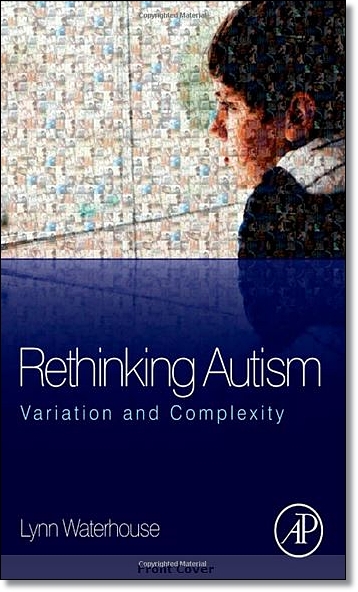
Rethinking Autism Variation and Complexity by Lynn Waterhouse is a recent work which provides a thorough, expert and extremely well researched picture of the variation and complexity of  autism spectrum disorders.

Hopefully the rest of the professional and academic autism community will read Rethinking Autism and come to grips with autism variation, complexity and heterogeneity. The highly influential autism advocacy corporation Autism Speaks has typically done a poor job of representing the heterogeneity of the autism spectrum of disorders. AS has aggressively promoted the careers of John E Robison and Alex Plank two very, very high functioning persons with Aspergers/Autism Spectrum Disorders.  At the same time Autism Speaks has also obscured the existence of the 40% of persons estimated to have autism and an intellectual disability and the large number of persons with autism who also suffer from epileptic seizures.


In what may be a major breakthrough for Autism Speaks, in the post Geraldine Dawson era, and a possible step forward in public understanding of autism disorders a high ranking Autism Speaks official, Michael Rosanoff, Autism Speaks associate director for public health research and scientific review, has acknowledged the heterogeneity of autism spectrum disorders in clear, unambiguous terms, in  a Detroit Free Press article Brain changes of autism may begin in the womb:

"Rather than one disease, autism is now regarded as a collection of conditions with similar traits but different causes, Rosanoff says. People on the autism spectrum are extremely diverse. Some are non-verbal and profoundly disabled; others have successful careers, particularly in science and technology, describing themselves as different, rather than disabled. "Autism is so heterogeneous," Rosanoff says. "We're never going to get to the one cause.""

For anyone else, including other Autism Speaks officials who want to catch up to Mr. Rosanoff in understanding autism disorders, autism researchers and major media columnists interested in a thorough, scholarly view of autism spectrum disorders I strongly recommend Rethinking Autism: Variation and Complexity by Lynn Waterhouse. 

Saturday, August 10, 2013

OTARC Panel: Dr. Giacomo Vivanti: Does Severe Autism Cause Intellectual Disability?

Excellent panel discussion by the La Trobe University Olga Tennison Autism Research Centre (OTARC) with Dr. Giacomo Vivanti, Dr. Cheryl Dissanjake and Dr. Cynthia Zierhut.  The panel comments on the cultural representation of autism as genius in movies such as Rain Man and television series such as the Big Bang theory. Dr. Vivanti talks about autism research tendency to focus on high functioning autism perceived by many autism researchers to constitute "pure" autism research.  He calls this bias into question as non evidence based,  circular reasoning. There is no legitimate basis to separate autism and intellectual disability as "comorbidity".  

Dr. Vivanti's recent paper, Intellectual development in autism spectrum disorders: new insights from longitudinal studies,  has looked at the possibility that severe autism itself causes intellectual disability an hypothesis which itself is controversial.

Monday, July 29, 2013

Severe Autism: Autism in the Shadows - Thank You Amy Mackin


"My son’s story is one of hope, not unlike the stories regularly broadcast on television, printed in magazines or making the rounds on YouTube. Yet the autism spectrum is wide and diverse, and many who suffer from severe autism will never reach the level of functioning that my child has achieved. Although these people are also part of the story, we rarely hear their stories."

Amy Mackin, Autism in the Shadows, Washington Post, July 19, 2013

Amy Mackin is a writer and a blogger who writes at www.amymackin.com.  She is also the mother of an autistic child who she describes as high functioning in the Autism in the Shadows opinion piece she wrote for the Washington Post. Although here son is high functioning Ms. Mackin's article is an eloquent, direct and powerful statement about the invisible autistics, those who live at the severe end of the autism spectrum.  As the father of a 17 year old son who lives at the severe end of the autism spectrum I thank Amy MacKin for her concern for those with severe autism, those who are ignored and neglected (with some exceptions) by both the mainstream media AND by  autism research professionals.  Amy Mackin has spoken the truth about severe autism honestly and directly:

"We must see the pain of a parent who watches her child smash his head against a concrete wall, who throws himself on the floor of a store because he simply cannot stand the fluorescent lights another second; the person who starts violently screaming because the crowd getting off the subway terrifies him. We must feel the anguish of compassionate caregivers when everyone around is staring at their loved one with horror and judgment. We must comprehend the grief of parents who are forced to acknowledge that their children may never be able to care for themselves, and we should consider all the future decisions and worry that realization encompasses.

Many personal stories about autism make us smile and renew our faith in humanity. But some stories will make us cry. They should, because autism can also be terrifying and hopeless. This side of the spectrum still lurks mostly in the shadows. But to fully understand why we search so exhaustively for answers and doggedly seek a cure, these stories must be seen and heard, too."

Thank you Amy Mackin. 

Saturday, July 27, 2013

Conor Countdown Continues In Support of FLEXIBLE, EVIDENCE BASED Inclusion


The Conor Countdown continues, as Conor gets up each day at 6 am and changes the number reflecting the number of days until school resumes.

My son Conor, and his autism disorder disability,  have been well accommodated in schools here in Fredericton, New Brunswick, Canada.  He has benefited both from the assistance of education aides and resource teachers trained in the UNB-CEL Autism program and by placement, at our request, outside the regular classroom for his ABA based instruction.

 His placement is not segregation in the sense of the racial segregation which once prevailed in the American south.  His placement reflects the fact that Conor's autism based sensory sensitivities and need for predictable routine, coupled with his individualized learning style and instruction methods require a quieter learning environment. 

In the regular classroom, early in Conor's education,  he bit his hands every single day until he was removed to a quieter location where the self injurious biting ceased. Now in high school his individualized instruction continues but he has many, many opportunities for socialization at the Leo Hayes High School Resource Centre with other students with special needs, in common areas and activities like school outings, visits to the cafeteria and ... Conor's favorite by far ... in weekly visits to the Nashwaaksis Middle School swimming pool. 

Conor loves his flexible, evidence based schooling so much that the summer, with no school, is a difficult time for him.  We do our best to help him during this period and Conor does his best to help himself.  One of the activities that helps him get through the summer break is the "Countdown".  Each day, every day, at 6 am Conor gets up and changes the number on his board under the question "How Many Days Until School?"  He can see the number getting smaller each day, he can take steps each day to make the number smaller reducing his anxiety and frustration.

Conor's self injurious biting while placed in the regular classroom was a vote against the extreme, non evidence based "regular classroom for all students" philosophy. Now, during the school year Conor packs his lunch bag every night and puts it in front of the side door to the driveway and Dad's car. During the summer Conor does his "How many days until School" countdown.  Both activities are strong compelling statements from Conor in support of the flexible, evidence based, inclusive education he has received at school since being removed from the regular classroom.

Thursday, July 25, 2013

Run Jump Fly Boy Is Back - Thank You Again DECH ICU!


A few months ago, Conor was lying unconscious  in a bed at the Intensive Care Unit of the Chalmers' Hospital (the DECH) with tubes running out of his body and hooked up to 10+ year old monitoring equipment.  Notwithstanding the age of the monitoring equipment the fantastic DECH ICU team brought Conor back to us without any restrictions or impairments.  Conor's recovery has been constant since his release and we are happy. Today on the trail Conor hit the final recovery benchmark with the return of our Run, Jump, Fly boy!


Wednesday, July 24, 2013

Why I Chose Autism REALITY As My Social Media Name


The picture above, for those visiting my blog for the first time, is my son Conor now 17+ years old.  I love him dearly and he brings great joy into my life every day.  He is also severely autistic with severe cognitive challenges (intellectual disability) and like many with those characteristics he also suffers from epileptic seizures.  As great a joy as he is he also engages in acts of self aggression and suffers from sensory challenges, meltdowns and obsessively repetitive behaviors that are very disruptive in themselves.  

For Conor his autism is not a joy, a blessing, a superior ability or a different way of thinking.  It is a serious disability, a disorder,  and his intellectual disability and epileptic seizures are not "co-incidences" or "co-morbidities". They are part  of his reality, a unified part of his reality, together they limit his life expectancy. Those are all facts that I have been determined to face throughout his life so that I do not do him a disservice.

I will never run from Conor's reality because to do so, as it would for an obvious, physical disability, could be harmful to him.  I have chosen long ago not to embrace the non evidence based belief that if I only pretend that autism is a blessing that somehow that belief will magically transform reality. 

I have helped Conor by being part of his life and enjoying his company every single day and will do so as long as I live. I have tried to help my son, and others in my province and country who suffer as he does, through determined advocacy, by  facing reality head on. And I will continue to do so as long as I live.  Others can choose political correctness and feel good cliches. I will continue to deal with autism ... reality ... and love my son as I do.