Saturday, May 26, 2012

Conor's Autism Reality: From Joy To Self Injurious Behavior In A Flash


I have never accepted, and have in fact been openly contemptuous of, the view that autism is a joy, an alternative, even superior way of thinking.   My son's autistic disorder diagnosis accurately describes autism as it really is ...  a disorder, one that  impairs the lives of those, like my son Conor, who suffer from that disorder.  In my view those who promote autism as anything other than what is, who portray autism as a feel good alternative way of thinking delude themselves and ill informed members of the public. In societies where the public participates in a democratic process to determine what services and interventions will be made available to help those in need the light and fluffy portrayals of autism do a serious disservice to those with severe autistic disorders who require help in living and enjoying their  lives.

In the picture above, and most that follow these comments, my son is shown enjoying time on the swings at the neighborhood grade school he attended several years ago.  We arrived early and no one else was present on the grounds. There was no sensory overload.  It was overcast and mildly cool but very pleasant. We made no demands on Conor and let him enjoy his time on the swings which, for the most part, he did.  We were there only  a few minutes though when, quite suddenly and with no discernible external causal factors, no external stress factors, he began hitting himself on the head.  There was no apparent internal cause for his sudden shift to self injurious behavior either.  He had enjoyed breakfast and had visited our washroom facilities for personal reasons.  He showed no indication of discomfort whatsoever prior to switching suddenly from enjoying the swings to self injury. 

Conor's sudden shift from enjoying the swings to self injury suprised me only because it was so sudden and occurred while he was thoroughly enjoying himself.   After 16 years of 24/7 caring for my son I have no idea what caused this specific outburst of Self Injurious Behavior (SIB) any more than most similar incidents where there were no obvious external or internal causes.  What I do believe, and believe fully, is that such sudden SIB's are a result of his neurological disorder, his autistic disorder.  I don' t give a darn whether any autism experts accept my anecdotal evidence or not.  Conor's SIB is part of his autistic disorder.  The many well intentioned autism researchers who gathered in Toronto for the IMFAR convention might wish to consider spending more of their time, resources and intellects reseaching Self Injurious Behavior in persons with Autistic Disorder or Autism Spectrum Disorder as it will be officially known after May 2013.


Monday, May 21, 2012

After IMFAR Some Green Therapy


My 4 days at IMFAR 2012 in Toronto were an incredible experience. After 4 days spent largely inside a hotel though I was in need of some "therapy". Yesterday I hit the trails for some outdoor Conor time.  Felt great.  

Today more time outdoors enjoying the green city  of Fredericton and its surroundings.  Green therapy works every time.  I should have asked Ilanit Gordon Ph.D. of oxytocin fame to do some fMRI scans to get my baseline measurements at the end of the IMFAR conference and then do some more today after a couple of good outings on the North Riverfront Trail and around Killarney Lake. Oxytocin? Not for me thanks.  Green therapy, absolutely!


Sunday, May 20, 2012

Walking With Conor After IMFAR Autism Research Convention


IMFAR was quite an experience.  Very intense. Learned lots, saw lots and met some interesting people. Spent a lot more time indoors then I usually would at this time of year though.  I was glad to get back to Fredericton and get outdoors  walking with Conor today.  And we did lots of walking.  Conor had missed his old Dad while I was gone and his Mom managed the situation by having him check off each day that I was gone on the list above including this morning when he woke up.  He checked Sunday off the list and we hit the trails. Great to be home.


Saturday, May 19, 2012

Ritvo Swedo DSM5 Autism Shootout At The IMFAR Corral


Edward Ritvo-Susan Swedo Shootout at 
the IMFAR Corral, Sheraton, Toronto
Photo by Harold L Doherty, May 18, 2012

Dr. Susan Swedo of the DSM5 autism committee presented a defense of the proposed DSM5 Autism Spectrum Disorder twice yesterday at IMFAR in Toronto.  After the second presentation I jumped up to the mike and asked about the exclusion of Intellectually Disabled under the exclusion wording "not otherwise accounted for by general developmental delays" in the wording for Mandatory Criterion A social communication categories. I was advised that some but not all ID would be excluded.  A couple more questioners approached the mikes on both sides of the room including Dr. Edward Ritvo author of Understanding the Nature of Autism and Asperger's Disorder: Forty Years of Clinical Practice and Pioneering Research.  Dr. Ritvo asked pointed questions about the risk-benefit analysis of introducing the new DSM5 ASD and did not appear happy with the answers he was getting from Dr. Swedo who switched the questioning to the other microphone where Dr. Marshalyn Yeargin-Allsopp was waiting to make a point.  As a layperson, a parent autism advocate with concerns about the DSM5, I am happy that Dr. Ritvo added his prestige and expertise to the debate about the wisdom of the DSM5 autism do-over.  I hope we hear more from Dr. Ritvo on this subject.

Friday, May 18, 2012

DSM5 Autism Day At IMFAR 2012: Swedo Confirms Some Intellectually Disabled Will Be Excluded from DSM5 Autism Spectrum Disorder


Today was DSM5 Autism Do-Over Day at IMFAR 2012.  Dr. Susan Swedo, head of the DSM5 committee that drafted the DSM5 Autism Spectrum Disorder, spoke twice today, once at a stakeholder's luncheon  and afterwards  at an oral presentation in the Grand Ballroom.  Dr. Swedo replied to my questions after the second presentation and indicated that the DSM5 Autism Spectrum Disorder will exclude some, though not all, intellectually disabled from an ASD diagnosis.

I attended both events but did not have an opportunity to question Dr. Swedo during the luncheon as the event was simply running out of time. During the luncheon presentation she was very emotional in discussing the media criticisms of the DSM5  Autism Spectrum Disorder. At one time she accused some in the media of telling lies about the motivation behind the new DSM5.  It was not done, as alleged by some, to cut back the autism epidemic and save costs for insurers.  It was done because the DSM5, according to Dr. Swedo, reflected experience with autism disorders and careful study. It was done to improve specificity in diagnosing autism not to eliminate some.  Having heard her speak with great emotion and conviction I don't question Dr. Swedo's sincerity, her compassion or the motivation behind the redefined DSM5 autism definition.  I do disagree with the specific targeting of intellectually disabled for exclusion from the DSM5.

Dr. Swedo delivered an expanded version of her presentation in a late afternoon session.  Her remarks began, as they did at the luncheon, with a vigorous attack on the media for their DSM5 coverage and misrepresentations about exclusion of high functioning persons with autism and the motives which prompted the new definition. Dr. Swedo said nothing about the exclusion of intellectually disabled until I asked voiced my concerns during the question period about the exclusion of intellectually disabled from the DSM5 definition by operation of the "not accounted for by general developmental delays" exclusionary clause in Mandatory Criterion A of the DSM5's new ASD.  Dr. Swedo indicated that the exclusionary phrase would result in exclusion of some but not all intellectually disabled from a DSM5 Autism Spectrum Disorder.  

Dr. Swedo's comments confirm that the expansion of autism in recent editions will culminate with HFA/Aspergers as the new Autism.   Many of the vast majority of persons with autism and intellectual disability that existed prior to the DSM-IV are now being kicked to the curb; removed from the autism spectrum. 

Thursday, May 17, 2012

Intellectual Disability At IMFAR: Underdiagnosis of Autism Spectrum Disorders in Persons with Intellectual Disability

It comes as no surprise but very little is said  about Intellectual Disability at the IMFAR 2012 autism research convention oral presentations.  Prominent autism experts, including Catherine Lord, have noted in the past that intellectually disabled autistics are under represented in autism studies.  This is true even though the vast majority of persons with Autistic Disorder have intellectual disabilities.  The exclusion of the intellectually disabled from autism research reflects the challenges presented by working with low functioning, severely autistic, intellectually disabled subjects.  None of the oral presentations to date focused on the intellectually disabled autistics or discussed issues specific to them. Some studies mentioned that low cognitive subjects were not included but generalized their conclusions to all persons with autism. If you look hard enough though you can find mention of the intellectually disabled hidden in the IMFAR poster sessions.

One such poster involved a Gent University study by Herbert Roeyers and Martine Thys titled Underdiagnosis of Autism Spectrum Disorders in Individuals with Intellectual Disabilities.  The authors point out that only a limited number of studies have examined the prevalence of ASD in ID populations;  of intellectually disabled persons with autism spectrum disorders.  The authors felt it is important to study this co-occurrence relationship between ASD and ID in order to improve quality of life for persons with this co-morbidity relationship. In their study the authors arrived at a prevalence rate of 12.5% of persons with ASD in the ID population studied or approximately 10 times the percentage for persons with ASD in the general population.  Of the numbers identified with ASD only 38% were previously identified as having ASD indicating very serious underdiagnosis of ASD in the Intellectually Disabled population.

While the New York Times expresses great concern over possible future DSM5 exclusion of high functioning autistics, and prompts much reaction from autism experts, neither the NYT, nor most of the experts, even mention current underdiagnosis of autism in people with intellectual disability.

IMFAR 2012 Preconference Highlights: Oxytocin, IPADs and the Autism Speaks Autism Treatment Network

Yesterday was a busy day at the IMFAR 2012 Preconference sessions. Although described as a Preconference the days events were packed with information and persons in attendance had to use their time carefully, whether they were suffering from jet lag or not, to maximize their participation.  The highlights of my day at the Pre-Conference were:

1) IMFAR Press Conference Highlighting Key Studies. Introduced by INSAR President  Helen Tager Flusberg with presentations by Steven Scherer, Dan Messenger, Nanit Gordon, Terry Bennett and Rebecca Landa. Dr. Tager Flusberg opened the press conference presentations with a brief overview of the IMFAR presentations during this second decade of IMFAR conventions. The presentations are the cutting edge or leading articles in autism research during the past year and have not been yet been presented for full review prior to publication in learned journals.  

I will be writing more about each speaker's presentation when time permits.  I was very interested in Dr. Nanit Gordon's presentation about Oxytocin's Impact on Social Cognitive Brain Function in Youth with ASD which seemed to follow directly from a presentation I heard earlier in a preconference session about parental behaviors and children's capacity to become members of the social group, understand complex social signals and develop social collaboration. I reference that session in paragraph 2).  Dr. Gordon presented data including fMRI images showing the effect of Oxytocin on areas of the brain important to the aforementioned social capacities.  Oxytocin was one of the response items to certain types of interaction, particularly parental interaction. My concern and my questions concerned whether if parental interaction increases a hormonal response, oxytocin, which improves capacity for at risk children to develop social capacity does that imply that our current research is indicating a return to the Bettelheim era when autism was blamed on cold, aloof mothers?  Dr. Gordon and Dr. Helen Tager Flusberg both spoke with me after the presentations and assured me that was not the case ... the data does not support the view that  parental personality or interaction, particularly mothers, plays a role in causing autism disorders in children. The aim of the research is to find treatments to help improve the social capacities of children with autism.


fMRI Images presented by Dr. Ilanit Gordon,of Yale, showing
 effect of Oxytocin introduced by nasal spray on areas of the brain 
important for social functioning. On the left are the images of
the days subject received the spray. On the right are images of
days when a placebo spray was used. 

2) Preconference sessions for people with ASD, families, clinicians, researchers, policymakers and others interested in Autism Spectrum Disorder(s). I attended a preconference session at which study results and information  were presented concerning "Bio-Behavioral Synchrony and the Development of Social Reciprocity"".  As stated in the Press Book Abstract, the speaker Ruth Feldman, Ph. D., Bar-Ilan University, described "how micro-level social behaviors in the gaze, vocal, affective, and touch modalities are dynamically integrated with online phsyiological processes and hormonal response to create dyad specific attachments and support children's capacity to become members of the social group, understand complex social signals, and develop social collaboration." As a parent listening to the presentation the information presented as summarized about seemed to be providing data that suggested a return to Bettelheims' Refrigerator Mothers theory of autism causation.  When the moderator took the podium to thank the speaker at the conclusion of her presentation he alluded to this possible interpretation of the presentation indicating that it is a delicate area to explore and one which must be done with balance. One of the response items measured was Oxytocin which prompted my questions to Dr. Gordon at the subsequent press conference.

3) Autism Treatment Network and the information about health issues of particular interest to persons with, or parents of children with, autism disorders. 

Many issues were covered including constipation, seizures, and sleep disorders. From the perspective of a parent of a son with severe autism disorder and developmental delays these are very important topics. Autism Speaks Autism Treatment Network and the various speakers presented helpful practical information for families and health care practicioners including "Strategies to Improve Sleep in Children with Autism Spectrum Disorders A Parent's Guide".

4) IPAD - Purdue Study on "Infusing Speech Output Into the Picture Exchange Communication System for Children with autism, Oliver Wendt, Ph.D., Ning Hsu, M.S., Rachel Casey, B.S. & Evan Mattice, B.S.  Contact info was presented concerning the study for Oliver Wendt, olli@pudue.edu. Conclusions without getting too specific at this time included that "All participants mastered iPad intervention, but varied in ability to complete later protocol phase, which are replicable across settings."

Tuesday, May 15, 2012

Autism Reality NB at IMFAR 2012 in Toronto, Canada


I am off tomorrow morning, very early tomorrow morning, for the IMFAR 2012 convention in Toronto.  I am very excited to be attending and blogging courtesy of Autism Speaks, Autism Speaks Canada, Dana Marnane and Suzanne Lanthier.  It was a tough day today though. Conor knows Dad won't be home for a few days and he has been a bit agitated.  This afternoon I received a call from the good people at the Leo Hayes High School that Conor was not having a good afternoon. They thought it better that he stay at school until his regular departure time though and I agreed.  When I picked him up I was informed that Conor had in fact calmed down and the rest of the afternoon had gone well.  Conor will miss his old Dad until I return Saturday night.  I might react differently but I will be missing him too.

It is worth it though to attend IMFAR with the annual concentration of autism research and knowledge being hosted in Canada. I am looking forward to blogging about IMFAR from the perspective of a father of a 16 year old son severely affected by his Autistic Disorder.  I underlined Disorder intentionally.  Autism for me is not a culture or a way of life. It is not just a different way of thinking.  It is a serious disorder that restricts my son's life, my son that I love dearly.  I want to attend IMFAR and learn  as much as possible and, hopefully, convey what I have learned, filtered through the perspective I have provided at Facing Autism in New Brunswick for 6 years. It is the perspective of a realistic, caring father who refuses to drink the "autism is a blessing" feel good Kool-Aid of the Neurodiversity advocates who insist on obliterating from public awareness the harsh realities inflicted on so many, including my son, who suffer from autism disorders. 

I hope the IMFAR convention brings news of real progress in autism research.  Although I am a realist I do not give up hope, hope based in solid research.  

I thank Autism Speaks for this opportunity.

Sunday, May 13, 2012

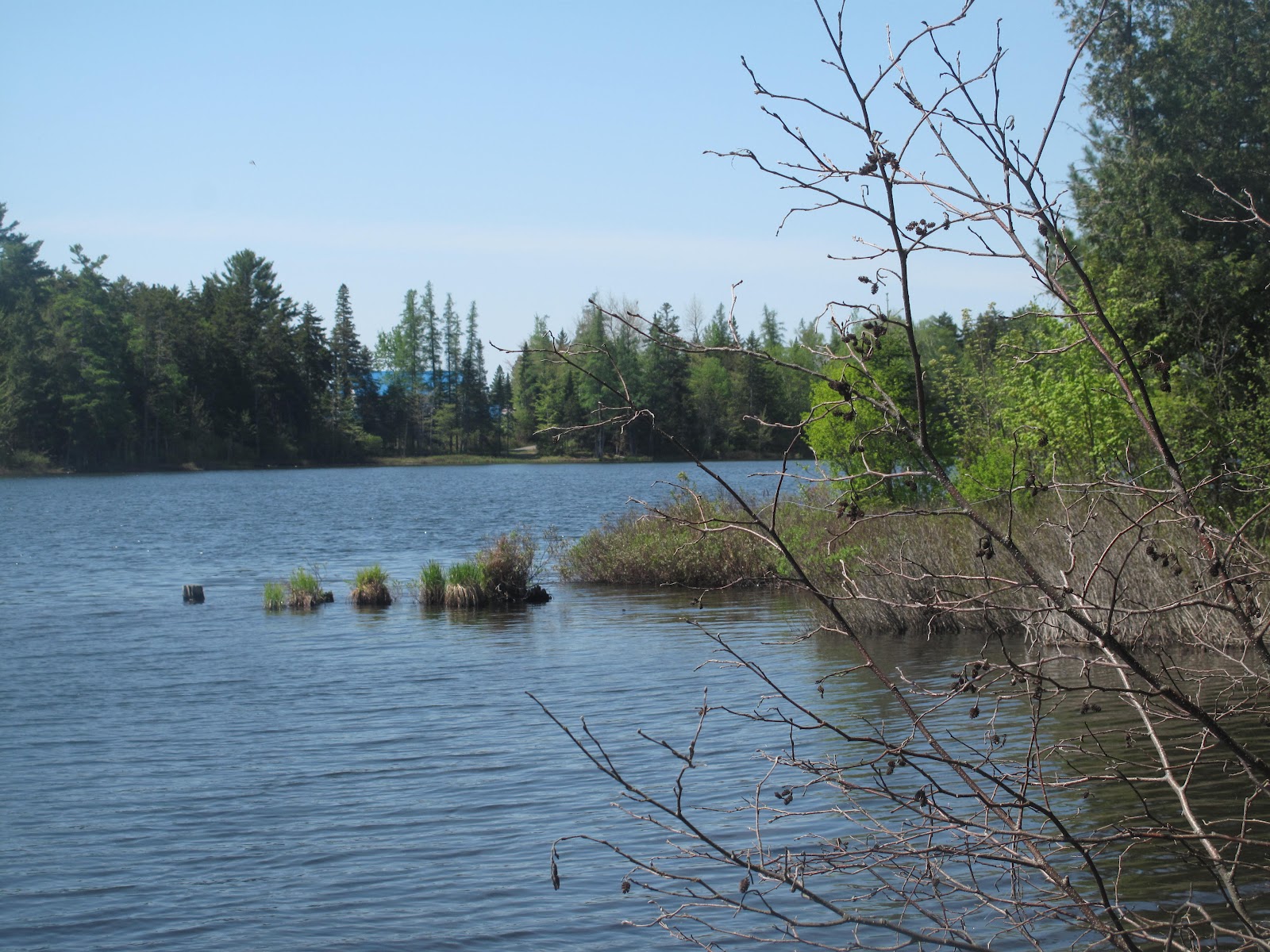
No Nature-Deficit Disorder For Conor In Fredericton,The Green City


Conor enjoying some time at the Saint John River
All photos were taken within a short walking distance
from our home in Fredericton, New Brunswick
The Green City

My younger son Conor, 16, suffers from severe Autistic Disorder.  He does not, however, suffer from Nature-Deficit Disorder in part because of our family life style choices and in part because we live in a city, and a neighborhood, with easy access to nature here in Fredericton.  I was pleased to see Fredericton referred to as a Green City in a recent article in the Brantford Examiner: City should look to Fredericton for example. Author Greg McMillan argues that Brantford, Ontario should brand and promote itself  as a Green City as Fredericton, New Brunswick has been doing aggressively over the past decade. The article notes that the two cities have much in common including trail systems located along rivers.  On a personal note we live less than a minute's walking distance from the North Riverfront Trail in Fredericton and Conor and I enjoy its benefits often, sometimes several times a day.


Conor suffers from Autistic Disorder a very real and serious disorder defined in the DSM-IV and the ICD-10, the two mental disorder diagnostic manuals used by physicians around the globe.  Nature-Deficit Disorder is not a medical diagnosis, it is an expression used by nature writer Richard Louv to describe the modern disconnect between man and nature, particularly between children and nature. Louv explains his coining and use of this term in No More "Nature-Deficit Disorder"The "No Child Left Inside" movement:

In "Last Child in the Woods," I described what I called "nature-deficit disorder." I hesitated (briefly) to use the term; our culture is overwrought with medical jargon. But we needed a language to describe the change, and this phrase rang true to parents, educators, and others who had noticed the change. Nature-deficit disorder is not a formal diagnosis, but a way to describe the psychological, physical and cognitive costs of human alienation from nature, particularly for children in their vulnerable developing years. In the four years since publication of "Last Child" (with an updated and expanded edition in 2008), the gap has grown wider.


I am not suggesting any specific connection between autism disorders and nature-deficits in modern children regardless of where they live.  I know that I personally feel better the more I get outside.  Like many of my generation I grew up outdoors before personal computers, video games and even before multiple channel, high definition big screen televisions.  If we lingered indoors our parents would occasionally tell us "to get outdoors and blow the stink off".  I was fortunate in that I always lived in small communities near natural environments. To this day I absolutely love being outdoors, near nature, along the river and in the woods.  I bring Conor with me and I believe that he, not because he is autistic, but because he is human, benefits from more exposure to nature.  It makes me feel good to be close to nature even more so when I can enjoy it with Conor.  I hope he feels the same way and benefits from it as I believe he does.


Thursday, May 10, 2012

Shocking WebMD Medscape Autism Article


WebMD Medscape has published a shocking autism article in which it .... acknowledges the existence of large numbers of persons with Autistic Disorder and .... Intellectual Disability.  The article even dares to refer to Intellectual Disability under its name in the DSM-IV ... Mental Retardation.  Apparently the Medscape article authors do not appreciate the decades of committed research aimed at helping persons with MR that have resulted in profound medical advances like ... renaming Mental Retardation as Intellectual Disability  (DSM5).  

Dr. Laurent Mottron, and his mentor Michelle Dawson, for whom autism is a strength,  Estee Klar for whom autism is a joy, Ari Ne'eman, and the members of his  ASAN (Autism Self Advocacy Network) corporate board of directors,  for whom autism is a culture, even those who acknowledge the existence of persons with autism AND intellectual disability but KWibble over the numbers, would probably be shocked to read  Medscape's blunt references to autism and mental retardation/intellectual disability:


Autism is a condition that manifests in early childhood and is characterized by qualitative abnormalities in social interactions, markedly aberrant communication skills, and restricted repetitive and stereotyped behaviors.
Most individuals with autism also manifest mental retardation, typically moderate mental retardation with intelligence quotients (IQs) of approximately 35-50. Although children with autism are often difficult to evaluate with intelligence tests, three fourths of autistic children function in the mentally retarded range.
Generally, the lower the IQ, the greater the likelihood of autism. However, the low functioning level hinders assessment for key characteristics of autism in individuals with profound mental retardation and IQs below approximately 20. A small portion of those with autism never develop spoken language. Thus, diagnostic instruments for autism may give spurious results in children with profound mental retardation.
This article addresses autism in individuals with mental retardation. For information concerning individuals with autism spectrum disorders and related conditions without mental retardation, please see Asperger Syndrome and Pervasive Developmental Disorder."
As the above quote clarifies the Medscape article is referring to Autistic Disorder when it refers to autism and makes clear the real divide on the autism spectrum of disorders: those with an autism disorder with intellectual disability and those with an autism disorder without intellectual disability.  
The article continues to shock with its honest discussion of other autism realities including the fact that many persons with autism disorders also suffer from seizures or that pharmaceutical therapies are ineffective in treating core deficits of autism.  
For this father of a son severely impacted by Autistic Disorder deficits and Intellectual Disability it is a refreshing change to read an article that speaks honestly about the nature of autism disorders and which acknowledges the realities of persons with autistic disorder and intellectual disabilities.  The DSM5 Autism Do-Over Committee, and various Neurodiversity ideologues, should follow the Medscape lead by providing "better information, better health".

Sunday, May 06, 2012

DSM5's Most Fundamental Flaw? Combining The Autism Disorders Into One Disorder


Autism Advocate Ari Ne'eman Speaking At the National Press Club
My  son's severe Autistic Disorder is not the same 
autism disorder as Mr. Ne'eman's.

The DSM5  autism do-over, the New Autism Spectrum Disorder, will come into effect in 2013.  There is a further opportunity to offer public comment about the radical changes being forced upon the public but the DSM5 committees who have shaped the New ASD in the image of their own research biases have shown no inclination to acknowledge the merits of any of the many criticisms of their handiwork. It does not matter whether the criticism comes from expert professionals involved with shaping previous editions of the DSM (Fancis, Volkmar)  or a stumbling, ignorant, hysterical father (moi) of a severely autistic son who has lived first hand, 24/7 for 16 years,  with the realities of severe autism and who objects to the targeting of the intellectually disabled for exclusion from the New ASD. No matter the source the  DSM5 team has not flinched and has not deviated from their own research biased views of autism.  (The DSM5 team swears that the New ASD reflects solid autism research. DSM5 autism team member Catherine Lord though  has acknowledged that autism research tends to excluded those with intellectually disability  while also confessing that the real aim of the New ASD is to exclude those same intellectually disabled from autism diagnoses.) The biggest flaw is not the possible exclusion of some at the highest functioning end of the spectrum or the likely exclusion of many with intellectual disabilities.  It is the combining of disparate disorders into one.

The biggest flaw of the new DSM5 is the combining of the many autism disorders into one disorder when even the most ignorant, ill informed and irrational of persons dealing with autism ... parents ... can see that there are huge differences between those who  have fashioned careers as public spokespersons for all persons with autism and those who can not function in daily life.  

Ari Ne'eman is an intelligent, eloquent university graduate comfortable in discussing his vast knowledge of autism before assembled groups from the US to the UK.  This young man can hobnob with the intellectuals at the IACC, state and federal politicians in New Jersey and Washington and mainstream media representatives at the US National Press Club in Washington.  He appears to be very comfortable in front of media cameras. My son at 16 has accomplished much in terms of where he started but he is still working at a Dr. Seuss reading level, working with great effort to make a full sentence, lacks understanding of the world, engages in repetitive behavior that can end with self injurious behavior.

As a father of a low functioning autistic son I can not see the deficits that  resulted in an autism disorder for Mr. Ne'eman.  As an autism advocate who has worked with and met some higher functioning kids with Aspergers whose limitations are still noticeable I can not see those same limitations in Mr. Ne'eman. I do not believe that Mr. Ne'eman's professionally diagnosed autism disorder, or the autism disorders of the members of the corporate board oranized by the very high functioning Mr. Ne'eman have any similarity to my son's diagnosed Autistic Disorder or to those with Asperger's that I have met. Still Mr N. , like his ASAN board members presumably have diagnosed autism disorders. 

What is clear though is that Mr. Ne'eman's disorder is not the same autism disorder that I have seen in my real life, daily,  experiences as a father or as an autism advocate.  In the latter capacity I have met a number of persons with Aspergers whose diagnoses are clear to anyone who speaks with them but they are still different from my sons. They are also different from the severely autistic persons I have met on visits to psychiatric hospital facilities where they reside here in New Brunswick.

I am not suggesting that Ari Ne'eman does not have an "autism' disorder.  I am not qualified to say that and I recognize that and respect his professional diagnosis.  I am qualified, as an observant human being, to say that Mr. Ne'eman's challenges are not the same as my son or many others with Autism and Asperger's that I have met.  To me I see no signs whatsoever of a disorder of any kind in Mr. Ne'eman but again I realize I am not a qualified professional  and I assume that those who provided his diagnosis were capable professionals.  Mr Ne'eman's autism disorder though does not remotely resemble my son's or other persons I have met with autism and Asperger's disorders.

In the opinion of this humble dad the combining of the various autism disorders into one disorder is a fundamental flaw in the New Autism Spectrum Disorder.