Showing posts with label CDC. Show all posts

Thursday, June 12, 2014

US CDC Autism Prevalence Estimates Challenged


I didn't see this autism "controversy" brewing. The authors of an article published  in the Sage Autism journal have challenged the credibility of the US CDC autism prevalence figures. The full article is on line and free for viewing (PDF also available free) at:

Should we believe the Centers for Disease Control and Prevention’s autism spectrum disorder prevalence estimates?


David Mandell
Luc Lecavalier

"In March 2014, the Centers for Disease Control and Prevention (CDC) released their most recent estimate of the prevalence of autism spectrum disorder (ASD) among children aged 8 years (CDC, 2014). Their startling finding was that 1 in 68 children met criteria for ASD in 2010, compared with 1 in 88 in 2008 (CDC, 2012), 1 in 110 using combined data from 2006 and 2004 (CDC, 2009), and 1 in 150 in 2002 (CDC, 2007). This dramatic increase has raised many concerns regarding possible causes, with much attention given to toxic exposure in the perinatal period (Rodier, 2011) and broadening of the diagnostic criteria (Newschaffer et al., 2007). While these and other hypotheses certainly are worthy of further exploration, we believe that this apparent increase should raise as many concerns about the study methods themselves as it does about other reasons for the observed change in prevalence. ........."

Sunday, April 01, 2012

Autism Rates Reach New Epidemic Levels? Round Up the Usual Suspects!


"The usual suspects

The people habitually suspected or arrested in response to a crime. The phrase is usually used in regard to scapegoats rather than actual perpetrators of the crime in question.

This expression has a specific and unambiguous origin. It was spoken by Captain Louis Renault, the French prefect of police, played by Claude Rains in the 1942 U.S. film Casablanca. The context was a scene in which the Nazi, Major Strasser is shot by Humphrey Bogart's character, Rick Blaine. Renault was a witness to the shooting but saves Rick's life by telling the investigating police to "round up the usual suspects"."


-The Phrase Finder

CDC Director Dr. Thomas Frieden, playing the part of Captain Renault from the film classic Casablanca, rounds up the usual suspects as the CDC announces stunning new autism rates in the US of 1 in 88 children, 1 in 54 boys:

"DR. THOMAS FRIEDEN, director, Centers for Disease Control and Prevention: 

There are a few things that we know for certain and there are some things that we don't know. And we always want to be up front about what we do and don't know.

We know for certain that doctors are getting better at diagnosing autism. We also know for certain that communities are getting better providing services to children with autism and that at CDC we've gotten better at tracking all of the children in a community who may have been diagnosed or identified with autism.

So we know that some of the increase is certainly because we're detecting more cases of autism. Whether that's all of the increase or not, we simply don't know. But we do know that there are many children with autism and that many of them need services and that diagnosis is often too late.

So whether this is a real increase or not is really secondary to saying that this is a big problem, lots of people are out there who need services and would benefit from services."

There is no dispute that diagnostic change, increased awareness and better detection probably explain some of the repeated and astonishing increases in autism diagnoses.  There is, however, no definitive study, or group of studies, which assigns 100% responsibility for the pre-2012 increases entirely to these factors.  There is absolutely no credible basis for anyone to state that the recent increase from 1 in 110 to 1 in 88 over a period of a few years is entirely attributable to diagnostic and social factors.  

Autism research funding has historically been directed overwhelmingly towards genetic autism research.  Only in recent years has any significant support been provided for environmental causes or triggers of autism, causes and triggers which might, and probably are, involved in these stunning increases in the numbers of children diagnosed with autism.  

The safe route to take in the face of such astonishing numbers is to invest more monies in treatment, education and residential care of those affected by autism disorders and to invest substantially more research dollars in exploring the environmental causes of autism disorders.  We must search for all the possible suspects as we try to determine what is causing the epidemic of autism disorders that increasingly affect more and more of our children.  

Friday, March 30, 2012

Canada's Autism Epidemic? To Start With We Have to Use American Numbers 1in 88 Children, 1 in 54 Boys


Canada Flag Photo by Harold L Doherty

The CDC in the US has released new numbers on the autism epidemic in the US.  It now estimates that 1in 88 children (1 in 54 boys) have an autism disorder.  There are no known, reliable estimates available for Canada which has not updated its autism estimates in several years.  The Harper government has not taken Canada's national autism crisis seriously preferring to hide behind constitutional walls and leave the availability of treatment to an autistic child to depend on which province his/her parents live in.  

A National Autism Symposium was cancelled once the Harper government became aware that serous autism advocates were planning to participate.  The symposium was rescheduled and the resulting symposium was a sham. Speakers and so called  "community representatives" were chosen who would not take an aggressive advocacy position on any autism issues.  

The speakers list even included persistent anti-ABA activist Dr. Laurent Mottron who believes that the idea of curing autism is nonsense.  Mottron's mentor and fellow anti-ABA, anti-autism cure activist Michelle Dawson was also in attendance. Causes of autism stressed the genetic bases of autism with no attention to possible environmental causes or triggers.  The prevalance rate of 1 in 165 advanced by Dr. Eric Fombonne at that 2006 symposium is still the only figure recognized by the Harper government and by the Autism Society Canada

With the release of the United States CDC estimate of 1 in 88 Autism Speaks has called for a serious response to the autism epidemic:


Autism Speaks called for the development of a national autism action plan that should include, among other elements:

  • Increased funding for basic science uncovering the genetic underpinnings of autism;
  • Increased funding for environmental research detecting the causes of autism;
  • Accelerated funding and development of effective medicines and treatments;
  • Commitment to a strategy where all children with autism from every background are diagnosed no later than18 months of age;
  • Commitment to a National Training Corps to recruit more therapists and service providers, as well as specially trained teachers and teacher assistants;
  • A strategy to address the growing needs of adults with autism, specifically around continuing education, employment, housing/residential living and community integration.
The Autism Speaks recommendations are solid and, hopefully, will be adopted in the United States.  In Canada we can not realistically expect a serious response along those lines from our current Federal government.  That has been clearly demonstrated over the past several years of Harper Conservative rule.

In terms of the prevalence rate though it is absurd to rely  on the outdated figure of 1 in 165.   In the absence of any credible, current estimates from Canadian government institutions or from federal autism advocacy groups, the US figure of 1in 88 should be taken as the best available estimate of Canada's autism rates. 

We must also continue the push for national Medicare coverage of effective ABA autism treatment, for continued, real autism research of causes and cures, and for the beginnings of a plan for adult autism employment opportunities and adult residential care and treatment facilities.  

The US has stepped up to the plate, again, in offering meaningful, honest information about the autism epidemic.  Canada has long suffered from a lack of will that has allowed our autism epidemic to become a national autism crisis.   We must begin now working toward the day when a new national government is elected that will take our autism crisis seriously. 

In the meantime we should abandon the ridiculously outdated autism estimate of 1 in 165 and use the American estimates: 1 in 88 children, 1 in 54 boys. 

Saturday, July 02, 2011

TIME Promotes Myth That Many With Autism are Highly Intelligent


In Could Amanda Knox Have an Autism Spectrum Disorder? TIME adds its influential voice to those who propagate the  myth that "many with autism are highly intelligent".

Amanda Knox is the 23-year-old American college student who was convicted of sexually assaulting and killing her roommate, Meredith Kercher, in Italy in 2007.  The TIME article makes a plausible case for the proposition that some of the evidence used to convict Ms Knox, including a forced confession, and some seemingly callous behavior, may indicate an un-diagnosed Asperger's Disorder condition rather than evidence of guilt. That possibility has become particularly important in light of revelations that DNA trace evidence used to convict Ms Knox may, after review by independent experts, be considered unreliable.  

In elaborating on the Asperger's Disorder possibility,  and explaining some aspects of Ms Knox's behavior including the confession, the TIME article states:

"like many autistic people, Knox was highly intelligent but also extremely naïve and gullible:
"She's the smartest person you'd ever know" but "dumb as a rock" when it comes to "street sense," [her stepfather said]. In conversations with her friends and family, a portrait emerges of a person with a childlike innocence. She was, as her mother, Edda, puts it, "oblivious to the dark side of the world.""

If the above quote said like many people with Asperger's Disorder", Knox was highly intelligent it might be an accurate statement.  Under the DSM-IV an Asperger's Disorder is excluded where the person has no cognitive development issues:

"E. There is no clinically significant delay in cognitive development or in the development of age-appropriate self-help skills, adaptive behaviour (other than in social interaction), and curiosity about the environment in childhood."

The lack of clinically significant cognitive developmental delay does not necessarily mean that a person has high intelligence but it does leave that possibility open. The article provided no studies to indicate that many persons with Asperger's are highly intelligent.

Where the article is flat out wrong though is in stating that many persons with "autism" are highly intelligent.  That information is contradicted by the Canadian Psychological Association 2006 brief to a Canadian Senate Committee stated that:


Cognitive impairment is present in about 80% of persons diagnosed with Autism and general intellectual functioning is most often below average.  Persons diagnosed with Asperger’s Disorder have average to above average intellectual functioning. [underlining added]


As noted above the CPA reference to autism is a reference to the autism spectrum disorders except Asperger's.

The United States Centers for Disease Control, the CDC,  has conducted two surveys which looked at the entire spectrum of autism disorders, including those with Aspergers and found that:

"Data show a similar proportion of children with an ASD also had signs of intellectual disability than in the past, averaging 44% in 2004 and 41% in 2006."

Contrary to the view, expressed by TIME,  that many persons with autism are highly intelligent, the US National Institute of Mental Health states with respect to Autism Spectrum Disorders in the section titled Problems That May Accompany ASD:

"Mental retardation. Many children with ASD have some degree of mental impairment. When tested, some areas of ability may be normal, while others may be especially weak. For example, a child with ASD may do well on the parts of the test that measure visual skills but earn low scores on the language subtests." [underlining added]

If Amanda Knox does in fact have an Asperger's Disorder, and if the Disorder casts doubt on the confession obtained from her and provides an alternative explanation for the behavior that was used to convict her then I certainly hope the issue is fully explored.  To that end TIME's powerful voice could be of substantial value in overturning a possible wrongful conviction for murder.  That would be a great accomplishment if all those developments play out as indicated.  In reaching such a conclusion though it is unnecessary for TIME to proceed by promoting the myth that many persons with autism are highly intelligent.  This myth, while pleasant for many to embrace, in fact obscures the very serious challenges faced by the vast majority of persons with Autistic Disorder who in fact are also cognitively impaired or intellectually disabled.

TIME with its great influence should be more careful in how it portrays autism, including Autistic Disorder, and the challenges, including intellectual disabilities,  faced by persons with Autistic Disorder, to the world.

Saturday, May 07, 2011

Autism and the Stigma of Intellectual Disability: Some CDC Facts


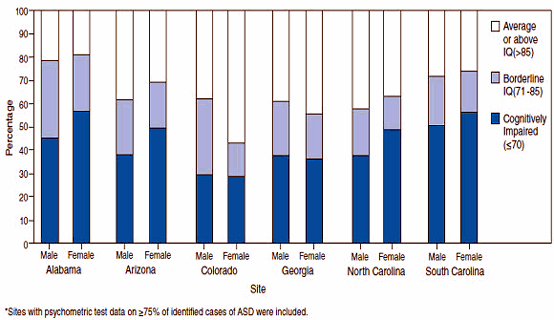
CDC:  Intelligence quotient (IQ) of children aged 8 years with an autism spectrum disorder (ASD) for whom psychometric test data were available,* by site and sex (IQ) score-Autism and Developmental Disabilities Monitoring Network, 11 sites, United States, 2006


Last week some "autism" blog sites on the internet launched more personal attacks against me for daring to again correct the myth that ALL, or MOST, autistic persons are characterized by high intelligence.  I am not going to respond to the silly comments directly.  I will refer anyone who is interested in the subject and who  wishes to look at autism disorders realistically to the Centers for Disease Control and Prevention site which states that:

"A report published by CDC in 2009, shows that 30-51% (41% on average) of the children who had an ASD also had an Intellectual Disability (intelligence quotient <=70)."


The above information from the CDC is referring to ALL persons with ANY Autism Spectrum Disorder including those with Asperger's Disorder.  By definition Asperger's excludes diagnosis where the person has cognitive impairment.  For classic Autistic Disorder the average number of persons with an Intlellectual Disability or Cognitive  Impairment would obviously be much higher than the 41 % average for all persons with ANY Autism Spectrum Disorder.  

Perpetuating the myth that persons with autism disorders tend to be of high intelligence does not help the vast majority of those with classic Autistic Disorder who have Intellectual Disabilities.  It reflects a desire to disassociate autism from intellectual disability. Autism is seen as good or at least acceptable.  Intellectual Disability is seen as bad.


Perpetuating the myth of autism and high intelligence  stigmatizes those with autism and intellectual disability.  

Thursday, January 06, 2011

Autism Speaks & CDC Autism Prevalence Increase Workshop Timely: Autism is Rising & Environmental Factors Likely Involved


"Based on the above mentioned research, approximately 53% percent of the increase in autism prevalence over time may be explained by changes in diagnosis (26%), greater awareness (16%), and an increase in parental age (11%). While this research is beginning to help us understand the increase in autism prevalence, half of the increase is still unexplained and not due to better diagnosis, greater awareness, and social factors alone. Environmental factors, and their interactions with genetic susceptibilities, are likely contributors to increase in prevalence and are the subject of numerous research projects currently supported by Autism Speaks.

The increase in autism prevalence is real and the public health crisis is growing. More families are affected by autism today then ever before."

Autism Speaks Official Blog, October 22, 2010

The above statement by Autism Speaks was based on several published sources and CDC information. including articles by authors Bearman and King, who have indicated that approximately 50% (47%) of autism prevalence increases are based on factors other than social factors. Now Autism Speaks and the Centers for Disease Control and Prevention (CDC) are co-sponsoring a workshop  on February 1, 2011 to investigate the changes in autism prevalence over time in the United State:

"The purpose of this workshop is to identify promising directions, priorities, and needs for better understanding ASD prevalence trends. The workshop will include presentations on what has been done to understand reasons for ASD prevalence changes, examples of understanding prevalence change from other conditions, and panel breakout sessions to allow for further discussions.


This meeting is open to the public with pre-registration required by January 24, 2011 for US citizens and January 13 for non-US citizens."

Autism Speaks Official Blog, January 5, 2011

While Autism Speaks has been puzzling at times in its efforts to "speak" about autism disorders, promoting the careers of purported autism spokespersons who question the very existence of autism as a  medical  disorder,  the importance of the above initiative can not be overstated.  For far too long the "it's gotta be genetic" mindset has held sway and prevented substantial scientific exploration of possible environmental causes or triggers of autism. Hopefully the recent US Senate hearings, official statements by the IACC acknowledging the emergence of a gene environment interaction paradigm, the CHARGE study, work by Dr. Irva Hertz-Picciotto and UN Davis M.I.N.D. researchers,  and efforts like the Autism Speaks/CDC prevalence workshop will lead to further environmental autism research; research which should have been commenced  years ago.

Sunday, November 28, 2010

Autism and Intellectual Disability: More Denial, More Stigma, This Time In Alabama


In Children with Asperger's could lose diagnostic identity we see still more evidence, this time in Alabama,  of the stigma attached to the fact that the vast majority of persons with Autistic Disorder, unlike those with Aspergers Disorder diagnoses,  also have intellectual disabilities or cognitive impairments. Once again the story tells of concerns held by some that those with Aspergers will be stigmatized by being lumped in with those with Autistic Disorder in the DSM-5  New Autism Spectrum Disorder. In expressing these concerns the subjects interviewed contribute to the stigmatization of those with Intellectual Disability generally and specifically to the many persons with Autistic Disorder and Intellectual Disability:

"It's difficult to say where Asperger's ends and autism begins," Mulvihill said.


That difficulty - and the stigma attached to autism - is partly why some adults with Asperger's are not happy about the proposed change in the DSM, Crane said. While those individuals on the high-functioning end of the autism spectrum might show only slight symptoms, those on the other end of the spectrum are profoundly affected by the disorder.


Being classified as autistic can make it even more difficult for high-functioning individuals to develop relationships with their peers.


Crane said despite their various challenges, autistic children are highly intelligent.


"These kids are definitely the scientists of tomorrow," said Crane, who established the Riley Center after her son was diagnosed with autism. "They're brilliant. That's why early intervention is so important."

The comments by Crane of the Riley Center are a perfect example of the denial that is so prevalent in any public discussion of Autistic Disorder. The main difference between Autistic Disorder and Aspergers is in the area of intellectual disability.  By definition in the current version of the DSM-IV a person with "autism" criteria AND Intellectual Disability will be excluded from an Asperger's Disorder (DSM-IV, Diagnostic Criteria for Asperger's Disorder  299.80)  diagnosis (as set out on the CDC web site):

"E. There is no clinically significant delay in cognitive development or in the development of age-appropriate self-help skills, adaptive behavior (other than in social interaction), and curiosity about the environment in childhood.

I have written frequently on the refusal of so many parents, professionals and persons with very high functioning autism disorders to acknowedge the high rates of intellectual disability in persons diagnosed with Autistic Disorder as that disorder is currently diagnosed in the DSM-IV.  The 2006 Canadian Psychological  Association brief to a Canadian Senate committee examining autism stated that:

"Symptoms and Impairments:


• Cognitive impairment is present in about 80% of persons diagnosed with Autism and general intellectual functioning is most often below average. Persons diagnosed with Asperger’s Disorder have average to above average intellectual functioning."

The CPA figures with respect to Autism (Autistic Disorder) appear consistent with the CDC figures with respect to the entire autism spectrum:

"Data show a similar proportion of children with an ASD also had signs of intellectual disability than in the past, averaging 44% in 2004 and 41% in 2006."

The 41-44% figure for the entire spectrum includes those with Aspergers diagnoses who, by definition, do not have intellectual disabilities or cognitive impairment.  They are also approximate the numbers provided set out in the ICD-10 for persons with respect to Childhood Autism F84.0:

"F84.0 Childhood Autism

A pervasive developmental disorder defined by the presence of abnormal and/or impaired development that is manifest before the age of 3 years, and by the characteristic type of abnormal functioning in all three areas of social interaction, communication, and restricted, repetitive behaviour. The disorder occurs in boys three to four times more often than in girls. 
...
All levels of IQ can occur in association with autism, but there is significant mental retardation in some three-quarters of cases."(Bold highlighting added - HLD) 

These figures contradict the denial of intellectual disability inherent in Crane's generalizations that "autistic children are highly intelligent", "these children are definitely the scientists of tomorrow"and "they're brilliant".  Such statements deny the reality of the close association between Autistic Disorder and intellectual disability and are clearly reflections of the stigma attached ... not to autism per se ... but to intellectual disability.  It is the connection between autism and intellectual disability that creates concern for many with Asperger's Disorder about merging Asperger's and autism in the DSM-5.  It is that frequently expressed and highly publicized concern that contributes to the stigmatization of those many persons with Autistic Disorder and Intellectual Disabilities. 

The US National Institute of  Mental Health states with respect to Autism Spectrum Disorders in the section  titled Problems That May Accompany ASD:

"Mental retardation. Many children with ASD have some degree of mental impairment. When tested, some areas of ability may be normal, while others may be especially weak. For example, a child with ASD may do well on the parts of the test that measure visual skills but earn low scores on the language subtests."

What is interesting about the NIMH comment is that it ties mental impairment to language disabilities, another area that distinguishes Autistic Disorder from Asperger's Disorder in the DSM-IV.  It is a relationship that is glossed over by those who wish to disavow the obvious relationship between autism and intellectual disability.  By contrast an Italian study, published in the Journal of Intellectual Disability Research has expressly underlined the relationship between autism and intellectual disability:

Abstract

BACKGROUND: In 1994, the American Association on Mental Retardation with the DSM-IV has come to a final definition of pervasive developmental disorders (PDD), in agreement with the ICD-10. Prevalence of PDD in the general population is 0.1-0.15% according to the DSM-IV. PDD are more frequent in people with severe intellectual disability (ID). There is a strict relationship between ID and autism: 40% of people with ID also present a PDD, on the other hand, nearly 70% of people with PDD also have ID. We believe that in Italy PDD are underestimated because there is no agreement about the classification system and diagnostic instruments.

METHOD: Our aim is to assess the prevalence of PDD in the Italian population with ID. The Scale of Pervasive Developmental Disorder in Mentally Retarded Persons (PDD-MRS) seems to be a very good instrument for classifying and diagnosing PDD.

RESULTS: The application of the PDD-MRS and a clinical review of every individual case on a sample of 166 Italian people with ID raised the prevalence of PDD in this population from 7.8% to 39.2%.

CONCLUSIONS: The study confirms the relationship between ID and autism and suggests a new approach in the study of ID in order to elaborate a new integrated model for people with ID. (bold highlighting added -HLD)


The denial of the Intellectual Disability connection to autism, as in Autistic Disorder, will be completed in the DSM-5 and will result in further stigmatization of those with Autism and Intellectual Disability.  It will also contribute to the trend to conduct "autism" research excluding persons with autism and intellectual disability the "vast majority" of those with autism as it is currently defined. The study reports in these cases tend to generalize their findings to the entire autism spectrum of disorders despite the exclusion of intellectually disabled autistic subjects.  The informed, mature  and enlightened approach of studying the connection between autism and intellectual disability suggested by the authors of the Italian study will never see the light of day.

The intellectual disabilities of so many with autism, and the very serious challenges they face,  will simply be ignored for fear of stigmatization. The Alabama example is only one of many examples of such stigmatization. 

There will be more.

Tuesday, November 23, 2010

Autism Rising: CDC Says Autism Increase is Real

One of the heated  debates, of the many, that arise in discussion of autism related matters is whether the rates of autism increase is real, in whole  or in part, or whether the rates are increasing solely because of 1994 diagnostic definition changes in the DSM and increased social awareness.  The  United States Center for Disease Control however, in arguing that thimerosal, the mercury contained in some vaccines, does not cause autism disorders, has taken the clear and unambiguous position that increasing numbers of autism diagnoses reflect a real increase in autism disorders:

"Does thimerosal cause autism?

Research does not show any link between thimerosal in vaccines and autism, a neurodevelopmental disorder. Although thimerosal was taken out of childhood vaccines in 2001, autism rates have gone up, which is the opposite of what would be expected if thimerosal caused autism."
Obviously if the increases in autism diagnoses did not reflect real increases in autism there would be no merit to the CDC position that increased autism rates confirm that thimerosal does not cause autism.   The increases in autism diagnoses are real, autism IS rising, the CDC says so.

Monday, September 20, 2010

Manganese in Water Tied to Low Child IQs and Should be Studied in Connection with Autism Disorders

A Quebec study of manganese levels in drinking water from municipal wells in eight communities along the St. Lawrence River between Montreal and Quebec City has found , as reported on the CBC,  that manganese significantly lowers children's IQ levels:

The water came from municipal wells and wasn't specially treated for manganese.

"We found significant deficits in the intelligence quotient (IQ) of children exposed to higher concentration of manganese in drinking water," said the study's lead author, Maryse Bouchard of the University of Quebec at Montreal's Centre for Interdisciplinary Studies in Biology, Health, Society and Environment.

"Yet, manganese concentrations were well below current guidelines," she added in a release.

Intellectual impairment

The average IQ of children whose tap water was in the upper 20 per cent of manganese concentration was six points below children whose water contained little or no manganese, the researchers found.

The study looked at 362 children aged six to 13. The amount of manganese from tap water and food was estimated, based on the results of a questionnaire.

Each child was also assessed with a range of tests of cognition, motor skills and behaviour.

Factors such as family income, maternal intelligence, maternal education and the presence of other metals in the water were taken into account.

Even then, few environmental contaminants have shown such a strong link with intellectual ability as manganese, said study co-author Donna Mergler, also at UQAM.

Intellectual disabilities, as reported by authorities such as the Canadian Psychological Association and the US CDC, are present in 75-80% of persons with Autistic Disorder and 41-44% of all persons with Autism Spectrum Disorders generally. It would seem worthwhile to research and explore  the possible relationship between manganese and autism disorders.

Tuesday, August 03, 2010

Whooda Thunk It? CNN: Study Raises Bias, Timely Disclosure Questions About Pharma Funded Drug Trials

Whooda Thunk It?

CNN reports that a recent study has disclosed evidence of bias in pharmaceutical company funded drug trials. The study found evidence of an inherent bias in favor of the drug being studies with such studies being 4 times more likely to report outcomes that favored the drug of the sponsoring pharmaceutical company. Industry funded drug trials were also less timely in providing public information about the trial results:

Researchers from the United States and Canada looked at 546 drug trials registered in ClinicalTrials.gov, a registry of both federal and private trials in the United States and abroad. 346 of them, or 63 percen, were funded by the drug industry. The remaining 200 were paid for by government or non-profit organizations. Study authors found that more than 85 percent of industry-funded trials in their sample posted favorable outcomes and were 4 times more likely to report findings that favored their drug.

"We did this study in order to determine whether there is an inherent bias because pharmaceutical companies fund trials on products in which they have a financial interest," said study co-author Dr. Kenneth Mandl of Children's Hospital, Boston. "The most reassuring result would have been that the rate of favorable outcomes would be the same regardless of funding sources. In a very dramatic way that was not the case and what we need to ascertain is if the cause of this shift toward favorable findings among trials funded by pharmaceutical companies is related to the details of the protocols and study design."

Dr. Florence Bourgeois, also of Children's Hospital, Boston and lead author of the study says typically trials sponsored by drug companies are more efficient and well funded. Still, she found the result stunning. "The implications of these findings are that we need more oversight in the way clinical trials are designed as well as in the analysis and reporting of the results. One option may be to make study protocols directly available on clinicatrials.gov as well as the comprehensive reviews complied by the FDA on trial results." She continued, "While we cannot specifically point to which factors contribute to the association between funding source and positive results reporting, our findings speak to the need for more disclosure of all elements of a study."

...

According to Mandl, industry funded trials also were less timely in terms of providing public information including trial results. He says even though drug trials are overseen by the Food and Drug Administration, there are still some variables that could favor pharmaceutical companies, including placebo comparisons, dosing and duration. "The concern is the pharmaceutical industry is funding the studies of the drugs in which they have a vested financial interest."

The influence of pharmaceutical companies in last years widely criticized H1N1 pandemic was examined by the Parliamentary Assembly of the Council of Europe (PACE). In its March 23 2010 report The handling of the H1N1 pandemic: more transparency needed the PACE expressed concern over the connections between World Health Organization (WHO) science advisors and pharmaceutical company interests:

11. Independent experts from the medical community mainly criticised the agenda setting and governance process concerning the H1N1 flu in terms of the criteria used for declaring a pandemic, the lack of empirical evidence justifying such a step and the clearance to use certain medicines and vaccines. They also repeatedly raised the issue of the influence that private stakeholders from the pharmaceutical industry might have had on major decisions taken by international and national authorities. For the purpose of this memorandum the rapporteur has compiled the main issues raised in a critical perspective. All arguments presented seem to have one common reference point: the disparity between the relatively mild unfolding of the influenza and the actions taken at European and national level.2

None of this, of course, is to suggest that there is any  unhealthy pharmaceutical company influence on public health authorities involved with autism issues ... right Dr. Gerberding?   Maybe Dr. Julie Gerberding, President of Merck Vaccines  can put to rest fears of pharma conflicts of interest by pushing for a comparative study of autism rates in vaccinated and unvaccinated populations as once called for by  former CDC  Director Dr. Julie Gerberding who once said that "such studies could be done and should be done".

Monday, June 14, 2010

Autism's Vast Majority Was Hurt By The DSM-IV. Next Comes the DSM-5 and the New Autism Spectrum Disorder


"But the autism umbrella has since widened to include milder forms, says Dr. Marshalyn Yeargin-Allsopp, a medical epidemiologist at the CDC. For example, it now includes Asperger syndrome, where the sufferer is socially impaired, but experiences typical language development.

Another difference between past and present autism diagnosis involves the presence of intellectual disabilities,
adds Yeargin-Allsopp. During the 1960s and 1970s, the vast majority of those diagnosed with autism had an intellectual disability but today, only about 40% have one."

CDC Autism Expert Dr. Marshalyn Yeargin-Allsopp

In the above noted quote the CDC's autism expert Dr. Yeargin-Allsopp did not try to get too precise with the numbers of persons on the "autism spectrum of disorders" who also have an intellectual disability. Two recent CDC surveys estimated that 44% and 41% of persons with ASD have an intellectual disability not 40% but it is difficult to be precise, even for the CDC autism expert,  with large survey figures.  The results of such surveys are expressed with terms like "about" or "approximately" so there is nothing added to our understanding of autism by KWibbling over whether the correct figure is 41% of 44%.  Nor is there any reason based on the CDC approximate figures to KWibble over the Canadian Psychological Association's 2006 estimate that 80% of those with autism, distinguished from Aspergers, also have an intellectual disability. The CPA figure is accepted as consistent, by this humble Dad, until the CPA, or an equally credible, authoritative source says otherwise. 

What we need to do is understand,  as revealed in the quote above from Dr. Yeargin-Allsopp,  that the clear association between autism and intellectual disability was downplayed by the American Psychiatric Association in the DSM-IV revisions.  We should understand the harm these revisions have caused to public understanding of the realities of autism disorders and the further harm that will be done when the "autism spectrum" is again expanded and watered down.  We should understand now and begin to explore the connections between  Intellectual Disability and "classic" autism,  currently called Autistic Disorder,  before the APA plunges ahead with its New Autism Spectrum Disorder in the DSM-V,  which it will do notwithstanding any public commentary or criticism.

This humble father of a 14 year old son with Autistic Disorder and Intellectual Disability is not going to KWibble over the CPA's math unless a credible authoritative source takes issue with the CPA figures and demonstrates that they are wrong.  I am not ashamed of my son's Intellectual Disability and I do not subscribe to the romanticization of  autism and other serious neurological disorders  under the offensive Neurodiversity ideology which describes these disorders variously as cultures,  natural differences or preferences. Nor am I a  "professor of psychology" at a community college or university with the qualifications to take issue with a national professional governing body like the Canadian Psychological Association.

Dr. Yeargin-Allsopp's comments are those of a CDC autism expert telling us in plain language that prior to the DSM-IV revisions which grouped autistic disorder with Aspergers and PDD-NOS the Vast Majority,  not a 50% plus 1 majority, but the Vast Majority of those with autism also had an intellectual disability. That strong and compelling piece of information about the reality of autism as a neurological disorder was obscured by simple definition changes  in the DSM-IV. 

There are some "autism experts" who publish several articles a year, and conduct studies of "autism" involving only high functioning autistic subjects and persons with Aspergers.  They do not make the effort to study the most seriously disabled of all persons with "autism spectrum" disorders ... Autistic Disorder's Vast Majority... those with Intellectual Disabilities.  They routinely publish studies involving HFA and Aspergers studies which invariably get reported in the mainstream media as demonstrating that persons with  autism have hidden, perhaps even superior, intelligence.  That type of feel good reporting obscures our understanding of the realities faced by those who are members of Autistic Disorder's Vast Majority ... those  with an Intellectual Disability,  With the further merger of the PDD's into one New Autisim Spectrum Disorder in the DSM-5, and the further watering down of what constitutes autism, the figure of 40% cited by the CDC's autism expert will, once again, be magically reduced and obscured ... hidden from public consciousness.

Does everyone really think it is just a coincidence that 80% of those with Autistic Disorder, or not to KWibble ....  the Vast Majority, are intellectually disabled?  Unfortunately the American Psychiatric Association is about to  get the DSM-V, and the New Autism Spectrum Disorder, in place to further obscure  and further reduce the impetus to research, explore and understand autism as an intellectual disability.   The vast majority of those with classic autism who are intellectually disabled will not be helped by the DSM-V changes. Their reality will be further obscured and hidden behind an increasingly glossy portrayal of autism in our public discussions.  

Time to order a new set, a DSM-5 version,  of rose colored glasses  with which to look at the New Autism Spectrum Disorder.

Sunday, May 09, 2010

CDC Facts: Autistic Disorder and Intellectual Disability


Honest discussion of many autism subjects will invite hostility from different quarters of the alleged autism community. One example is the connection between Autistic Disorder and Intellectual Disability.  Few will even discuss the obvious fact that many persons with Autistic Disorder are also Intellectually Disabled.  Attempts to discuss Autistic Disorder and Intellectual Disability are met with overt hostitlity even though Intellectual Disability is a fact of classic autism or Autistic Disorder:.

The CDC Autism Spectrum Disorders (ASDs) Facts section of the CDC web site states this fact simply and clearly:

Autistic Disorder (also called “classic” autism)

This is what most people think of when hearing the word “autism.” People with autistic disorder usually have significant language delays, social and communication challenges, and unusual behaviors and interests. Many people with autistic disorder also have intellectual disability

(emphasis added -HLD)


With the expansion of the definition of autism in the 1994 DSM-IV the concept of autism has come to include many very intelligent, high functioning persons as autistic and the intellectual disability component of autistic disorder is erroneously but intentionally set aside as a "comorbid" or "coincidental" condition, a process that will be worsened with the New Autism Spectrum Disorder category in the DSM-5.  The obvious connection between autism (pervasive developmental delay) and intellectual disability will be pushed even further from our consciousness.  

Monday, May 03, 2010

Autism Disorders and Intellectual Disability: Claim that 75-80% of Persons with Autistic Disorder are Intellectually Disabled is Based on Credible Authorities

UPDATE: Alan Griswold is in very deep denial. I have now provided 3 credible sources to support the 75-80% range of persons with Autistic Disorder as also being Intellectually disabled - the ICD, the CPA and the CDC and Mr. Griswold can only repeat  his opposition to an association between Autistic Disorder and Intellectual Disability.  Of course accepting this information would require Mr. Griswold to reject his contribution to the world's discussion of autism disorders, his book Autistic Symphony which rejects autism as a medical disorder:  


"Autistic Symphony offers a unique look at the fascinating subject of autism. Challenging the psychiatric and scientific perspectives that focus exclusively on disabilities and impairments, Autistic Symphony celebrates the challenges and rewards experienced by every autistic individual, and argues that far from being a medical monster, autism is one of our culture's greatest strengths."
 
As I mentioned in my previous post Alan Griswold of Autistic Aphorisms is one of those comfortable with speculation that Jesus Christ may have been autistic but is not comfortable with the fact that many persons with Autistic Disorder are Intellectually Disabled.  Mr. Griswold and Astrid at at  Astrid's Journal disagree with my numerical references and wrongly describe them as self constructed.

My claim is not that 75-80% of all persons with an Autism Spectrum Disorder are also Intellectually Disabled as Astrid in particular seems to think. My assertion is that credible authorities have stated that 75-80% of persons with Autistic Disorder are intellectually disabled.  I stand by that assertion and, once again, for those who actually read before reacting, offer the sources:

1. Canadian Psychological Association    Autism Brief to the Standing Senate Committee on Social Affairs, Science and Technology November 9, 2006.

In that brief the CPA refers to 2 separate categories "Autism" and Asperger's":

"Cognitive impairment is present in about 80% of persons diagnosed with Autism and
general intellectual functioning is most often below average
. Persons diagnosed with
Asperger’s Disorder have average to above average intellectual functioning.


...

In sum, persons with ASD present with a wide range of impairments in cognition, language and
behaviour which present in some common but reliably distinct ways between Autism and
Asperger’s disorders
."

2. Center for Disease Control Counting Autism 

CDC’s most recent data show that between one in 80 and one in 240 children with an average of one in 110 have an ASD. This is a prevalence of about one percent of children. These results reflect data collected by CDC’s Autism and Developmental Disabilities Monitoring (ADDM) Network in multiple communities throughout the U.S. in 2006.

Estimates are based on health and education records from participating communities, which includes eight percent of the U.S. population of eight year olds. All children in the studies were eight years old because previous research has shown that most children with an ASD have been identified by this age for services.


...


Cognitive Functioning (from the pdf version)

2004
 

From 37.9% (Arizona) to 63% (Alabama) (overall average: 43.8 %) of the children identified with an ASD also had an intellectual disability (an IQ ≤70, at the sites that had test results on intellectual ability for at least 75% of the children identified).

2006
 

From 29.3% (Colorado) to 51.2% (South Carolina) (overall average: 41.0 %) of the children identified with an ASD also had an intellectual disability (an IQ ≤70, at the sites that had test reults on intellectual ability for at least 75% of the children identified)

The CDC figures of 41-44% for all persons on the Autism Spectrum having an intellectual disability are consistent with the 80% figure for those with Autism EXCLUDING Aspergers cited by the CPA. These figures and sources are my authorities for the upper end of the 75-80% range of persons with Autistic Disorder having an Intellectual Disability.  That is not a self constructed figure.
The lower end of the range I cite is the figure based on older sources like the 1992 ICD diagnostic criteria for Autism:
3.The ICD-10 Classification of Mental and Behavioural DisordersWorld Health Organization, Geneva, 1992


F84.0 Childhood Autism


A pervasive developmental disorder defined by the presence of abnormal and/or impaired development that is manifest before the age of 3 years, and by the characteristic type of abnormal functioning in all three areas of social interaction, communication, and restricted, repetitive behaviour. The disorder occurs in boys three to four times more often than in girls.


...


All levels of IQ can occur in association with autism, but there is significant mental retardation in some three-quarters of cases.


F84.1 Atypical Autism


A pervasive developmental disorder that differs from autism in terms either of age of onset or of failure to fulfil all three sets of diagnostic criteria. Thus, abnormal and/or impaired development becomes manifest for the first time only after age 3 years; and/or there are insufficient demonstrable abnormalities in one or two of the three areas of psychopathology required for the diagnosis of autism (namely, reciprocal social interactions, communication, and restrictive, stereotyped, repetitive behaviour) in spite of characteristic abnormalities in the other area(s). Atypical autism arises most often in profoundly retarded individuals whose very low level of functioning provides little scope for exhibition of the specific deviant behaviours required for the diagnosis of autism; it also occurs in individuals with a severe specific developmental disorder of receptive language. Atypical autism thus constitutes a meaningfully separate condition from autism.


Includes:
* atypical childhood psychosis
* mental retardation with autistic features
These three authorities are the primary sources for my assertion that 75% (3/4 in the ICD) to 80% (CPA, CDC) of persons with Autistic Disorder also have intellectual disability.  Those are not self constructed figures as claimed by Alan and Astrid.  They are figures provided by credible authorities.

Sunday, April 04, 2010

The New Autism Spectrum Disorder (NASD) in the DSM-5: Autism Minus Intellectual Disability


The CDC web site introduces Autism Spectrum Disorders with some basic autism facts, including facts about Autistic Disorder and Intellectual Disability, which are being ignored by the American Psychiatric Association in its proposed revisions to the Pervasive Developmental Disorders (which will now formally be called Autism Spectrum Disorder) section of the DSM-5.  One simple, but very important,  fact which the APA will hide is the fact that  many people with Autistic Disorder, the classic "autism",  also have an Intellectual Disability.

It is these people with Autistic Disorder and Intellectual Disability who have the most severe symptoms.  They will not typically author internet blogs, preside over corporate boards, conduct research, hold media interviews or mingle with Washington DC politicians and bureaucrats.  Those diagnosed today with Aspergers and mild PDD-NOS will be the faces of the New Autism Spectrum Disorder in the DSM 5 a transition which is already well underway with the Hollywood, the Mainstream Media and, in President Obama's administration, appointment of a hard line anti autism cure person with  high functioning Aspergers to a high profile disability council position. The classic instances  of Autistic Disorder with Intellectual Disability will be fully excluded from the New Autism Spectrum Disorder.

"ASDs are “spectrum disorders.”  That means ASDs affect each person in different ways, and can range from very mild to severe.  People with ASDs share some similar symptoms, such as problems with social interaction.  But there are differences in when the symptoms start, how severe they are, and the exact nature of the symptoms.


  • Autistic Disorder (also called “classic” autism)
    This is what most people think of when hearing the word “autism.”  People with autistic disorder usually have significant language delays, social and communication challenges, and unusual behaviors and interests. Many people with autistic disorder also have intellectual disability.
  • Asperger Syndrome
    People with Asperger syndrome usually have some milder symptoms of autistic disorder.  They might have social challenges and unusual behaviors and interests.  However, they typically do not have problems with language or intellectual disability.
  • Pervasive Developmental Disorder – Not Otherwise Specified (PDD-NOS; also called “atypical autism”)  People who meet some of the criteria for autistic disorder or Asperger syndrome, but not all, may be diagnosed with PDD-NOS. People with PDD-NOS usually have fewer and milder symptoms than those with autistic disorder.  The symptoms might cause only social and communication challenges.
  •  

The CDC statement that "many people with autistic disorder also have intellectual disability" is consistent with other authorities and studies including the Canadian Psychological Association  2006 brief to the Canadian Senate which stated that  "Cognitive impairment is present in about 80% of persons diagnosed with Autism and general intellectual functioning is most often below average". The CPA reference to autism excludes Aspergers which is referenced separately. The statement is also consistent with the CDC's 2009 studies which found that "Data show a similar porportion of children with an ASD, also had signs of intellectual disability averaging 44% in 2004 and 41% in 2006".
  The APA is of the view that the Pervasive Developmental Disorders should be grouped into one Autism Spectrum Disorder, nominally distinguished on grounds of severity of symptoms.  In fact though the intellectual disability which characterizes many instances of Autistic Disorder, of "classic" autism, will be separated from the Autism Spectrum which will alsoreduce its focus to "social communication" and "fixated interests and repetitive behaviors".  Significant language delays will not be major diagnostic criteria for the New Autism Spectrum Disorder in the APA's Brave New DSM 5. There will be no reference, even by necessary implication to Intellectual Disability in the DSM-5's New Autism Spectrum Disorder.


It is easy to speculate about the reasons motivating the APA in seeking to remove the Intellectually Disabled, low functioning, classically autistic from the New Autism Spectrum Disorder (NASD).  The NASD will make it impossible to use epidemiological studies to demonstrate any vaccine autism connections since the very definition will have changed.  This will come in handy after the use of thimerosal laced vaccines in many areas during the great 2009 Swine Flu Panic.


Life will also be easier, and their consciences less ruffled, for those "clinicial psychologists" and researchers who focus almost exclusively on working with persons with High Functioning Autism and Aspergers.  On the research side those High Functioning Autism experts like Dr. Laurent Mottron who has published dozens of research papers involving subjects with High Functioning Autism, Aspergers and Savant qualities will now be able to truly claim to be autism experts without anyone mocking them for their obvious reluctance to study low functioning, intellectually disabled, severely autistic subjects.

Clinical psychologists will find their success rates working with autistic subjects soaring when their autistic subjects all carry the New Autism Spectrum Disorder diagnosis. Those more difficult low functioning autism cases will be relegated to the dustbins of history ... and forgotten completely in residential and institutional care facilities.  Clinical utility takes on a whole new dimension in the era of the New Autism Spectrum Disorder

It will also be handy for the Ari Ne'eman's and other very high functioning persons with Aspergers who will now be able to speak with at least a little bit of credibility on behalf of persons with the New Autism Spectrum Disorder. This is a wish granted for Ari Ne'eman, Amanda Baggs, Michelle Dawson and Alex Plank. These persons with HFA and Aspergers are high profile opponents of attempts to cure people, even other people's children, of their autism disorders.  Cementing their status as spokespersons for the New Autism Spectrum Disorder will take some pressure off of the health authorities, including psychiatrists, and "autism" researchers who do not want to spend their time and resources seeking cures for autism disorders.


In the  Brave New World of the DSM-5 everyone will be happy except the severely disabled, low functioning persons with Autistic Disorder and Intellectual Disability, the "classic" autistics ... and the parents and family members who are the only ... the ONLY ...  ones fighting on their behalf.  Members of the APA will be busy slapping each other on the back and congratulating themselves for solving the Autism Crisis in the way they know best ... by defining it away.   

The New Autism Spectrum Disorder has arrived.

Monday, December 28, 2009

A ScienceBlogs Blogger Who Discusses Autism Rationally!

I am only a layperson, a humble parent, and small town lawyer, who makes no pretense to being a scientist. But I have a hard time reading blogs like Respectful Insolence by Orac (Dr. David Gorski) and believing that his blog is anything remotely resembling scientific discourse. His cheap and repetitive insults about Jenny McCarthy, David Kirby, the Geirs, Dr. Wakefield, biomed autism parents and professionals, etc do not resemble the science classes I attended in High School. "Woo", "quackery" and "lunacy" and other such terms that litter his every post do not seem to belong in a truly scientific lexicon, as this humble observer understands science.


Apart from Dr. Gorski and his ranting I have looked for other alleged science bloggers at ScienceBlogs who have commented rationally about autism. I haven't found too many that deal with autism at all, other than to deride the persons listed above, and anyone who questions the possible role played by vaccines in causing autism in some children. I have found one exception though at Greg Laden's Blog.

In Autism Study Examines Cause of Apparent Rise in Rate  Mr. Laden, who has a Ph.D. in anthropology, published a comment, on January 12, 2009, on the subject of the study by Irva Hertz-Picciotto and Lora Delwiche of the M.I.N.D. Institute, UC Davis, which examined the apparent (Dr. Laden's adjective)  rise in the frequency of diagnosed autism in California. That study noted that diagnostic definition changes, increased awareness and other social factors did not appear to explain the increases in autism noted in the study and suggested the need for more even funding of autism research to include possible environmental causes for autism.

Dr. Laden's remarks were fair, balanced and objective.  He noted the limitations of the study as well as some of the possible implications.  Dr. Laden addressed the fear that the study in question might have been overly influenced by anti-vax groups with an expanded 'environmental' focus but acknowledged that the study could, and should, stand or fall on its own merits in the long run. To this layperson Dr. Laden's approach smacked of .... well,  of science ... as I was led to believe it existed in my school science classes:


The fact that a careful look at reporting and diagnostic effects does not readily explain the level of magnitude of the change we see here suggests that more explanation is needed. 


In the absence of a correlation between these data and a list of causal effects (which could then lead to some effective hypothesis testing) it important to keep an open mind about what causes autism. I can think of no reason that this study's validity or lack thereof informs us in this regard. Those who wish to insist that no matter what there is no increase in autism rates are no less a failure at explaining autism as those who see a real increase in graphs like this one. 

Meanwhile, the authors of this study and others are looking into the data further to test for environmental links.

I don't know if Dr. Laden has since retreated from his reasonable response to  he UC Davis Mind study under pressure from alleged science bloggers  and Neurodiversity ideologues or not.  The  comment section following his commentary contains diatribes from the usual Neurodiversity ideologues  like Kev Leitch and Mike Stanton and of course "science" blogger Orac\Gorski who throws personal insults at Dr. Laden about his knowledge of the autism spectrum. (I am not sure what expertise, if any, Dr. Gorski  has concerning autism disorders, I understand he is a surgical oncologist at the Barbara Ann Karmanos Cancer Institute specializing in breast cancer surgery).

I was unable to find any commentary at Greg Laden's blog about the recent CDC figures on autism prevalence now estimating that 1 in 110 children are affected by an autism disorder.  The study results were released just prior to Christmas with the obviously forseeable consequence that people would be occupied with other matters and not paying attention to the announcement.  Perhaps he would rather just not wade again into the dirty waters inhabited by the Insolent Dr. David H. Gorski and Neurodiversity ideologues Kev Leitch and Mike Stanton. 

Perhaps Greg Laden will offer commentary on the new CDC autism figures in the New Year.  Whatever the situation I hope that actual science bloggers and commentators are not scared off by the likes of Gorski, Stanton and Leitch.  Autism disorders, particularly Autistic Disorder, are very serious disorders that impair the lives of many.  Autistic children and adults can use good scientific analysis and discussion  about autism research and not the trash talk which is offered by so many alleged "science" bloggers listed at ScienceBlogs.


Bookmark and Share