Friday, August 30, 2013

New Brunswick is a Canadian (and North American) Leader In Early Autism Intervention and School Autism Services


New Brunswick is a Canadian, and North American,  leader in early autism intervention and school autism services.  I do not doubt that that statement is enough to prompt a retort from many jurisdictions.  New Brunswick is not one of the wealthiest jurisdictions in Canada, let alone North America, but the fact is that New Brunswick has had publicly provided early ABA autism intervention to the extent of 20 hours per week for ages 2-5 for several years.  700-800 education aides and resource teachers also  received the same UNB-CEL Autism Intervention training.  

These services have been provided by both Liberal and Conservative governments.  The drive to put these services in place resulted from intense, persistent and well organized parent advocacy.  Above all we had the advantage of guidance from local autism experts.  The UNB-CEL program that provided these autism services was able to do so in both of New Brunswick's official languages, French and English, even though the French language Université de Moncton chose not to participate in developing the program.  Ultimately NB was recognized as a leader in provision of early intervention by Dr. David Celiberti of the Association for Science in Autism Treatment.  

Over the past year several international and local experts, listed in the attached letter from Nicole Gervais, Executive Director, have developed an on line program which has provided ABA based autism training to NB teachers and aides. They did so in conjunction with the NB government's new, combined Department of Education and Early Childhood Development. The predecessor Department of Education's officials had long felt that paying the UNB-CEL for the autism training was too expensive and were clearly annoyed that the program resulted from parent advocacy, professional advice and direct political initiative. Officials including the Director of Student Services moved to assert control over autism programs in the Education Department, even going so far as to threaten me with legal notice to stay out of a meeting between the Department and ASNB at which autism training was discussed. Nonetheless senior department officials essentially claimed ownership of the program developed by UNB-CEL and have, over the past year, developed the in house departmental training program described in Ms Gervais letter:

I am very impressed with both the international and local autism expertise involved with developing the program and I have to believe that this program will bode well for New Brunswick children and youth with autism spectrum disorders. Many of the concerns which I raised in a  recent letter to NB autism officials, and raised several years ago, as an Autism Society New Brunswick representative, when advocating for provision of UNB-CEL autism training for resource teachers and aides are dealt with in this program as described. Given the recognized expertise of those who developed the UNB-CEL program further I am certain that the program itself will be excellent.  

I am much less assured though by the in house elements of the program, particularly the evaluation of the candidates practicum completion, in the context of a collective bargaining environment where the parties conducting the evaluations are representatives of the employer in the collective bargaining relationships with NBTA and CUPE Local 2745 representing the teachers and aides respectively.  I have 30 years experience as a labour lawyer in New Brunswick and federally. I have also been very active as an ASNB representative on autism education issues over the past dozen years. On these issues I do not defer to the Department autism experts or to their in house legal advisers.  There will be grievances filed if any aides or teachers fail their evaluations with resulting pressures on those conducting the evaluations.

CUPE Local 2745 in particular has been averse to even supporting autism training for the aides they represent for fear that older aides would be unable to complete training and their ability to utilize their seniority for preferred assignments would be compromised.  As an ASNB president I had invited and met with the then CUPE Local 2745 President to discuss autism training for TA's (Education Aides) at a breakfast meeting at Bolden's Cafe in Fredericton.   She was totally disinterested in my suggestion that CUPE support parents in advocating for autism training for teachers and education aides.  Her successor, the current CUPE Local 2745 President, Sandy Harding, has been much more openly hostile to our efforts advocating for autism trained education aides in their bargaining unit. 

Notwithstanding my concerns over the in house elements of the program I do recognize the considerable expertise both of the international and the local experts involved in the development of the program and that expertise bodes well for New Brunswick children and students ... particularly if the Department officials have the will to properly evaluate those who take the training.  If education officials can stand up to CUPE 2745 pressure and provide honest, accurate evaluations of autism course participants New Brunswick will continue as a North American leader providing early autism intervention and autism school services to ALL students not just those who can afford specialized instruction or live in Fredericton where evidence based intervention and autism instruction have historically been embraced.

Tuesday, August 27, 2013

2 Harmful Acts: Autism Hate Letter And CHEO Removing Autistic Child With GDD From Early Intervention Program


The notorious autism hate letter that targeted an Ontario family and their autistic child has sparked horror and outrage around the world.  As the father of a 17 year old son with severe autistic disorder, profound developmental delays and tonic-clonic (grand mal) seizures I recoiled when I heard the news of this hateful act and I believe I have some understanding of  how the family felt and hope they are handling it as well as possible.  I suspect that the person or persons responsible for this act are now fearful that they may become publicly identified. Why the person felt it necessary to commit such an act is a mystery to me. I am happy to see that people around the world have responded with condemnation of the letter.

At the same time I am disappointed with the lack of reaction to the decision by the Children's Hospital of Eastern Ontario to write off an autistic child with "global developmental delay" by removing him from an early intervention program.  Call it what you want, justify it as you please, but the decision of the CHEO will have a real impact on the child with severe challenges by removing him at a critically important point in his life from the only solidly evidence based intervention for persons with autism and intellectual disability, "global" or not.  

Many have speculated about the mental health status of the author of the notorious autism hate letter. The harmful CHEO decision though was made by people whose mental health status is not in doubt, people who know what harm they have done to a child very much in need of their help, people who obviously lack compassion and concern for the well being of the autistic child with "global developmental delay" that they do not want darkening the "outcomes" profile, or assessments,  of the services they offer. 

A hate letter and a refusal to help.  Both are harmful. Neither can be justified.

Saturday, August 24, 2013

Hemispherectomy: Cut My Son's Brain In Half? No Way .... Unless


I am not a neurologist, neurosurgeon or medical doctor of any kind.  I am not a psychologist or a certified behavior analyst.  I am a lawyer and a father of two sons one of whom has a severe autism disorder, profound developmental delays and ... in recent years has suffered a number of seizures including absence seizures and grand mal or tonic-clonic seizures.  He also suffered a life threatening adverse reaction to one of his anti-seizure medications.

With all that I can still not even begin to contemplate, with all the debates and lack of scientific confirmation of cause or cure that exists in the autism literature I have read over the past 15 years, the thought of surgeons cutting my son's brain in half. I am absolutely NOT second guessing the parents who have approved such surgery for their children.  I assume their children's seizures are much worse and much more frequent than what my son has endured. I believe the process is a last resort and is considered when severe seizures are identified as resulting from a specific location in one hemisphere of the brain. To those whose children have received a hemispherectomy I wish their children continued and total recovery and life improvement.

Apart from the kick to the groin that results from even contemplating such a remedy I am unsure from what I have read that the science of this radical procedure is solid.  I am aware that there are reported instances of success, and confirming studies,  as set out in the NBC News article "Taking out half a kid's brain can be best option to stop seizures, research confirms".  On the other hand there are also doubts about the process as set out in the Medpage Today article "Outcomes Mixed for Brain Surgery in Epilepsy".

I am not pretending to have any expertise whatsoever in assessing this medical procedure to deal with epilepsy.  I have advocated for many years for evidence based interventions for autism disorders because of my son's autism and have looked for the most authoritative guidance from genuine autism experts to do so.  I am simply trying to come to an understanding of epileptic seizures and possible treatments and came across this information about Hemispherectomy, literally surgery to remove half of a child's brain.  As a reader can probably tell, I am surprised, very surprised that such a procedure exists today and I understand that other people have faced these serious challenges before with the guidance of medical experts.  

If my son's condition worsens perhaps I would have to get over it and contemplate this option. Right now all I can say is no way! But .... I know I have probably not seen my son endure what other parents have seen their children endure.  I hope I am never forced by circumstances to make such a decision in my son's case and I admire the love for their children and the courage of the parents who have had to make such decisions. 

The Hemispherectomy Foundation web site is available to provide the information, child and family impact stories, and balanced perspective that are lacking in my emotional reaction to learning of this process. Personally I will continue to read more on this important subject.  If the day ever arrives that this procedure is recommended and necessary to help my son ... I hope the science is clear and I hope I have the courage to proceed with his best interests in mind.

Friday, August 23, 2013

Children's Hospital of Eastern Ontario (CHEO) Writes Off Child With Autism AND Global Developmental Delay (Intellectual Disability)


CHEO: No Teddy Bears & No Autism Program 
for Severely Challenged Children 

The Children's Hospital of Eastern Ontario has been added as a respondent in a human rights proceeding, and accused of discrimination, after it kicked an autistic child with global developmental delay, severe intellectual disability, out of an early intervention program.

In an Ottawa Citizen article Don Butler reported:

"CHEO declined to comment specifically on the case Thursday. But in an email, it said the hospital’s care providers are “incredibly committed to the well-being of kids and would never discriminate against a child because of a disability. “Our clinicians have to make difficult decisions about the appropriate care for each child, and they always strive to base their decisions on the child’s unique needs and best interests.” The only reason a child would be discharged from the intensive behavioural intervention program, the hospital said, “is if the treatment were not working for him or her.”

The CHEO did not indicate what "the appropriate care" would be for a child with autism and global developmental delay OTHER THAN early intervention behavioural intervention.  It would be nice if the health "care" providers of the CHEO could indicate what other care was "appropriate" for this or any other child with autism and severe intellectual disability.

In the absence of any indication as to what other care would be of assistance to a child with autism and GDD, in lieu of early intervention,  the only reasonable conclusion is that the alleged health care providers of the CHEO have simply written such children off as unworthy of assistance.  

Tuesday, August 20, 2013

SFARI Highlights Serious Risk of Epilepsy for Teens with Autism and Intellectual Disability


"Children with autism who are older than 13 years and have low intelligence are at the greatest risk of having epilepsy, says one of the largest epidemiological studies on the issue to date1. Children are typically diagnosed with epilepsy after having at least two seizures — uncontrolled surges of electrical activity in the brain. About 2 percent of the general population has epilepsy2. Most studies peg its prevalence among people with autism at 30 percent.
The new study, published 4 July in PLoS One, breaks down this prevalence by age. It finds that among children with autism, up to 12.5 percent of children aged 2 to 17 have epilepsy. The rate is largely driven by epilepsy in children aged 13 to 17, who have more than double that prevalence. The study also found that low intelligence — defined as having an intelligence quotient (IQ) below 70 — is associated with a cluster of symptoms seen in people who have both epilepsy and autism. The symptoms include difficulty with daily living, poor motor skills and language ability, regression and social impairment."
SFARI (Simons Foundation Autism Research Initiative), Risk of epilepsy in autism tied to age, intelligence, Laura Geggel, August 19, 2013

The information in the SFARI article above helps inform the public about a study and an issue of great importance, one that should be brought to the attention of parents, family doctors and pediatricians and clinical psychologists - the substantial numbers of persons with autism, intellectual disability, epilepsy. and the adolescent years during which many with autism and ID first endure epileptic seizures.

The study itself could be a capsule summary of my son's disorders during his first 17 years of life.  Diagnosed at age 2 (literally the day after his second birthday) , after several months of tests, Conor suffers from Intellectual Disability the ultimae taboo in autism world discussions.  Together autism and intellectual disability increase dramatically the chances of developing epilepsy.  As the article and study it reports indicate adolescence is an age when epilepsy appears for many with autism and intellectual disability.  That is exactly what happened with our son Conor.

Conor's first Grand Mal seizure, as I reported on November 17, 2012, (No Autism. Today, Conor's Grand Mal Seizure Scared The Hell Out Of Me) literally shook our world. We had reported what we thought were seizures to Conor's pediatrician 18-24 months before.  He would suddenly stare off looking away or close his eyes as though he was in pain. His pediatrician agreed they were probably seizures but indicated medication was probably not a good idea since there was no falling involved in his seizures.  On November 17 things changed dramatically with Conor's first Grand Mal.  He would later suffer a second Grand Mal,  and shortly thereafter a life threatening adverse medication reaction, which I have also reported on this blog.

Our experience led me to believe that pediatricians and other doctors, as well as clinical psychologists, should inform parents and advise them to be on the look out for the development of seizure activity in their autistic children.  Hopefully this major study reported by SFARI and the prestige of the Simons Foundation Autism Research Initiative will encourage professionals  to inform and educate parents of autistic children particularly those with intellectual disability to be on the lookout for seizure activity and how to recognize them.  They may also want to direct them to Silently Seizing written by Caren Haines, RN and mother of an autistic son who suffered from seizures.  The book pulls no punches in talking about the damage that can occur  from seizures and would be an honest introduction to the seizure activity and its risks. 

Saturday, August 17, 2013

You Can Help the Chalmers Hospital ICU Save Lives!


The Intensive Care Unit (ICU) at Fredericton's Chalmers hospital saves lives even with vitally important monitoring equipment that is more than 10 years old.  We found out first hand how important the ICU is when our son Conor spent 6 days at the ICU with a life threatening adverse medication reaction:


Conor during his 6 day stay in the ICU


Conor, in full recovery mode, 3 months after leaving the Chalmers ICU

I understand that the Chalmers Foundation hopes to meet their target for purchasing the new monitoring equipment by the end of August.  

If you are interested in helping the ICU save lives visit the Chalmers Foundation current project page - ICU Making a Difference and contribute towards purchasing new monitoring equipment for the ICU.  

Wednesday, August 14, 2013

Autism Breakthrough? Autism Speaks Recognizes Autism Heterogeneity!


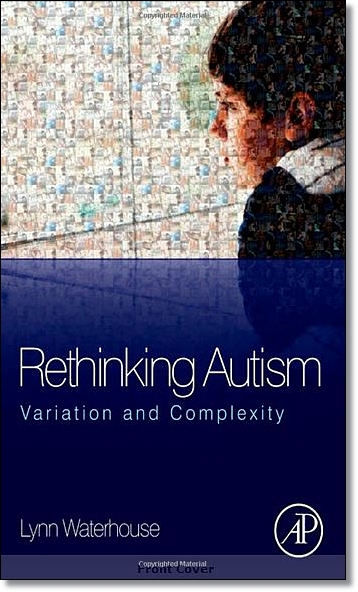
Rethinking Autism Variation and Complexity by Lynn Waterhouse is a recent work which provides a thorough, expert and extremely well researched picture of the variation and complexity of  autism spectrum disorders.

Hopefully the rest of the professional and academic autism community will read Rethinking Autism and come to grips with autism variation, complexity and heterogeneity. The highly influential autism advocacy corporation Autism Speaks has typically done a poor job of representing the heterogeneity of the autism spectrum of disorders. AS has aggressively promoted the careers of John E Robison and Alex Plank two very, very high functioning persons with Aspergers/Autism Spectrum Disorders.  At the same time Autism Speaks has also obscured the existence of the 40% of persons estimated to have autism and an intellectual disability and the large number of persons with autism who also suffer from epileptic seizures.


In what may be a major breakthrough for Autism Speaks, in the post Geraldine Dawson era, and a possible step forward in public understanding of autism disorders a high ranking Autism Speaks official, Michael Rosanoff, Autism Speaks associate director for public health research and scientific review, has acknowledged the heterogeneity of autism spectrum disorders in clear, unambiguous terms, in  a Detroit Free Press article Brain changes of autism may begin in the womb:

"Rather than one disease, autism is now regarded as a collection of conditions with similar traits but different causes, Rosanoff says. People on the autism spectrum are extremely diverse. Some are non-verbal and profoundly disabled; others have successful careers, particularly in science and technology, describing themselves as different, rather than disabled. "Autism is so heterogeneous," Rosanoff says. "We're never going to get to the one cause.""

For anyone else, including other Autism Speaks officials who want to catch up to Mr. Rosanoff in understanding autism disorders, autism researchers and major media columnists interested in a thorough, scholarly view of autism spectrum disorders I strongly recommend Rethinking Autism: Variation and Complexity by Lynn Waterhouse. 

Saturday, August 10, 2013

OTARC Panel: Dr. Giacomo Vivanti: Does Severe Autism Cause Intellectual Disability?

Excellent panel discussion by the La Trobe University Olga Tennison Autism Research Centre (OTARC) with Dr. Giacomo Vivanti, Dr. Cheryl Dissanjake and Dr. Cynthia Zierhut.  The panel comments on the cultural representation of autism as genius in movies such as Rain Man and television series such as the Big Bang theory. Dr. Vivanti talks about autism research tendency to focus on high functioning autism perceived by many autism researchers to constitute "pure" autism research.  He calls this bias into question as non evidence based,  circular reasoning. There is no legitimate basis to separate autism and intellectual disability as "comorbidity".  

Dr. Vivanti's recent paper, Intellectual development in autism spectrum disorders: new insights from longitudinal studies,  has looked at the possibility that severe autism itself causes intellectual disability an hypothesis which itself is controversial.

Monday, July 29, 2013

Severe Autism: Autism in the Shadows - Thank You Amy Mackin


"My son’s story is one of hope, not unlike the stories regularly broadcast on television, printed in magazines or making the rounds on YouTube. Yet the autism spectrum is wide and diverse, and many who suffer from severe autism will never reach the level of functioning that my child has achieved. Although these people are also part of the story, we rarely hear their stories."

Amy Mackin, Autism in the Shadows, Washington Post, July 19, 2013

Amy Mackin is a writer and a blogger who writes at www.amymackin.com.  She is also the mother of an autistic child who she describes as high functioning in the Autism in the Shadows opinion piece she wrote for the Washington Post. Although here son is high functioning Ms. Mackin's article is an eloquent, direct and powerful statement about the invisible autistics, those who live at the severe end of the autism spectrum.  As the father of a 17 year old son who lives at the severe end of the autism spectrum I thank Amy MacKin for her concern for those with severe autism, those who are ignored and neglected (with some exceptions) by both the mainstream media AND by  autism research professionals.  Amy Mackin has spoken the truth about severe autism honestly and directly:

"We must see the pain of a parent who watches her child smash his head against a concrete wall, who throws himself on the floor of a store because he simply cannot stand the fluorescent lights another second; the person who starts violently screaming because the crowd getting off the subway terrifies him. We must feel the anguish of compassionate caregivers when everyone around is staring at their loved one with horror and judgment. We must comprehend the grief of parents who are forced to acknowledge that their children may never be able to care for themselves, and we should consider all the future decisions and worry that realization encompasses.

Many personal stories about autism make us smile and renew our faith in humanity. But some stories will make us cry. They should, because autism can also be terrifying and hopeless. This side of the spectrum still lurks mostly in the shadows. But to fully understand why we search so exhaustively for answers and doggedly seek a cure, these stories must be seen and heard, too."

Thank you Amy Mackin. 

Saturday, July 27, 2013

Conor Countdown Continues In Support of FLEXIBLE, EVIDENCE BASED Inclusion


The Conor Countdown continues, as Conor gets up each day at 6 am and changes the number reflecting the number of days until school resumes.

My son Conor, and his autism disorder disability,  have been well accommodated in schools here in Fredericton, New Brunswick, Canada.  He has benefited both from the assistance of education aides and resource teachers trained in the UNB-CEL Autism program and by placement, at our request, outside the regular classroom for his ABA based instruction.

 His placement is not segregation in the sense of the racial segregation which once prevailed in the American south.  His placement reflects the fact that Conor's autism based sensory sensitivities and need for predictable routine, coupled with his individualized learning style and instruction methods require a quieter learning environment. 

In the regular classroom, early in Conor's education,  he bit his hands every single day until he was removed to a quieter location where the self injurious biting ceased. Now in high school his individualized instruction continues but he has many, many opportunities for socialization at the Leo Hayes High School Resource Centre with other students with special needs, in common areas and activities like school outings, visits to the cafeteria and ... Conor's favorite by far ... in weekly visits to the Nashwaaksis Middle School swimming pool. 

Conor loves his flexible, evidence based schooling so much that the summer, with no school, is a difficult time for him.  We do our best to help him during this period and Conor does his best to help himself.  One of the activities that helps him get through the summer break is the "Countdown".  Each day, every day, at 6 am Conor gets up and changes the number on his board under the question "How Many Days Until School?"  He can see the number getting smaller each day, he can take steps each day to make the number smaller reducing his anxiety and frustration.

Conor's self injurious biting while placed in the regular classroom was a vote against the extreme, non evidence based "regular classroom for all students" philosophy. Now, during the school year Conor packs his lunch bag every night and puts it in front of the side door to the driveway and Dad's car. During the summer Conor does his "How many days until School" countdown.  Both activities are strong compelling statements from Conor in support of the flexible, evidence based, inclusive education he has received at school since being removed from the regular classroom.

Thursday, July 25, 2013

Run Jump Fly Boy Is Back - Thank You Again DECH ICU!


A few months ago, Conor was lying unconscious  in a bed at the Intensive Care Unit of the Chalmers' Hospital (the DECH) with tubes running out of his body and hooked up to 10+ year old monitoring equipment.  Notwithstanding the age of the monitoring equipment the fantastic DECH ICU team brought Conor back to us without any restrictions or impairments.  Conor's recovery has been constant since his release and we are happy. Today on the trail Conor hit the final recovery benchmark with the return of our Run, Jump, Fly boy!


Wednesday, July 24, 2013

Why I Chose Autism REALITY As My Social Media Name


The picture above, for those visiting my blog for the first time, is my son Conor now 17+ years old.  I love him dearly and he brings great joy into my life every day.  He is also severely autistic with severe cognitive challenges (intellectual disability) and like many with those characteristics he also suffers from epileptic seizures.  As great a joy as he is he also engages in acts of self aggression and suffers from sensory challenges, meltdowns and obsessively repetitive behaviors that are very disruptive in themselves.  

For Conor his autism is not a joy, a blessing, a superior ability or a different way of thinking.  It is a serious disability, a disorder,  and his intellectual disability and epileptic seizures are not "co-incidences" or "co-morbidities". They are part  of his reality, a unified part of his reality, together they limit his life expectancy. Those are all facts that I have been determined to face throughout his life so that I do not do him a disservice.

I will never run from Conor's reality because to do so, as it would for an obvious, physical disability, could be harmful to him.  I have chosen long ago not to embrace the non evidence based belief that if I only pretend that autism is a blessing that somehow that belief will magically transform reality. 

I have helped Conor by being part of his life and enjoying his company every single day and will do so as long as I live. I have tried to help my son, and others in my province and country who suffer as he does, through determined advocacy, by  facing reality head on. And I will continue to do so as long as I live.  Others can choose political correctness and feel good cliches. I will continue to deal with autism ... reality ... and love my son as I do.

Autism`s 40% With Intellectual Disability? Auti$m $peak$ Doesn't See YOU, Doesn't Speak For YOU!


Autism Speaks has done much to create publicity around the word autism, the color blue, puzzle pieces and ... some very talented, high functioning individuals with autism diagnoses like Alex Plank and J. E. Robison.  In terms of its public statements and presentations though it does little to nothing to  raise awareness about one very basic fact: autism has a very close relationship with intellectual disability to the extent that 40% of persons with autism spectrum diagnoses (DSM-IV) also have intellectual disability. 

Prior to the DSM-IV and prior to the addition of PDD-NOS and Aspergers persons with intellectual disability constituted the vast majority of persons with autistic disorder.  Autism Speaks has reluctantly acknowledged that 40% of persons with autism have intellectual disability but does not reflect their existence in their press releases.  Autism Speaks conflicted attitude toward those with autism and intellectual disability was illustrated vividly in the recent Drake and J. Cole lyrics uproar when Autism Speaks defended persons with autism but not those with autism and intellectual disability. Instead of criticizing the rappers for their derogatory reference  to persons as “autistic, retarded." Autism Speaks went further and argued that in fact persons with autism are very successful and talented. No mention was made in the Autism Speaks press release of the 40% of the autism spectrum who are intellectually disabled even though the words "mentally retarded." have been replaced by the words intellectually disabled.  

Autism Speaks chose not to stand up for the intellectually disabled members of the "àutism community" even though they were  expressly  maligned in the original lyrics:


"Lyrics from the recently released song “Jodeci Freestyle” from hip hop artists Drake and J.Cole have many in the autism community up in arms. The song, which was released last month and is now getting airplay, contains the following lyric by J. Cole: “I’m artistic, you n----s is autistic, retarded." 

These lyrics are offensive and perpetuate negative stereotypes. There are many inspiring individuals with autism and other disabilities who have achieved great success across a variety of artforms, including music. We encourage J. Cole to recognize their talents and learn from the positive example they have set for all of us."

This is not the first time Autism Speaks has chosen to ignore the intellectually disabled 40% while promoting the very, very, very high functioning elite members of the autism spectrum like J. E. Robison and Alex Plank.  There is almost never any mention of the intellectually disabled in promotions and news releases by Autism Speaks or on their web site.  I have previously noted that Autism Speaks has only reluctantly acknowledged the existence of intellectual disability on the About Autism section of its web site burying mention of 40% with ID in the middle of the page, book ended by references to those with high IQs and abilities.

In the "rapper incident" AS went further than just ignoring those with autism and intellectual disability.  They implied that persons with autism, all persons with autism, are in fact talented, successful people.  They were ashamed to mention and defend the 40% with autism and Intellectual Disability.  The rappers have offered sincere apologies and taken steps to address the issue by changing the lyrics.  Rapper J.  Cole even acknowledged the existence of those with severe autism and their families.  By their actions Drake and J. Cole have shown themselves to be ahead, light years ahead of Autism Speaks in caring about ALL persons on the autism spectrum including the 40%  intellectually disabled.  

Monday, July 22, 2013

Severe Autism Breakthrough: J. Cole Offers Sincere Apology And Acknowledges Existence of Severe Autism

Dreamvillain


Rapper J. Cole has offered what appears to this observer to be a very sincere apology, one offered without qualifications and one which actually offers a breakthrough for those who, like my son, suffer from severe autism. Unlike most prominent autism advocates rapper J. Cole actually acknowledged the existence of, and included in his apology, those at the severe end of the autism spectrum.  

Many autism advocacy organizations and "self" advocates routinely denigrate anyone who mentions severe autism disorders. Television series, movies and feel good mainstream media rarely acknowledge the severe, low functioning end of the autism spectrum. Rapper J. Cole's apology, however,  set out on his blog, DREAMVILLAIN, extended to all persons with autism disorders including those with severe autism and their families. 

I hope Autism Speaks, in particular, takes note of Cole's references to those with Aspergers AND those with severe autism and their families. If Rapper J. Cole can acknowledge the existence of severe autism surely Autism Speaks can do the same and start addressing the challenges facing the 40% on the autism spectrum who also suffer from intellectual disability and the many spectrum members who suffer from serious "comorbid" conditions like epileptic seizures. Cole's apology is set out hereafter in full, as stated on his blog, with my underlining added. 

Autism Speaks

Recently there’s been a trend that includes rappers saying something
offensive, only to be attacked for it in the media and pressured to
apologize. I have to be completely honest and say there’s a part of me
that resents that. I view rap similar to how I view comedy. It’s going
to ruffle feathers at times. It’s going to go “too far”. I do not
believe that an apology is needed every time someone is offended,
especially when that apology is really only for the sake of saving an
endorsement or cleaning up bad press.
With that said, this is not the case today. This letter is sincere.
This apology IS necessary.
In a recent verse on the song “Jodeci Freestyle”, I said something
highly offensive to people with Autism. Last week, when I first saw a
comment from someone outraged about the lyric, I realized right away
that what I said was wrong. I was instantly embarrassed that I would
be ignorant enough say something so hurtful. What makes the crime
worse is that I should have known better.
To the entire Autism community who expressed outrage, I’m moved and
inspired by your passion, and I’m amazed at how strong you are as a
unit. I have now read stories online from parents about their
struggles and triumphs with raising an Autistic child and I admire how
incredibly strong you have to be to do so. It’s touching. It also
makes what I said even more embarrassing for me. I feel real shame.
You have every right to be angry.
To anyone suffering from Autism, either mildly or severely, I am
sorry. I’m bound to make mistakes in my life, but in my heart I just
want to spread Love.
I want to educate myself more on Autism, and I’ll gladly own my
mistake and serve as an example to today’s generation that there’s
nothing cool about mean-spirited comments about someone with Autism.
People with this disorder and their loved ones have to go through so
much already, the last thing they need is to hear something as
ignorant as what I said. I understand.
To the parents who are fighting through the frustrations that must
come with raising a child with severe autism, finding strength and
patience that they never knew they had
; to the college student with
Asperger’s Syndrome; to all those overcoming Autism. You deserve
medals, not disrespect. I hope you accept my sincere apology.
Much Love
-Cole
Well said Cole, well done. 

Wednesday, July 17, 2013

Dear Anna Kennedy: Please Stop Misrepresenting Autism, Autism Is A Health DISORDER NOT a Gift


Anyone  described as "having autism" or "being autistic" 
would have received an autism disorder diagnosis 
pursuant, in all likelihood, to either the DSM or the ICD 

Dear Anna Kennedy

My 17 year old son Conor who was diagnosed 15+ years ago with "autistic disorder" (now autism spectrum disorder) and profound developmental delays ( a euphemism for intellectual disability) is truly a gift. Conor brings great joy to our lives as shown on the sample pictures that follow.  While Conor is a joy, however, his autism disorder is not.  Nor is his autism disorder a GIFT or a SUPER ABILITY.


Conor's autism is a disability and a disorder and that is WHY he received a medical diagnosis of autism (autistic disorder).  While there may be some autistic individuals with special gifts he is not one of them.  Conor is one of the 40% of persons with autism and intellectual disability.  As you probably know that combination also makes him more likely to suffer from epileptic seizures and indeed Conor has suffered two grand mal seizures in six months.  He also suffered a life threatening reaction to his anti-seizure medication at the time. Other challenges brought by his autism disorder are wandering, self injurious behavior (self biting and head banging) and obsessive behaviors.  There is abundant literature indicating that those with autism, ID and epilepsy are at particular risk of shortened life expectancy.

Drake and Cole deserve to be admonished for their denigration of persons with autism AND for their denigration of persons with intellectual disabilities.  The solution, however, is not to circulate a petition which claims that autism is a gift or a super ability. In doing so you mislead the public about serious, challenges faced by the vast majority of persons with autism DISORDERS.  If you continue to misrepresent autism to the world you will probably cause harm to people like my son who in fact suffer from their autism disorders.  

I have been advocating publicly in my home province of New Brunswick, Canada for 15 years with other parents and we have achieved some success in ensuring that NB children with autism receive evidence based early intervention and that autistic students receive assistance from autism trained education assistants and resource teachers.  I have visited two psychiatric hospital facilities and met severely autistic adults living out their lives in those institutions and I continue to advocate for modern residential care and treatment options for adults with autism.

Any successes we have achieved, or hope to achieve, are based on presenting accurate, informed, evidence based portrayals of the realities of autism disorders to government decision makers and to the public at large.  Portraying autism as a gift misleads everyone about the real challenges faced by many with these very serious disorders.


Please reconsider your misleading public characterization of autism as a gift and super ability and acknowledge clearly that autism disorders are exactly that ... disorders.  My son is a gift, his autistic disorder is not. 

Respectfully,

Harold L Doherty
Fredericton, New Brunswick
Canada

Tuesday, July 16, 2013

Conor's Fredericton Adventures 2013 Part I


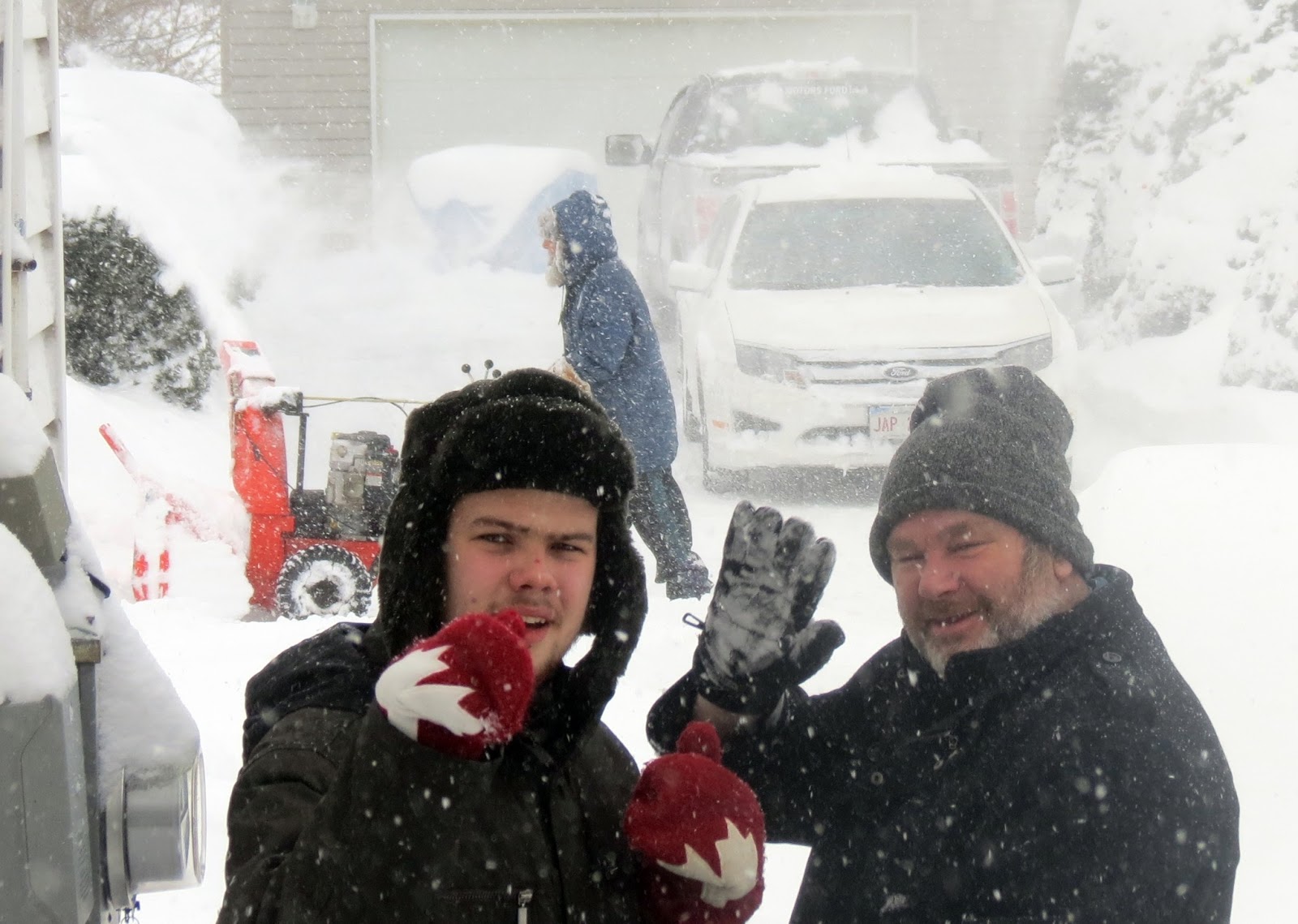
Conor & Dad, couple of hosers enjoying the snow, eh?


Conor's Saint John River view clear day, above, not so clear below


Conor helps Dad with a visit at the Chalmers Hospital Acute Care Unit


Conor and Mom head out for  a stroll on the North Riverfront Trail


Conor changes his mind about the strolling part


Conor enjoys a late March snowstorm eh?


Conor isn't the only one who gets to fly along our North Riverfront Trail


The Run Jump Fly Boy lets it all loose on the North Riverfront Trail, Fredericton


Just days after Conor was running, jumping and flying down the trail he was taken by ambulance to the Chalmers Hospital in Fredericton where he spent 6 days in the Intensive Care Unit, and a total of 2 weeks in hospital, as a result of a life threatening adverse reaction to his anti seizure medication. 


Many thanks to the incredible doctors, nurses and staff at the Chalmers Emergency and Intensive Care Units for saving our Conor.


Conor didn't take too long to fully recover and there was no better way to show it than heading out on the trail with Mom and Dad ... where he had to wait from time to time for us to catch up.

Looking forward to lots more fun with Conor on the trail and elsewhere in 2013.  I hope he continues to enjoy the wonderful outdoor environment that Fredericton and friends like the Ospreys shown below offer. 


Sound Advice for Autism Speaks


In yesterday's commentary  Autism Speaks Joins Drake And J.Cole In Insulting 40% With Autism AND Intellectual Disability I criticized Autism Speaks for stigmatizing persons with Intellectual Disability, particularly the 40% of persons on the autism spectrum with ID, the 40% that Autism Speaks seldom acknowledges in its promotions and literature.  

I received the comment, posted above, from BLOOM - Parenting Kids With Disabilities editor Louise Kinross that expresses my issue with Autism Speaks' approach to intellectually disabled members of the autism spectrum better than I did. It would do Autism Speaks and the autism community it purports to represent  a great service to give serious consideration to Louise's comment. 

Monday, July 15, 2013

Autism Speaks Joins Drake And J.Cole In Insulting 40% With Autism AND Intellectual Disability


Autism Speaks has joined rappers Drake and J. Cole in insulting persons with Intellectual Disability particularly the 40% of the autism spectrum with intellectual disability.  The rappers had published song lyrics referring in an insulting manner to persons who are "autistic, retarded".  Autism Speaks did not simply criticize the rappers for denigrating persons who were autistic or intellectually disabled. Autism Speaks criticized the rappers for perpetuating negative stereotypes and for failing to recognized the many persons with autism and "other" disabilities who have enjoyed great success and talents.  

Presumably it would have been OK in the view of Autism Speaks if the rappers had mocked only the 40% with intellectual disabilities or those who were not successful or did not display exceptional talents.   It is not clear to this father of a severely autistic son with profound developmental delays, who lacks an exceptional talent, who Autism Speaks for but it clearly does not speak for my son. 

There are no doubt many in the high functioning end of the autism spectrum community who would  be insulted by the rappers lyrics ... my son who would not understand the lyrics is not one of them. I love my son and I take insult at the smarmy lyrics of Drake and Cole simply because they intended to insult persons like my son who are autistic and/or intellectually disabled not because they failed to recognized the talents and intellects of higher functioning persons with autism disorders. I am also ticked off, but not surprised, by Autism Speaks for essentially endorsing the rappers mocking of intellectually disabled a term which does not even appear in the Autism Speaks criticism.   Nowhere are autism's 40% intellectually disabled more invisible than within the Autism Speaks agenda:

Hip Hop Lyric Insults Autism Community

"Lyrics from the recently released song “Jodeci Freestyle” from hip hop artists Drake and J.Cole have many in the autism community up in arms. The song, which was released last month and is now getting airplay, contains the following lyric by J. Cole: “I’m artistic, you n----s is autistic, retarded." 


These lyrics are offensive and perpetuate negative stereotypes. There are many inspiring individuals with autism and other disabilities who have achieved great success across a variety of artforms, including music. We encourage J. Cole to recognize their talents and learn from the positive example they have set for all of us."

Sunday, July 14, 2013

DSM-5 Autism Emperors' Ridiculous Assumption


"The fifth edition of the diagnostic and statistical manual of mental disorders (DSM-5) (APA in diagnostic and statistical manual of mental disorders, Author, Washington, 2013) has decided to merge the subtypes of pervasive developmental disorders into a single category of autism spectrum disorder (ASD) on the assumption that they cannot be reliably differentiated from one another."

LY Tsai, M. Ghaziuddin (JADD 2013) DSM-5 ASD Moves Forward into the Past


I agree with the observations of Tsai, Ghazuiddin and Dr. Waterhouse.  I have none of their outstanding academic and research  qualifications.  I am a humble Canadian labour lawyer, the father of a severely autistic 17 year old son, with "profound developmental delays" who has, like 25% of those with severe autism and intellectual disability also suffered from serious grand mal seizures.  My 17  year old son, who I love dearly, whose joyful visage adorns the sides of this blog,  reads at a Dr. Seuss level.  He is not autistic in the manner of a Michelle Dawson who appeared at the Supreme Court of Canada to argue as an "autistic" against the parents from British Columbia who were seeking Medicare coverage for evidence based ABA treatment for their autistic children.  My son is not autistic in the manner of an Ari Ne'eman who graduated from university, founded a corporate entity called ASAN, participates as a member of the IACC and lectures journalists on what it means to be autistic in a meeting of the Washington press corps.

I don't have the academic autism credentials of the distinguished names mentioned above.  I do have credentials as an autism father who has loved and cared for a severely autistic son for 17+ years. I have credentials as an autism advocate who, in my home Canadian province of New Brunswick, has advocated with other parents with success for early evidence based intervention for autistic children, autism trained Teacher Assistants and for the continuation of a tertiary care autism center for NB children and youth when threatened with closure by bureaucratic decree.  In my continuing advocacy for autistic adults I have visited psychiatric hospitals where they have lived in the absence of a residential care system to meet their needs. I have conducted many meetings with other autism parents as the Autism Society New Brunswick and met many autistic children and adults from my son's severe end of the spectrum to the very high functioning "Aspergers" end. 

What my experience, what my daily life for 17+ years has always told me, is that there are vastly different realities facing those on the autism spectrum. There is no evidence justifying the lumping together of these hugely different realities under the label Autism Spectrum Disorder.  To borrow the words of Dr. Waterhouse autism to any reasonably informed observer is marked by heterogeneity and complexity.

As Tsai and Ghazuddin have said the DSM-5 ASD is counter to evidence and is based on the assumption that "they cannot be reliably differentiated from one another."  

That assumption is not just wrong. It is in the humble opinion of this informed autism father a ridiculously false assumption.

Thursday, July 11, 2013

40% Intellectual Disability In Autism Disorders: Coincidence or Consequence?


I have never subscribed to the assumption that Intellectual Disability is a co-morbidity as described by the authors of a new study examining Intellectual  Disability in Autism: (unrelated in etiology and causality from the ASD itself)  I have been frustrated by the historical tendency of  "autism" researchers to exclude intellectually disabled autistic subjects from their research studies.  I am very disappointed with Dr. Lord, Dr. Swedo, Dr. King and other APA members for their efforts to further the artificial disassociation of Intellectual Disability from Autism Spectrum Disorder (s) in the DSM5.  I have always believed, as the father of a severely autistic son with "profound developmental delay", and contrary to the "autism as strength" ideology of Dr. Laurent Mottron and Michelle Dawson, that autism and intellectual disability are inseparable components of my son's condition. I am very pleased to see reports of a new study, as set out in this brief online paper by the authors of that study, which begins to examine the ID and ASD relationship front on and with complete intellectual honesty.  

I hope that the proof of principle resulting from the study  that "ASD symptom severity contributes to the extent to which the environmental input required to support “typical” brain development can be processed by the individual, so that the risk of developing ID increases as the number and severity of ASD social-communicative impairments increase"  is pursued further and that additional research on this topic is not squelched by the political correctness of those who control autism research funding dollars.

I also hope that researchers study the ID in ASD issue from  different perspectives:  that the ID increases the severity of the ASD symptoms and that ID and ASD are simply different aspects of one condition.   This humble father  does not believe that my son's severe autism symptoms and ID are separate coincidental or "comorbid" conditions.  I am pleased to see these "down under" Austalian researchers joining the ranks of the few with the intellectual honesty and curiousity to study the Intellectual Disability component of autism symptoms and disorders.

Intellectual development in autism spectrum disorders: new insights from longitudinal studies

Giacomo Vivanti1,2*, Josephine Barbaro1, Kristelle Hudry1, Cheryl Dissanayake1 and Margot Prior1,3
  •   1Olga Tennison Autism Research Centre, School of Psychological Science, La Trobe University, Melbourne, VIC, Australia
  •  2Victorian Autism Specific Early Learning and Care Centre, La Trobe University, Melbourne, VIC, Australia3
  • 3 Melbourne School of Psychological Sciences, University of Melbourne, Melbourne, VIC, Australia
The presence/absence of Intellectual Disability (ID) is considered to be the most critical factor affecting outcomes in individuals with Autism Spectrum Disorders (ASD). However, the question of the specific nature of ID in ASD has received little attention, with the current view being that ID is a comorbid condition (i.e., one that is unrelated in etiology and causality from the ASD itself). Recent advances in developmental neuroscience, highlighting the importance of early exposure to social experiences for cognitive development, support an alternative view; that ID in ASD might emerge as a consequence of severe social-communication deficits on the experience-dependent mechanisms underlying neurocognitive development. We tested this prediction in two independent samples of young children with ASD (Ns = 23 and 60), finding that children with greater ASD severity at an initial assessment were more likely to present with poorer cognitive outcomes at a later assessment, irrespective of initial cognitive level. The results of this proof of principle study suggest that ASD symptom severity contributes to the extent to which the environmental input required to support “typical” brain development can be processed by the individual, so that the risk of developing ID increases as the number and severity of ASD social-communicative impairments increase.