Saturday, June 16, 2012

Rational, Flexible Inclusion: The Fully Inclusive Classroom Is Only One Of The Right Ways To Meet The Best Interests Of The Special Needs Child (Henteleff, 2004)

Attached hereto is a PNG copy as well as a PDF copy link to "The Fully Inclusive Classroom Is Only One Of The Right Ways To Meet The Best Interests Of The Special Needs Child"(2004) by Yude M. Henteleff, C.M. Q.C., L.L.D. (Hon).  Mr. Henteleff outlines succinctly and compellingly the legal basis for a rational, flexible model of inclusive education, one which will permit children with special needs, including severely autistic and developmentally delayed children like my son to participate in a safe, meaningful and rewarding education.  Here in New Brunswick the Porter-Aucoin report is pushing us Back To The Future, back to the simplistic and fundamentally flawed mid 1980's approach of forcing all children, regardless of their needs and challenges, to receive their education in the mainstream classroom.  The CACL and NBACL are now imposing their simplistic "vision" on schools in New Brunswick contrary to the 2009 NB policy defining inclusive education as being evidenced based and based on the best interests of each individual child. 

Dr. Henteleff's 2004 paper represents an articulate, sophisticated analysis by one of Canada's most distinguished lawyers who has represented many disability groups including autism groups and learning disability association groups over a long and distinguished career. Unfortunately, our current NB Premier David Alward and Education Minister Jody Carr are faithful followers of Gordon Porter's   simplistic inclusion "vision".  Hopefully future NB governments will just walk away from that "vision".  The Henteleff critique, first presented to the CACL in 2004 and maintained on their web site until recently provides a rational, flexible alternative for future NB administrations.  Mr. Henteleff also presented a new submission at the Atlantic Human Rights Centre inclusive education conference.  It will be made available to participants after the conference and I will post it on this site.  

Many thanks to Mr. Henteleff.  And thanks to my friend Claire who was kind enough to provide me with access to a copy of the attached paper.


Thursday, June 14, 2012

Hey Claire, I Bumped Into Yude Henteleff Today at the Atlantic Human Rights Centre Inclusive Education Conference in Fredericton!


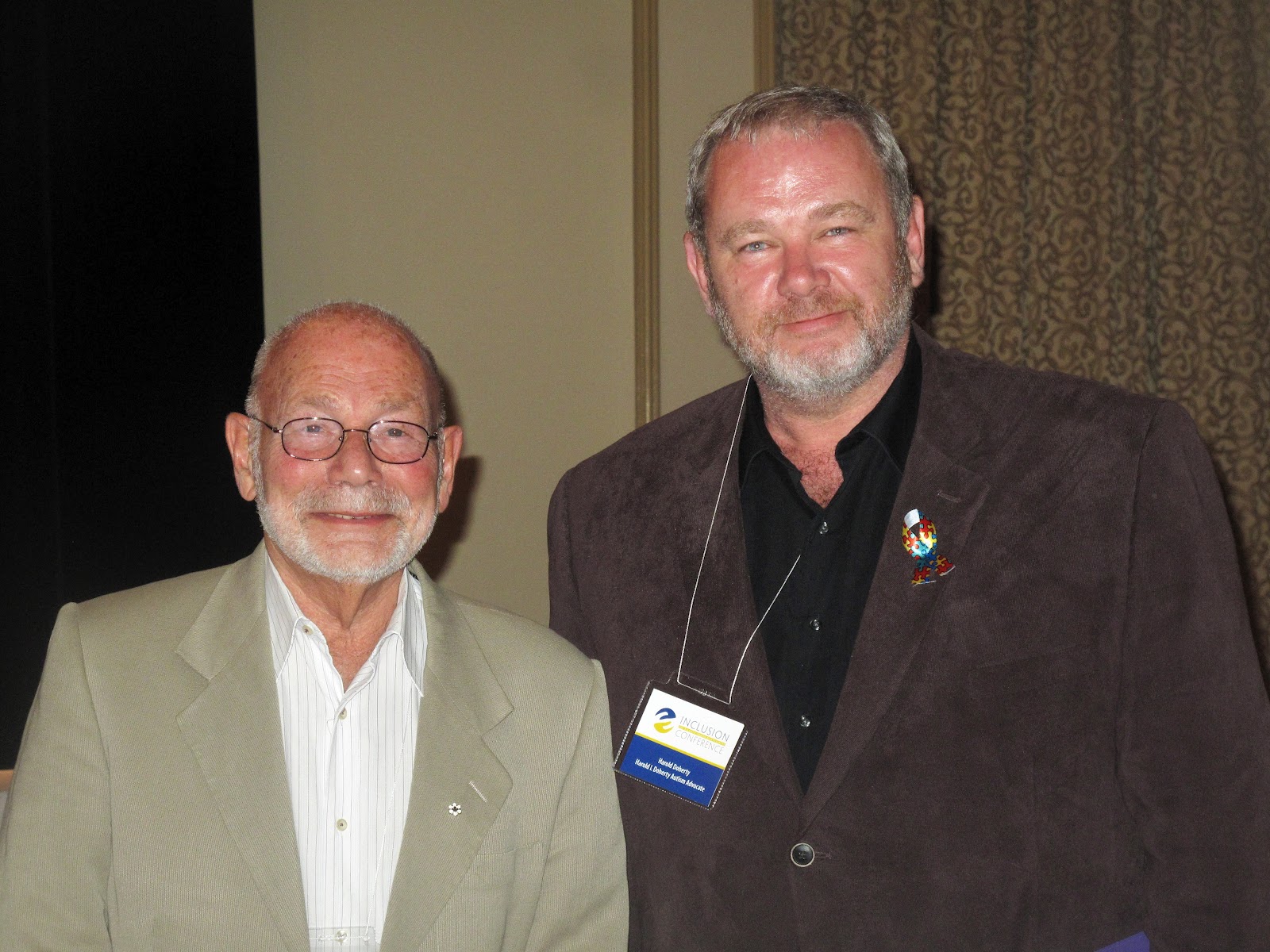
L: Yude  M. Henteleff, C.M., Q.C., L.L.D. (Hon.)     R: Harold L. Doherty 
at the Atlantic Human Rights Centre Inclusion Conference
Crowne Plaza Fredericton-Lord Beaverbrook, June 14, 2012 


THE FULLY INCLUSIVE CLASSROOM IS ONLY ONE OF THE RIGHT WAYS TO MEET THE BEST INTERESTS OF THE SPECIAL NEEDS CHILD
(NOTE: Apparently the CACL has removed Mr. Hentelleff's paper from their website)

Presented by Yude M. Henteleff, C.M., Q.C.
to the
C.A.C.L. NATIONAL SUMMIT ON INCLUSIVE EDUCATION
OTTAWA, ONTARIO
NOVEMBER 24, 2004

Imposing a standard, namely that the inclusive classroom meets all needs, is a perception not based on reality and is stereotypical. In other words, the standard takes the position that one environment meets the needs of all special needs children. By its very nature, such a standard is discriminatory, as was made clear by the Supreme Court of Canada in the Meiorin, Grismer, Law and Mercier decisions.   (Y.M. Henteleff)

Claire I couldn't help but think of you, when I saw Yude Henteleff at the inclusion conference today. We both respect Mr. Henteleff's outstanding work advocating for disability groups and advancing a rational, flexible model of inclusion that accommodates the challenges faced by children with severe disability deficits. 

Wednesday, June 13, 2012

What Do NB Teachers Really Think About The Porter-NBACL Full Inclusion Model?


What do New Brunswick teachers really think about the full inclusion model  which has been pushed relentlessly in NB schools by Gordon Porter and the New Brunswick Association for Community Living since the mid-1980's? The truth is many teachers recognize that extreme, everyone in the regular classroom inclusion does not work.  Teachers know this but they are afraid, for good reason, to speak up while they remain employed in New Brunswick schools. Speaking up and openly criticizing  the Inclusion Illusion would be detrimental to their careers and livelihoods and they know it.

Full inclusion, as defined by Gordon Porter, means "everyone in the mainstream classroom" as Mr. Porter preached to a Newfoundland audience a few weeks ago:


"Porter’s session revolved around the theme of parents and teachers working together to make inclusion work.“It means kids go to their neighbourhood schools with kids their own age in regular classes,” said Porter.“If you’re seven years old you go to the school just down the street. You go in a class with other seven-year-olds, and you’re supported if you have extra needs. “It’s so simple, it’s that simple,” said Porter."


I am a supporter of flexible inclusion and I am a critic and opponent of the full inclusion, everyone in the mainstream classroom inclusion, of Gordon Porter and his followers with the NBACL.  This father of a son with Autistic Disorder, and profound developmental delays learned long ago that Mr. Porter's  regular classroom is not appropriate for my son's learning requirements. It caused him harm and resulted in self injurious behavior repeated, severe biting of his hands and wrists. Today he is very well accommodated by a flexible inclusion which sees him receive his instruction in a quiet area outside the regular classroom.  He starts his day, has lunch, and has friends in a resource center in his high school with other students with challenges, challenges which Gordon Porter's full inclusion model would not accommodate.  He attends many events with his group from the resource centre and he loves, he absolutely loves going to school.

On my son's behalf and as a representative of the Autism Society New Brunswick I participated in the MacKay and Ministerial Inclusion reviews.  During these proceedings I was approached by teachers who thanked me for speaking out for a flexible model of inclusion.  Some children with an Autism Spectrum Disorder can function in the regular classroom, some can not.  Teachers can see that in their daily work, in respect of autistic students and others with severe challenges. Teachers though,  like most employees, know which way the wind blows where they work.  They know that if they preach the full inclusion gospel according to Gordon Porter they will be viewed favorably by the higher ups in the education department and the de facto education department ... the New Brunswick Association of Community Living. They know that if they publicly criticize full inclusion their careers could suffer. 


My experience during the inclusion review proceedings has been replicated after I have spoken publicly on television and radio.  I have been approached by many teachers who told me that they and their colleagues support my efforts in speaking up about the shortcomings of full (extreme)  inclusion. I have been encouraged by many teachers to continue critiquing the full inclusion model which governs the mindset of those who determine how our children will be educated.


I don't expect anyone in the office of the Minister of Education and Early Childhood Development or at the "bricks and mortar" building of his colleagues at the NBACL to believe what I have stated.  They do not accept actual direct evidence that conflicts with their full inclusion model and they will certainly not accept my hearsay evidence based on undisclosed witnesses to what actually happens in our regular "inclusive" classrooms. The full inclusion true believers simply ignore such evidence and blame problems on the students themselves or argue that more resources are needed in the classroom under the guidance of classroom teachers.  Then everything will work smoothly.  


The full inclusion model of Porter and the NBACL is not an evidence based approach to education.  It is at best a  feel good philosophy.  At worst it is an illusion.  The full inclusion illusion.  One that can literally cause harm, mental, emotional, even physical harm, to some children for whom it is not an appropriate learning environment. This father of a son with severe challenges knows it.  The teachers who work on the front lines educating our children also know it.


The attached document is the 2005 report of an executive committee of the New Brunswick Teachers' Association which describes New Brunswick schools as being in a state of crisis.  The NBTA's report talks about the classroom composition concerns expressed by the teachers they represent but denies that the issue is classroom composition; the issue for the Association is the need for more support in the classroom.   If you look under the politically correct tap dancing of the NBTA's report though there is an honest recognition in many of the statements of its' members that classroom composition is in fact the issue.  I have posted the 5 page summary of the committee's recommendations following my comments in case the document is removed from the NBTA web site in future.


Saturday, June 09, 2012

Thank You To All Who Were Involved With NB`s Incredible Autism Success Story: The UNB-CEL Autism Intervention Training Program


The foundation for the autism service gains that have been made in New Brunswick over the past several years has been dismantled and shut down for good. The screen image above is what I found when I did a search of the University of New Brunswick web site looking to see what, if any, course would still be offered by the UNB-CEL Autism Intervention Training program.  The content section of the screen, however, was literally blank. The UNB-CEL Autism Intervention Training Program is no more.

I was aware for some time that the Alward-Carr-Porter team would not continue to train education assistants and resource teachers through the program.  Autism training will be done "in house" by an education department hierarchy that resisted the program in the first place because it wasn't their project and because they thought it cost too much.  Now pre-school early intervention autism workers will no longer be trained at UNB-CEL either.  Apparently Minister Carr and his combined education-early childhood development team feels that it can do better by consulting experts to instruct our autism intervention agencies on how to provide their own versions of in house early autism intervention.  Minister Carr and Gordon Porter  will call the services they oversee evidence based but an evidence based autism intervention requires a level of quality and integrity that in house training subject to conflicting adult interests is unlikely to meet.

The UNB-CEL Autism program arose as a response to determined advocacy by parents of autistic children.  The program provided NB`s autistic children and students with quality and integrity in the intervention and instruction they received.  Former Premier Bernard Lord responded very personally, and very constructively,  despite the at times combative nature or our advocacy, to our requests.  His government looked for service providers that could provide the necessary early intervention services.  Rather than import and pay huge fees to import services from Ontario a steering committee of various autism professionals, academics and parents involved with autism issues thought it would be a good idea to develop a program using local expertise.  Premier Lord, and after him Premier Graham,  agreed and UNB-CEL provided the autism training for the services our children needed.

Anne Higgins, a brilliant administrator who at that time was with the University of New Brunswick was a key part of the group that founded the UNB-CEL Autism Intervention Training program.  She put a tight organizational plan together and implemented it  with incredible efficiency.  UNB Professor Emeritus (Psychology) and clinical psychologist Paul McDonnell and UNB Psychology professor Barb D'Entremont led the team at UNB that developed the content for the program.  Private autism agencies were established and the UNB-CEL Autism Intervention Training program was used to train early autism intervention and clinical supervisors for New Brunswick's two official language groups.

New Brunswick parents of autistic children advocated for an extension of the UNB autism training to the school system with requests that teacher assistants and resource teachers working with students with autism also receive the UNB autism training.  Both Premier Lord and Premier Graham, in direct discussions with representatives of New Brunswick's autism community, responded positively.  

The training of early intervention and education personnel working with autistic children and students met with fierce resistance, some of it from career bureaucrats in the higher echelons of the Department of Education and some of it from New Brunswick's inaccurately characterized "inclusion" and "community" movement.  Now with Minister Carr and NBACL inclusion icon Gordon Porter in charge of both early childhood development and schools the UNB-CEL autism training is no longer wanted.   The foundation of our autism gains in recent years has been abandoned. My comments are gloomy but they reflect current realities under this administration. 

I would like to end this comment on a positive note though by thanking all persons involved with the UNB-CEL Autism Intervention Training Program, particularly Anne Higgins, Paul McDonnell and Barb D`Entremont.  I would also like to thank all the parents whose efforts in advocating for early intervention and education assistance for our autistic children led to the establishment of the UNB-CEL autism training.  Without determined, focused autism parent advocacy there would have been no UNB-CEL autism program. Thank you all.

Friday, June 08, 2012

Dear Premier Alward: A Request for Adult Autism Care in New Brunswick


Photo by Harold L Doherty, May 20, 2012


Dear Honourable Premier, Honourable Ministers and all other respected recipients:

The subject of this post New Brunswick STILL Needs a Modern Adult Autism Residential Care and Treatment Facility is the title and subject of a comment on a blog I have operated for the past six years, Facing Autism in New Brunswick. Apart from operating that blog I have been active for 12 years in autism advocacy in New Brunswick for the simple reason that I have a son Conor, now 16, who is severely autistic with profound developmental delays. As a former Autism Society New Brunswick president and long time spokesperson for the Autism Society I participated in many meetings and proceedings with officials of both the Lord and Graham governments on early intervention, education and adult care issues affecting autistic persons in New Brunswick. Under both of those governments people in NB saw substantial gains in early intervention and education, to the point that two American autism experts, David Celiberti and Eric Larsson, reviewed and recognized NB as a model that should be considered by other provinces for replication in their jurisdictions.  In adult autism care, however, no significant gains have been made over the past dozen years. Group homes with untrained staff are still the norm.  The alternative, for more severely affected autistic adults, people with conditions very similar to my son, is a life spent in psychiatric care at the Restigouche hospital or even in a general hospital. 

I ask that you all open your minds to the realities confronting adults affected by autism in New Brunswick some of whom, like my son, will require life long residential care and treatment.  Several years ago a youth was housed temporarily in a facility on the grounds of a youth correctional centre in Miramichi.  A variety of other ad hoc solutions including exporting our autistic adults out of province, and even out of the country, to Spurwink in Maine, have been implemented at substantial financial cost and emotional cost to the autistic persons and family members involved.  A permanent, modern and professional solution has been badly needed for many years. Simply repeating phrases an cliches like "community" and "inclusion" endlessly will not solve the problem.

A coherent, rational and expert informed opinion has previously been proposed, but never acted by any NB government.  Paul McDonnell, a UNB Professor Emeritus, Psychology and practicing clincial psychologist helped educate the parents of autistic children who advocated for the early intervention and autism specific services which were enjoyed during the Lord and Graham eras.   On the CBC website in September 2010 he offered a proposal to improve NB's adult autism care and treatment needs.  I posted it on my blog comment cited above and do so again:

"We need an enhanced group home system throughout the province in which homes would be linked directly to a major centre that could provide ongoing training, leadership and supervision. That major centre could also provide services for those who are mildly affected as well as permanent residential care and treatment for the most severely affected.Such a secure centre would not be based on a traditional "hospital" model but should, itself, be integrated into the community in a dynamic manner, possibly as part of a private residential development.The focus must be on education, positive living experiences, and individualized curricula. The key to success is properly trained professionals and staff."


To Paul McDonnell's comments I would add that if this government, or the next, wish to consider the model he proposes including the secure centre for the long term care of the severely autistic and for a source of expertise for the community based homes for less severely impaired autistic adults then Fredericton is the only viable location.  I say that not because I live here at this time. I have lived in many places across Canada as a former "army brat" and as an adult. I travel around NB regularly as a labour lawyer. The Autism Society considered the location of such a centre many years ago and conducted a survey picking Fredericton for the following reasons:

1. Access to NB's autism expertise which is primarily located in Fredericton.
2. Fredericton can provide bilingual service as shown by the UNB-CEL Autism Intervention Training Program itself which provides to both official language groups. 
3. Central location.  Locating in a corner of the province does not assist families around the province in visiting with autistic family members receiving temporary care or residing in a professional autism centre.

To the reasons previously considered by the ASNB I would add a 4th personal reason.  Fredericton enjoys throughout the city a very "green" natural environment and trail system ideal for inexpensive, healthy, walking recreation of all persons including those severely affected by autism disorders. My son and I have benefit tremendously from this incredible resource. 

Autism is shorthand for Autistic Disorder and related neurological disorders which next year will be combined and known as Autism Spectrum Disorder (ASD) in the revised DSM-5 Diagnostical and Statistical Manual of Mental Health Disorders.  The Centers for Disease Control in the US, a highly respected authority, estimates that the numbers of persons with ASD is approximately 1 in 88. 

As the father of a son with severe ASD, I ask that this government begin work as soon as possible to provide a center with professional expertise as described by Professor Emeritus Paul McDonnell, one that can provide expert assistance to the community based group homes around the province.  This has been discussed for over a decade.  New Brunswick adults with autism can not afford to wait another decade before action begins to be taken.

Respectfully,

Harold L Doherty 
Fredericton NB 

cc. media, Facing Autism in New Brunswick

Thursday, June 07, 2012

New Brunswick STILL Needs a Modern Adult Autism Residential Care and Treatment Facility


Restigouche Regional Hospital, Campbellton New Brunswick


Centracare Long Term Mental Health Services Center, 
Saint John New Brunswick


New Brunswick adults with severe autism disorders need an alternative to the Centracare and Restigouche hospital models as recommended by NB Autism Expert Paul McDonnell in a 2010 CBC Analysis :

"We need an enhanced group home system throughout the province in which homes would be linked directly to a major centre that could provide ongoing training, leadership and supervision. That major centre could also provide services for those who are mildly affected as well as permanent residential care and treatment for the most severely affected.Such a secure centre would not be based on a traditional "hospital" model but should, itself, be integrated into the community in a dynamic manner, possibly as part of a private residential development.The focus must be on education, positive living experiences, and individualized curricula. The key to success is properly trained professionals and staff."


A young Saint John New Brunswick woman has, thankfully, found a new home in a special care facility as reported by CBC in Autistic Saint John woman finds new home. The article indicates that the young woman's mother is relieved but is still concerned about her daughter's future.  The mother's concerns are similar to my own concerns about my son and severely autistic adults in New Brunswick.  Everyone should be concerned.  New Brunswick governments, both Liberal and Conservative, have pretended to deliberate on this issue for years without providing a real solution for the long term residential care and treatment needs of adults with severe autism issues.

There is a reference in the article to the review of youth mental health needs by former Ombudsman Bernard Richard.  What the article does not address is the fact that Mr. Richard and his advisers at the Office of the Ombudsman refused during the review in which I participated to give serious consideration to the possibility of recommending that the government establish a facility for the permanent residential care and treatment of youths and adult with autism disorders.  The need for such a facility has been highlighted by stories similar to the young SJ woman's story for many years but the problem is simply ignored. 

Any attempt to discuss development of  a facility is treated with disdain by adherents to the New Brunswick Association for Community Living philosophy  that dominate New Brunswick public policy making for persons with disabilities.  Rather than find a sustainable, systemic  residential care and treatment solution  for persons with serious autism issues who can not live in group homes the NBACL dominated public policy mindset is to let severely autistic adults live in Psychiatric and other hospital wards,  live temporarily on youth prison grounds and hotels and even send them out of the country to long term care and treatment, at considerable public expense in Maine. For public decision makers who adhere to this philosophy anything is better than acknowledging that the simplistic community ideology does not provide a realistic, sensible solution for youth and adults with severe autism disorder deficits.

Autism experts have made submissions to the New Brunswick government on these issues and I have made representations as an autism society representative  to governments both Liberal and Conservative, about the need for a Fredericton based (close to NB's autism expert base) adult autism residential care facility, spoken with media and commented several times over the last decade all to no avail:

October 2005, Toronto Star

Autistic boy kept in New Brunswick jail

No other place for him to stay 13-year-old must go to U.S. hospital. No other place for him to stay
13-year-old must go to U.S. hospital
The Toronto Star, KELLY TOUGHILL, ATLANTIC CANADA BUREAU, Oct. 19, 2005
HALIFAX—A 13-year-old autistic boy now living in a New Brunswick jail compound will be sent out of Canada because there is no home, hospital or institution that can handle him in his own province.
Provincial officials confirmed yesterday the boy is living in a visitor's apartment at the Miramichi Youth Centre and will be moved to a treatment centre in Maine by November.
They stressed he is not under lock and key, has no contact with other inmates and is living outside the high wire fence that surrounds the youth detention centre.
Nevertheless, the jailhouse placement and the transfer to Maine have outraged mental health advocates and opposition critics.
"They put this boy in a criminal facility because he is autistic," said Harold Doherty, a board member of the Autism Society of New Brunswick.
"Now we are exporting our children because we can't care for them. This is Canada, not a Third World country.
"We are supposed to have a decent standard of care for the sick and the vulnerable, but we don't."
Liberal MLA John Foran echoed his concern. "This boy has done nothing wrong, is not the subject of any court order, but is in a penal institution."
Provincial officials yesterday insisted critics are misrepresenting the nature of the boy's situation and that in fact the province has done everything it can to help him.
"This individual is not being held, and is not incarcerated," said Lori-Jean Johnson, spokeswoman for the family and community services department.
"He has housekeeping, bath and a separate entrance. We are just utilizing existing resources."
Privacy laws prevent officials from discussing anything that would reveal the boy's identity, including details of his previous living situation and the whereabouts of his parents.
This much is known: He suffers from a severe form of autism and is a ward of the state, under the guardianship of the minister of family and community services. He was living in a group home until recently, but became so violent that he was judged a danger to himself and others. At a psychologist's recommendation, he was moved to a three-bedroom apartment on the grounds of the Miramichi Youth Centre, a prison for about 50 young offenders. Two attendants from a private company watch the boy around the clock, at a cost to taxpayers of $700 a day.
Johnson said she does not know any details of his care.
Doherty said the jailhouse placement and move to Maine highlight the desperate need for better services for autistic children in New Brunswick and across Canada.
He said staff at most group homes in New Brunswick aren't trained to deal with autism and don't understand the disorder.
"If you don't understand autism, things can become very bad very quickly," said Doherty, who has a 9-year-old son with the disorder.
"We have been pushing for (better facilities) in New Brunswick for several years. This is not a crisis that has popped up in the last two days. Residential care is a critical element for these people and it is not being provided."
Johnson said the provincial system of group homes and institutions that care for children and adults with psychiatric disorders and mental disabilities works for most people.
"We do have existing resources, but once in a while, there will be an exception. Here, we are looking at a very extreme case."
The boy will be moved to an Augusta, Me., treatment centre at the end of the month, said Johnson.
The centre, run by a non-profit group called Spurwink, specializes in dealing with autistic adolescents.
A Spurwink representative did not return a phone call from the Toronto Star.
Provincial officials could not detail the cost to keep the child at Spurwink, nor did they have information about why he's being sent to Maine, rather than a Canadian facility in another province.
As I am quoted saying in the 2005 Toronto Star we (Autism Society NB) had been pushing for several years for better autism care facilities here in NB.  The 2005 incident did not result in action from the Liberal government of the day.


Doherty, a lawyer, is now in the fight of his life. As Conor nears adulthood, Doherty’s greatest worry is that the province doesn’t have the proper services for someone like Conor to maintain a high quality of life when they leave the public school system. He’s afraid Conor will fall through the cracks.
“My big fear is that he will simply be put into a room in Campbellton in the psychiatric hospital without any real life to live once I’m too old or deceased.
“On the other hand, I don’t want him dumped into one of the group homes they have.
“They don’t have staff trained to help him and they don’t have enough programs to really work with someone like my son.”

Autism is a developmental disorder that affects a person’s communication and social skills. The severity of the disorder ranges from the severe form that Conor has to Asperger’s, a more mild form depicted in movies like Rainman. The Centre for Disease Control and Prevention says one in 110 children have autism.

New Brunswick provides care both in a patient’s home and in residential facilities for more than 6,250 adults under 65 with disabilities, including autism, says Department of Social Development spokesman Mark Barbour.
But Barbour admits the province needs to do more to help autistic adults.
“There is a need for more specialized services for autistic youth and adults, whose behaviours or conditions are severely impaired.
“These individuals require services and supports designed to specifically meet their high care needs.”
The province wants to build an autism residential facility, which would provide permanent care for severely autistic adults who can’t live on their own, Barbour said."

Department of Social Development spokesperson Mark Barbour's March 2011 comments about the province's desire to build a permanent care for severely autistic adults have not been followed by any subsequent public statements to indicate that the stated intention was anything more than a public relations sound bite.

June 2011 - Facing Autism in New Brunswick 


"In Autism resources in N.B. are a 'patchwork system' Jacques Gallant of the Times & Transcript has reported on the state of autism services here in New Brunswick (Canada, not New Jersey).  As Mr. Gallant reports, our early autism intervention services have received justified praise and our schools have made significant progress although much improvement is needed especially in rural schools. I am interviewed and discuss, in particular, my concerns about the wholly inadequate state of adult autism specific residential care facilities in New Brunswick.  We have group homes with untrained staff who can't accommodate the most severely challenged autistic adults and we have psychiatric hospital in northern New Brunswick far from most of our population.  Other than that we have resorted to temporary housing in hotels, general hospital wards, youth prison grounds and shipping our autistic population out of the province and even out of the country to nearby Maine.  New Brunswick needs an autism specific residential care facility, based in Fredericton, close to the autism expertise that has been developed at the UNB-CEL Autism Intervention Training program and the Stan Cassidy Centre Autism team.  The center should have a variety of configurations and buildings to accommodate the differing needs of the range of autistic adults on the spectrum.  It should have the trained staff and quick access to the autism professionals in Fredericton to help provide continued adult education, recreation and life enjoyment opportunities for autistic adults in New Brunswick. " 


Costs have always been a challenge in establishing a permanent residential care facility for New Brunswick adults with severe autism.  That is a given and always will be.  There are however serious costs associated with the failure to build such a facility.  The primary consideration blocking the establishment of a residential care facility in Fredericton where autistic adults could receive some expert autism care during their adult years has been the overwhelming domination of social policy decision making by the "community", "inclusion" mindset of the NBACL and its partners in government.  It is simply not possible for those who subscribe to that belief system to consider alternatives. 

During the last election UNB Psychology Professor Emeritus and Clinical Psychologist Paul McDonnell, New Brunswick's foremost autism expert, who has done more for autistic children and adults then anyone else in the province commented on CBC about the need for an adult autism residential and treatment facility:

September 2010, CBC, N.B. can be a leader in autism services (Analysis, Paul McDonnell)


"Our greatest need at present is to develop services for adolescents and adults.

What is needed is a range of residential and non-residential services and these services need to be staffed with behaviorally trained supervisors and therapists.Some jurisdictions in the United States have outstanding facilities that are in part funded by the state and provide a range of opportunities for supervised and independent living for individuals with various disabilities.The costs of not providing such services can be high financially and in terms of human costs. As a psychologist in private practice I know there are large numbers of older individuals who are diagnosed later in life with Asperger's Syndrome that have no access to professional services of any kind.

In the past we have had the sad spectacle of individuals with autism being sent off to institutional settings such as the Campbellton psychiatric hospital, hospital wards, prisons, and even out of the country at enormous expense and without any gains to the individual, the family, or the community.
We can do much, much better.

We need an enhanced group home system throughout the province in which homes would be linked directly to a major centre that could provide ongoing training, leadership and supervision. That major centre could also provide services for those who are mildly affected as well as permanent residential care and treatment for the most severely affected.Such a secure centre would not be based on a traditional "hospital" model but should, itself, be integrated into the community in a dynamic manner, possibly as part of a private residential development.The focus must be on education, positive living experiences, and individualized curricula. The key to success is properly trained professionals and staff."


The  realities facing severely autistic adults in NB have been clear for many years.  Periodically those realities show up in, usually unpleasant, media reports.  Our governments however have simply chosen to ignore those realities.  They are stuck, not on financial costs but on their ideological mindset, the refusal to implement a system as described by Professor McDonnell.  New Brunswick's autistic adults need a centralized, adult facility in Fredericton close to our autism expertise which could provide permanent residential care and treatment for severely autistic adults and could provide expert assistance to autism specific adult group homes, operating with autism trained staff, in communities around the province.   Such a system would actually address the adult care realities that surface periodically in media reports and help New Brunswick's severely autistic adults live and enjoy their adult years.  

Sunday, June 03, 2012

AOL Huffington Post Blogger Zurcher Promotes Autism Disorder Denial


I love and accept my son unconditionally. I  do not
 embrace the autism disorder that restricts his life.  I 
will speak honestly about autism disorders. 

Ariane Zurcher is a jeweler, author and mother of a child with autism.  Zurcher  though is tired of people talking about autism as though it were a disorder or group of disorders. In the AOL Huffington Post opinion piece The Depiction of Autism and Why It Matters Zurcher says she is tired of negative depictions of autism.  She criticizes those who do talk about the realities of autism disorders because ... well because in her view she has outgrown such views and so must we. No mention should be made of the deficits that led parents to seek medical advice in the first place, to find out what was wrong with their child.  No description should be made of the deficits that resulted in a medical diagnosis of autism in the first place.   Zurcher wants us all to talk about autism as though it were ... jewelry, pretty, sparkly jewelry.

The word disorder does not appear in Zurcher's opinion piece.  There is mention of deficits (without any description of those deficits) associated with autism but primarily for the purpose of chastising the media and anyone who uses negative imagery in talking about autism.   She does not describe in any detail the harsh realities facing those severely affected by autism disorders.  

Ariane Zurcher has tired of searching for treatment for her child's autism and doesn't want others to talk about autism as though it were a disorder.  Like other joy of autism authors before her Zurcher's solution to autism is simple: talk to some very high functioning celebrities with "autism" and talk about autism like it is not a disorder after all.  Embrace your child's autism and forget about the deficits your child displays which led you to seek medical advice for him or her in the first place.

I have always loved my son unconditionally and my blog is full of pictures of the many joyful times I have spent with him.  I find great joy in my son.  It is because of my love for my son that I will not walk the path of autism disorder denial that Zurcher and others before her have chosen.  I applaud the parents and organizations that stay strong and continue the efforts to fund research to find causes, treatments and cures for autism disorders.  

I will continue to speak honestly about autism disorders and the autism deficits that limit the lives of so many who suffer from them.  I hope that other parents stay strong and continue to support efforts to research and find the causes of, and treatments and cures for,  autism disorders.  

Saturday, June 02, 2012

DSM5 Autism Change Threatens Funding for Intellectually Disabled Who Meet DSM-IV Autism Criteria


Many children with intellectual disability and autism will be specifically targeted for exclusion under the DSM-5 new Autism Spectrum Disorder. The express wording of mandatory criterion A of the DSM-5 ASD criteria makes this clear:


Must meet criteria A, B, C, and D: 
A.    Persistent deficits in social communication and social interaction across contexts, not accounted for by general developmental delays"


Very, very few people, apart from myself, have expressed any concern over the express and specific exclusion of intellectually disabled from future autism disorder diagnoses.  No one has seriously discussed the rationale for targeting the intellectually disabled in this fashion.  The NYT has been upset over the likely removal from the autism spectrum of very high functioning persons with autism and Aspergers but has expressed no similar concern over the exclusion of the low functioning, intellectually disabled.  The most vulnerable, as they have been so often, are not considered as worthy of our concerns as the less vulnerable members of the autism spectrum. 

It came as a pleasant surprise to me to read an article on GoErie.com, Changes threaten funding for children with autism, that mentions the likely exclusion of intellectually disabled children with autism, as well as high functioning children with autism, under the DSM-5 Autism Spectrum Disorder. Featured prominently in the article are comments by a medical doctor and by a health care organization administrator which highlight the negative impact on funding for autistic children with intellectual disabilities resulting from the DSM5 autism changes:

"Children diagnosed with both mental disabilities and autism might no longer be eligible for autism services, if a new diagnostic manual is published as currently written.

Local families might have to pay out of pocket for their children with these dual diagnoses to receive autism support services, said Joseph Barber, M.D., an Erie pediatric neurologist.

"The concern is that funding for 'intellectual disabilities,' which is the new term for mental retardation, is more limited than the funding for autism," Barber said."
....

"The good news is that a recent study by Autism Speaks determined that the same number of children would be diagnosed with autism under DSM-5 as they would currently," said Maureen Barber-Carey, executive vice president of the Barber National Institute. "The concern is that children with intellectual disabilities would not be eligible for autism funding."

Dr. Susan Swedo, in reply to my questions at the IMFAR 2012 conference in Toronto recently, did indicate that not ALL persons with intellectual disability and autism would be disqualified from autism diagnoses under the DSM5 ASD criteria.  She indicated that the social communication challenges of mandatory criterion A would have to be present independent of the intellectual disability and would have to arise separately from autism.  How professionals would make that distinction in future is not clear to me.  Nor is it clear why, it should matter if an intellectually disabled child has serious social communication deficits he/she should not receive an autism disorder diagnosis if the other mandatory criterion for an autism diagnosis are also met.  

What was clear at IMFAR was that Dr. Swedo, and presumably the other members of the DSM5 committee responsible for the DSM5 Autism Spectrum Disorder, are feeling the pressure from the uproar over the possible exclusion of some higher functioning persons who would qualify for an autism diagnosis under the DSM-IV.  They appear to be hunkering down and are unlikely to make changes to the DSM5 autism criteria.  If they do though it will be at the high functioning end of the spectrum where the heat has come from not from the low functioning, intellectually disabled end of the autism spectrum where very few outside of myself and a few health care professionals in Erie appear to give a damn.

Friday, June 01, 2012

Conor and Mom Trail Time


End of May, first of June is a great time to be outdoors in Fredericton.  With beautiful weather the last couple of days Conor and Mom got outdoors for some fresh air and fun on the North Riverfront Trail. (Dad was there too, the invisible guy behind the point and click camera).


Atlantic Guest Columnist Breaks Autism Taboo, Discusses Economic Impact of Autism on Families


Atlantic guest columnist Laura McKenna breaks a major autism taboo by discussing the impact of autism in families, more specifically The Economic Impact of Autism on Families. This could be a real shock to those who feel that parents should have no input into discussions about autism generally and to those who want to prattle endlessly about the joys of autism as an alternative way of thinking. McKenna speaks very candidly about some harsh realities facing parents of autistic children:

"However, once the parent overcomes that grieving process, they have to endure a lifetime of smaller cuts. The therapy, which is so necessary for the child's success, is very expensive. Parents will fight insurance companies and school districts to cover the costs. Often, they are unsuccessful, and they must deplete family bank accounts. They face hostile school districts and community members who accuse the family of stealing their children's money. Families become drained both emotionally and financially. 

Working on their children's behalf becomes a full-time job. One parent, often the mother, either stops working or works less hours,  in order to manage the educational and therapy of the child. She must shuttle the child long distances to find the right services. She must navigate the health care bureaucracy. She must meet frequently with teachers and constantly negotiate with the school district to get the therapy that their children need." 

I recommend this article for anyone who is looking for a complete understanding of the realities of autism disorders and how they affect all of us, the diagnosed individual, the community, society and .... families with autistic children.